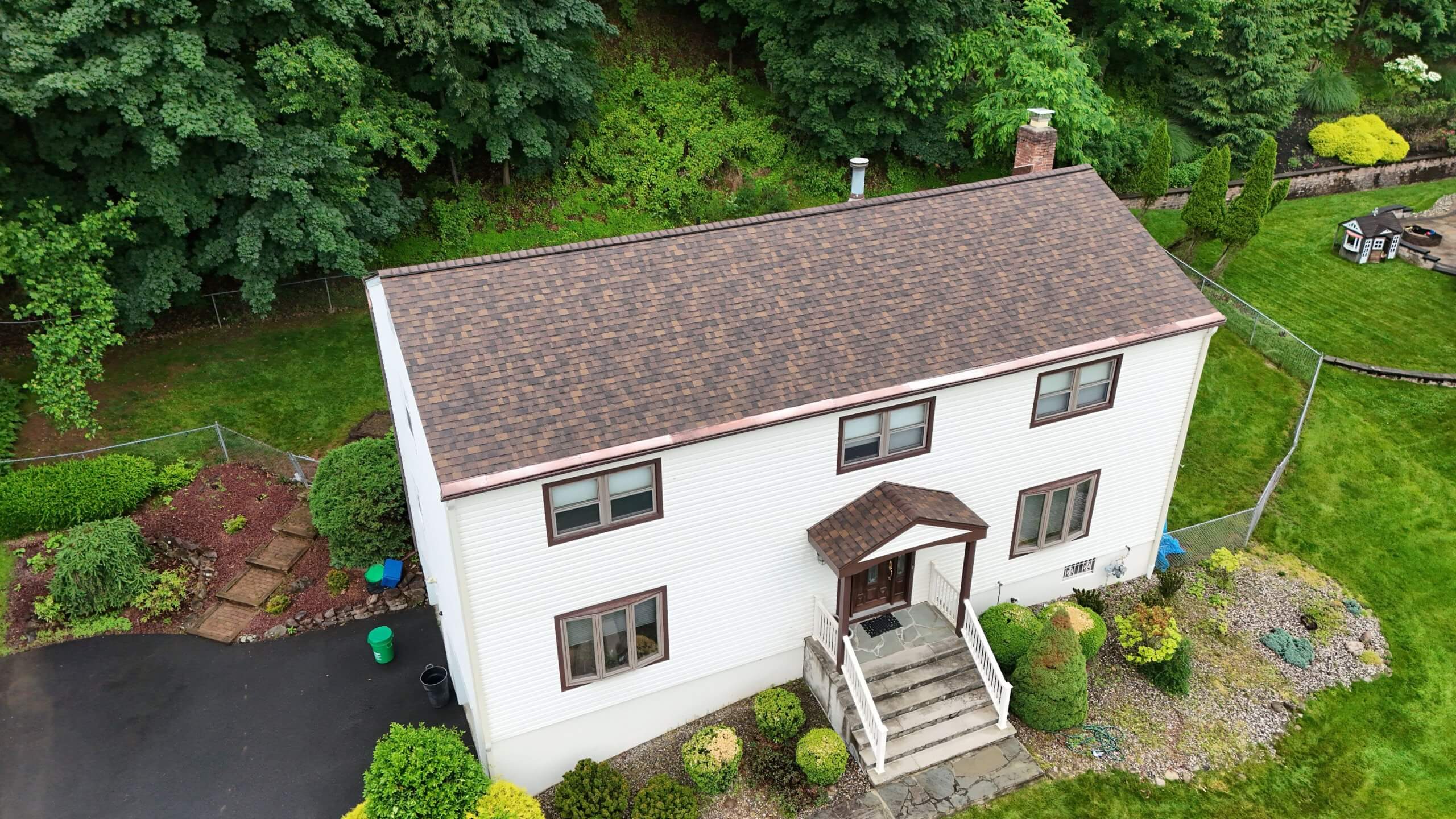
New Rochelle asks more of a roofing contractor than almost any other city in Westchester County, simply because of how much the city itself contains. As the county’s second-largest city, New Rochelle has grown in three distinct waves that sit side by side today: early-20th-century designed neighborhoods like Residence Park, Rochelle Heights, and Wykagyl Park built with Tudor Revival and Colonial Revival homes on slate and clay tile roofs; decades of mid-rise garden apartment and multi-family construction spread across the city’s denser corridors; and, over the past decade, one of the largest downtown high-rise redevelopment booms in the New York suburbs, with more than a dozen new residential towers changing the roofline of the city’s core. A roofing contractor built around any one of these building types will consistently misjudge the other two. On Time Roofing of New Rochelle has spent more than ten years working across all three, developing the material range and code knowledge that a city this varied actually requires.
We know the difference between the built-up roofing on a 1960s garden apartment complex off North Avenue and the single-ply membrane systems specified on a new downtown tower with a rooftop amenity deck. We know how a Tudor Revival home in Rochelle Heights ages differently than a triple-decker a few blocks away, and why New Rochelle’s overlapping layers of historic district review and downtown redevelopment code mean two projects on the same street can face entirely different approval paths. Beyond the roof, we handle the siding, gutter, and chimney work that New Rochelle’s mixed housing stock demands just as often. Serving New Rochelle, Pelham, Mamaroneck, and the broader Long Island Sound shoreline market, we bring the range of experience that a city this size and this varied genuinely requires.
New Rochelle isn’t a single-character city, and its roofing needs aren’t either. The combination of the city’s scale, its layered building history, and a permitting environment that now spans historic preservation and active downtown redevelopment creates roofing demands that a contractor without direct local experience will consistently underestimate.
New Rochelle sits directly on Long Island Sound, and that coastal position brings the same moderating winter effect and salt-air exposure found in the county’s other Sound-front communities — generally fewer severe freeze-thaw cycles than inland Westchester, offset by faster corrosion of standard flashing and gutter hardware near the waterfront in neighborhoods like Davenport Neck and Premium Point. What makes New Rochelle’s climate picture more complex is the city’s own scale: the dense, increasingly vertical downtown core retains heat differently than the shoreline or the leafy residential streets further inland, which means freeze-thaw exposure and wind conditions can vary meaningfully within the city itself depending on whether a property sits downtown, along the water, or in one of the established residential neighborhoods in between.
New Rochelle’s roofing market reflects three genuinely different periods of development. The city’s early-20th-century designed neighborhoods — Residence Park, Rochelle Heights, and Wykagyl Park among them — were laid out as planned residential communities with Tudor Revival, Colonial Revival, and English cottage-style homes, many built with slate or clay tile roofing that remains in place today. Through the mid-20th century, New Rochelle added substantial multi-family housing stock — garden apartment complexes and brick multi-family buildings spread across the city’s denser corridors — typically built with flat, built-up roofing that’s now decades past its original service life. And since the mid-2010s, downtown New Rochelle has undergone one of the largest urban redevelopment efforts in suburban New York, with more than a dozen new residential high-rise towers built around the Metro-North station, each specified with modern single-ply membrane roofing, rooftop amenity space, and stormwater management requirements that didn’t exist in the city’s older construction. Few roofing contractors work fluently across historic, multi-family, and modern high-rise systems in the same city; we do.
Roofing work in New Rochelle operates within a City of New Rochelle permitting structure that has grown more layered as the city has grown. The city’s Building Department administers permits for roof replacement and structural repair work citywide, with standard residential processing typically running 2–4 weeks. Properties within Residence Park, Rochelle Heights, and Wykagyl Park’s designated historic districts are subject to additional design review intended to preserve each neighborhood’s original architectural character. Downtown properties within New Rochelle’s active redevelopment zoning overlay face a separate set of modern commercial building code requirements — including stormwater management and, on some projects, green roof considerations — that older residential permitting doesn’t involve. Insurance claims for coastal storm damage or structural issues on aging multi-family buildings involve New York State insurance regulations, and documentation requirements for both individual homeowners and multi-family property owners warrant contractor experience with New York-specific claims handling.
After ten-plus years of roofing work across New Rochelle’s full range of property types, On Time Roofing has developed a clear picture of the failure patterns that appear most consistently in this city. Every problem below is tied to one of the three building eras — or the coastal position — that defines New Rochelle’s roofing market.
New Rochelle’s downtown redevelopment boom has added more than a dozen new residential towers to the city’s skyline over the past decade, each built with modern single-ply membrane roofing systems and, in many cases, rooftop amenity decks that put the roof surface itself under regular pedestrian use. These systems are newer than most of the city’s roofing inventory, but they carry their own failure patterns tied to rooftop traffic, drainage design around amenity infrastructure, and the sheer number of mechanical and utility penetrations a modern high-rise roof accommodates.
Signs you’ll notice:
New Rochelle-specific patterns: Downtown towers with active rooftop amenity spaces show wear concentrated in different locations than older flat-roof buildings, since pedestrian traffic and furniture loading create stress points that a vacant flat roof never experiences.
Severity: Serious to Emergency, depending on unit occupancy below the affected area. Leaks in occupied residential towers carry higher liability exposure than comparable damage in a vacant commercial building.
Typical solution: Membrane assessment specific to amenity deck wear patterns, protective walkway pad installation where missing, drain capacity verification, and coordinated repair scheduling that accounts for resident and building management access requirements.
New Rochelle’s mid-20th-century garden apartment and multi-family building stock, concentrated along corridors throughout the city, was largely built with built-up tar-and-gravel or early modified bitumen flat roofing that is now, in many cases, 30 to 50 years past installation. These buildings house a significant share of the city’s population, and roof failures here carry habitability implications across multiple units rather than affecting a single household.
Signs you’ll notice:
New Rochelle-specific patterns: Older garden apartment complexes that have never had a full membrane replacement, only successive patch repairs, show the highest concentration of multi-unit leak calls. Buildings with rooftop-mounted HVAC added after original construction show accelerated wear at those specific penetration points.
Severity: Serious to Emergency. Multi-unit habitability concerns and property management liability make prompt assessment a priority on these buildings.
Typical solution: Full membrane assessment across the building, drain and slope correction where standing water is present, and phased or full membrane replacement scoped around tenant occupancy and building access logistics.
Residence Park, Rochelle Heights, and Wykagyl Park were laid out in the early 20th century as planned residential communities, and their Tudor Revival, Colonial Revival, and cottage-style homes were built predominantly with slate or, on a number of properties, clay tile roofing — both materials chosen for their appearance and durability but now approaching or exceeding a century of service on many of these homes. Decades of piecemeal repair using mismatched materials, combined with aging flashing, create conditions that require a systematic assessment rather than continued spot fixes.
Signs you’ll notice:
New Rochelle-specific patterns: Homes within Residence Park and Rochelle Heights’ historic districts show the highest concentration of original slate and tile roofing, and design review requirements mean any replacement material must be selected to maintain the neighborhood’s protected architectural character.
Severity: Moderate to Serious. Individual broken material allows water entry; systemic flashing deterioration alongside material loss often indicates the roof system has reached a point where full reassessment is warranted.
Typical solution: Historic-appropriate slate or tile repair matched to each neighborhood’s material and color character, or full system replacement with a comparable dimensional shingle where the original system has reached genuine end-of-life, coordinated through the applicable historic district review process.
New Rochelle’s Long Island Sound shoreline — including the Davenport Neck, Hudson Park, and Premium Point areas — brings direct exposure to coastal storm effects that inland parts of the city, and inland Westchester generally, don’t experience to the same degree: stronger sustained wind during Nor’easters, storm surge and coastal flooding risk in low-lying waterfront areas, and greater exposure to the wind and rain that tropical storm remnants bring as they track up the Atlantic coast.
Signs you’ll notice:
New Rochelle-specific patterns: Waterfront estate properties along Premium Point and Davenport Neck see the most direct storm exposure, while homes throughout the city’s inland residential neighborhoods experience comparatively less severe wind loading during the same storm events.
Severity: Emergency. Coastal storm damage often arrives with heavy rain already underway, making rapid tarping essential to limiting interior damage.
Typical solution: Emergency tarping followed by repair or replacement using wind-resistant installation methods and, on waterfront properties, corrosion-resistant flashing and fasteners suited to the added salt exposure.
New Rochelle’s commercial base is substantially larger than a typical Westchester suburb’s, spanning the North Avenue retail corridor, the downtown Main Street and Huguenot Street business district, and a growing base of ground-floor retail beneath the city’s new residential towers. This mix of older commercial buildings and new mixed-use construction means commercial roofing needs in New Rochelle range from decades-old membrane systems needing full replacement to newly built retail space requiring routine maintenance from day one.
Signs you’ll notice:
New Rochelle-specific patterns: Older commercial buildings along North Avenue with rooftop HVAC added or upgraded over the years show accelerated membrane stress at penetration points, while retail space beneath newer downtown residential towers requires coordination with residential building management for any roof access.
Severity: Serious to Emergency. Active membrane failures in occupied commercial space represent both a property damage and tenant liability concern.
Typical solution: Full membrane assessment, drain clearing and slope correction where standing water is present, targeted repair for isolated failures, or full tear-off and replacement for systems past useful service life.
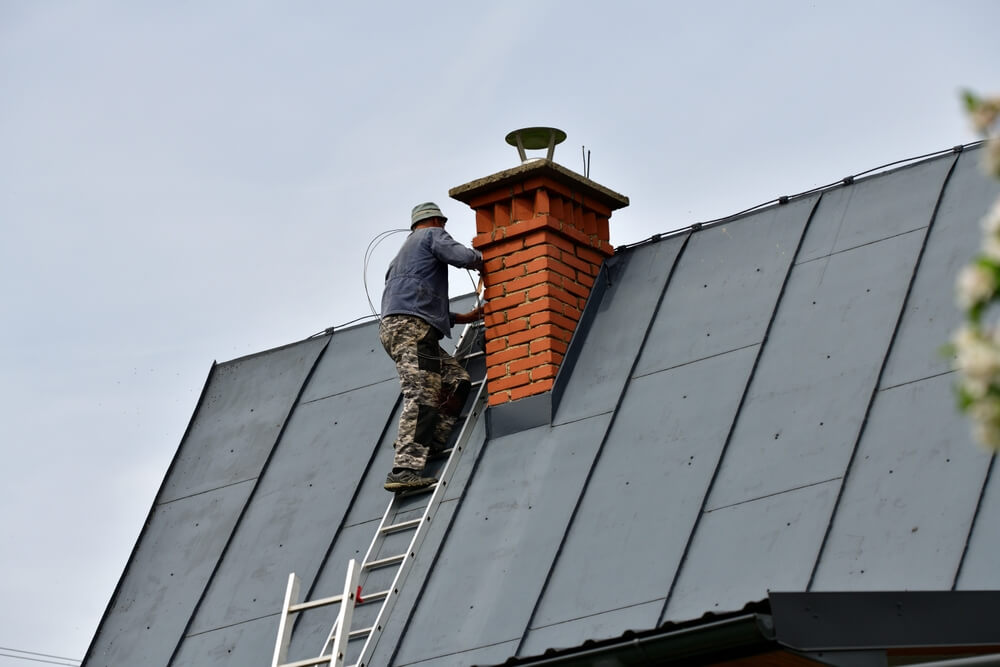
Chimney flashing failure — corrosion, separation, or ice-driven lifting of the flashing at the chimney-to-roof junction — is one of the most common single active leak sources across New Rochelle’s older housing stock, spanning both the city’s single-family designed neighborhoods and its multi-family buildings, many of which have multiple chimneys serving individual units or shared heating systems.
Signs you’ll notice:
New Rochelle-specific patterns: Multi-family buildings with chimney chases serving several units show the highest concentration of flashing-related leak calls, since a single flashing failure can affect multiple households simultaneously. Single-family homes in the city’s older residential neighborhoods with original, unreplaced flashing show a comparable pattern on an individual-property scale.
Severity: Serious. Chimney flashing failures allow water infiltration with every rain event and frequently produce structural damage to rafters and decking if left unaddressed.
Typical solution: Complete flashing removal and replacement using modern step flashing and counter-flashing systems appropriate to the chimney’s masonry type and the building’s overall roof material, combined with a masonry chimney assessment where warranted.
On Time Roofing of New Rochelle provides the full spectrum of roofing services for a city whose building stock spans single-family Tudors, mid-century garden apartments, and modern downtown high-rises — from a single slate repair in Rochelle Heights to full membrane replacement on a multi-unit building off North Avenue. Every service is calibrated to the specific building type and regulatory path each New Rochelle property requires.
We provide emergency tarping, debris removal, and damage containment for active roof failures — coastal storm damage, sudden multi-family leaks, and any situation where a roof compromise is allowing immediate water entry. Emergency response is available throughout New Rochelle and the surrounding 20-mile service radius.
Emergency services include rapid-deploy tarping over exposed areas, photograph documentation for insurance purposes, and removal of debris creating ongoing damage risk. New Rochelle’s coastal position means storm-driven emergency demand can spike after Nor’easters and remnant tropical systems, and the city’s density means a single roof failure can affect multiple households at once in multi-family buildings. We maintain response capacity to reach emergency calls within the same business day where conditions allow.
Full roof replacements from tear-off through finished installation — managing City of New Rochelle building permit applications, deck inspection and repair, underlayment appropriate for New York State’s climate requirements, and complete new shingle, slate, tile, or membrane installation, scaled to the property type involved.
For New Rochelle’s residential market, replacement specifications include ice-and-water shield at eaves and valleys per New York State code and dimensional architectural shingles with strong wind ratings. For homes within Residence Park, Rochelle Heights, or Wykagyl Park’s historic districts, we manage material and color approval through the applicable design review process. For multi-family and commercial buildings, we specify modern single-ply membrane systems and manage the logistics of tenant access and building coordination throughout the project.
Targeted repairs addressing specific failure points — individual slate or tile replacement, chimney flashing rebuilding, flat-roof membrane patching, and isolated storm damage — without requiring full system replacement where the surrounding system remains sound, whether the property is a single-family home or a multi-unit building.
Repair is the right recommendation when it genuinely extends a sound system’s service life. On New Rochelle’s mixed housing stock, distinguishing repair candidates from replacement candidates requires experience across building types — a garden apartment roof with an isolated seam failure is a different decision than one with systemic ponding across the field, and a historic slate roof with a few broken pieces is a different call than one with widespread flashing failure.
Full residential, multi-family, and commercial roof inspections — all surfaces, flashings, chimneys, gutters, ventilation, drainage, and attic conditions where applicable — with written findings, condition photographs, and remaining service life estimate, scoped to the specific building type.
For New Rochelle’s real estate and property management market, pre-purchase and pre-refinance inspections are particularly valuable given how differently the city’s three building eras age — a historic slate roof, an aging garden apartment membrane, and a newer high-rise system each require a different evaluation approach. Post-storm inspections document damage within the timeframe New York insurance policies require for claim initiation.
Scheduled maintenance services — debris clearing, gutter cleaning, flashing inspection and re-sealing, minor repair of developing issues, and condition reporting — designed to extend roof service life across New Rochelle’s single-family, multi-family, and commercial properties alike.
Given New Rochelle’s mix of coastal exposure and aging multi-family roofing, a fall maintenance visit — clearing gutters and drains, confirming slope and drainage, and inspecting flashing before the first freeze — is the highest-value maintenance timing for property owners managing roofs of any type in this city.
Installation, repair, and maintenance of commercial and multi-family flat and low-slope roofing systems — TPO, EPDM, and modified bitumen — for retail and mixed-use properties along North Avenue and the downtown Main Street and Huguenot Street corridors, as well as garden apartment and multi-family buildings throughout the city.
New Rochelle’s commercial and multi-family inventory ranges from decades-old buildings needing full membrane replacement to newly constructed downtown retail space requiring routine maintenance planning. Commercial and multi-family projects include permit management through the City of New Rochelle Building Department’s applicable review process.
Roof problems in New Rochelle rarely stay contained to the roof. Siding, gutters, and chimneys across the city’s single-family homes and multi-family buildings share the same exposure to coastal weather, storm wind, and general age-related wear — a failing gutter that overflows onto siding below, a deteriorating chimney crown that feeds water into flashing already under stress. On Time Roofing handles all three alongside our core roofing work, giving New Rochelle homeowners and property managers one coordinated assessment instead of separate vendors working from separate diagnoses.
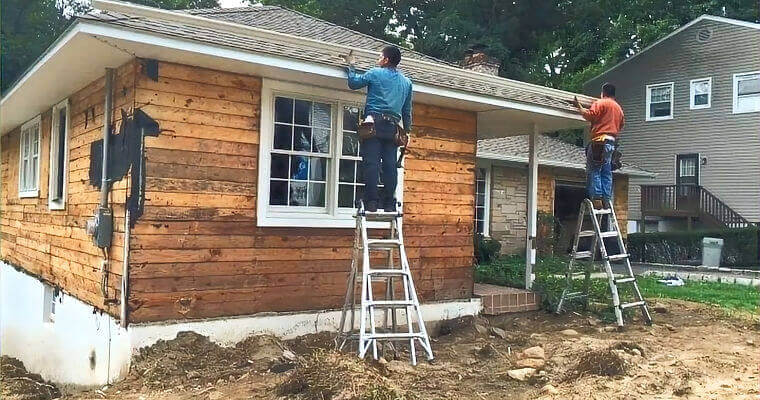
We install and repair vinyl, fiber cement, and wood-look siding across New Rochelle’s residential and multi-family housing stock, from full siding replacement on single-family homes in the city’s established neighborhoods to targeted repair on multi-unit buildings. Siding failures often trace back to a roofing or gutter issue upstream, so our inspection evaluates the full exterior envelope rather than treating siding damage as an isolated problem.
Best for: Homeowners planning siding work alongside a roof replacement, property managers addressing siding across multiple units, and storm-damaged siding sections requiring insurance-scoped repair.
We install seamless aluminum and coated-steel gutter systems and repair or replace gutters and downspouts sized appropriately for both single-family homes and larger multi-family roof surfaces, with corrosion-resistant material options for New Rochelle’s waterfront-adjacent properties.
Best for: Homes and multi-family buildings with sagging, overflowing, or corroded gutters, waterfront-adjacent properties needing coastal-grade hardware, and property managers coordinating gutter maintenance across a portfolio of buildings.
Beyond flashing work handled as part of our roofing services, we address the masonry side of chimney care — repointing deteriorated mortar joints, rebuilding damaged crowns and caps, and applying masonry waterproofing — for both New Rochelle’s historic single-family homes and the shared chimney chases common on the city’s older multi-family buildings.
Best for: Chimneys with visible mortar deterioration, cracked or missing crowns, or efflorescence staining, and multi-family buildings addressing shared chimney chases as part of broader building maintenance.
Every project at On Time Roofing of New Rochelle follows a clear, documented process from first contact through completion. The range of building types across the city and its layered permitting requirements make process discipline especially important — here is exactly how it works.
Timeline: Same-day contact; inspection within 1–3 business days
You call, email, or submit online. We confirm your address, property type — single-family, multi-family, or commercial — and the nature of the problem, then schedule the inspection. For emergency situations, we prioritize same-day or next-day response. For properties within Residence Park, Rochelle Heights, or Wykagyl Park, we note this at intake to ensure the right historic district expertise is assigned.
Customer expectations: No preparation needed. If you have prior repair documentation, permit history, or building management contacts for multi-family properties, having them available helps us plan the project efficiently.
Timeline: 45–120 minutes depending on property size and complexity
Our inspector systematically examines all roof surfaces, every flashing point, gutters and drainage, chimney and penetration conditions, attic access where available, and any visible interior symptoms reported. On multi-family and commercial properties, inspection scope expands to cover the full roof surface and coordinate with property management or building staff for access. On historic homes, we evaluate slate or tile condition alongside flashing and structural indicators.
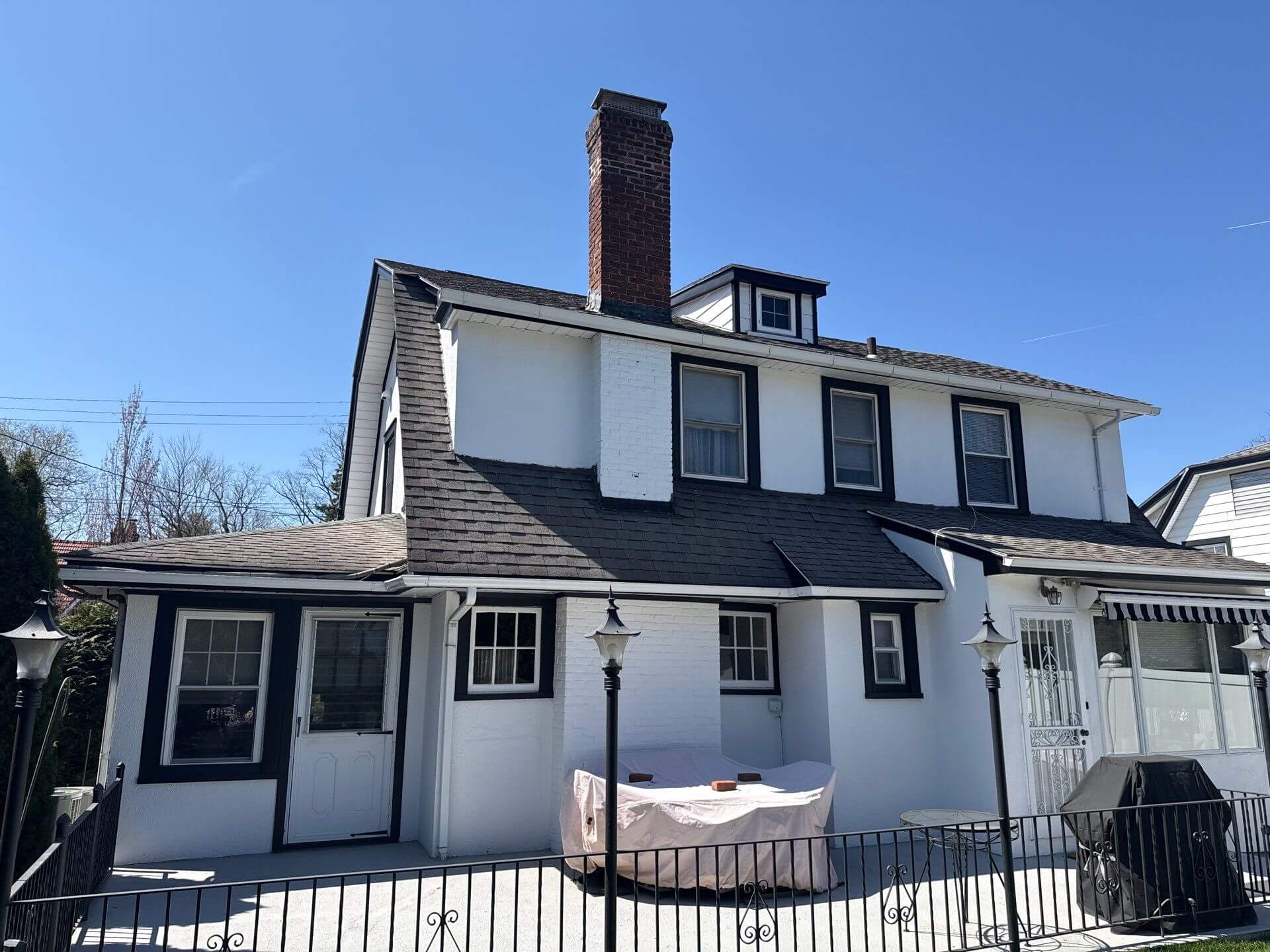
New Rochelle considerations: We note any applicable historic district requirements or downtown redevelopment zoning considerations that affect the project’s approval path.
Customer expectations: Written findings report with photographs within 24 hours of inspection.
Timeline: Estimate delivered within 24–48 hours of inspection
We provide a written, itemized estimate detailing material specifications, labor, permit fees, disposal, and any deck or substrate work identified during inspection, scoped appropriately for a single-family home, a multi-family building, or a commercial property. For historic properties, we explain the specification rationale relative to district design requirements.
City permit note: We confirm whether the specific project scope requires a City of New Rochelle building permit, historic district review, or downtown redevelopment code compliance, and include applicable fees and estimated processing timeline in the estimate.
Timeline: Repairs: same-day or next-day. Single-family replacements: 1–3 days. Multi-family and commercial projects: 3–10 days depending on scale.
Installation begins with property protection appropriate to the building — perimeter tarps and staging for single-family homes, or coordinated tenant access and phased work schedules for occupied multi-family buildings. On downtown and commercial properties, we coordinate directly with building management. Deck findings during tear-off are communicated and discussed before any scope beyond the estimate proceeds.
New York weather consideration: We schedule around forecasted precipitation and don’t start tear-off we can’t fully protect before anticipated rain.
Timeline: Final walkthrough on completion day
Before the crew leaves, a supervisor inspects the full installation and confirms complete cleanup, including shared entryways, parking areas, and sidewalks common on New Rochelle’s multi-family and downtown properties. We conduct a walkthrough with the owner or property manager, provide written warranty documentation, and register manufacturer warranties on qualifying products.
Customer expectations: All debris removed same day. Permit inspection scheduling managed by us for qualifying projects.
Every project On Time Roofing completes is backed by our New York State Home Improvement Contractor license, general liability insurance, and workers’ compensation coverage — coverage appropriate for both single-family residential work and larger multi-family or commercial scopes. We provide certificate documentation before any project begins.
Few roofing contractors work comfortably across all three of New Rochelle’s building eras. We have direct experience assessing historic slate and clay tile, diagnosing recurring leaks on decades-old garden apartment membranes, and understanding the drainage and access considerations specific to modern high-rise roofs with active amenity space. This is expertise built through years of working on New Rochelle properties specifically, not general training applied to an unfamiliar city.
On Time Roofing has spent more than a decade working specifically in New Rochelle’s roofing market — not as a regional contractor who occasionally takes city calls, but as a company that has worked across the full range of what New Rochelle actually contains: historic slate roofs in Rochelle Heights, aging garden apartment membranes throughout the city’s denser corridors, and modern flat-roof systems on the new downtown towers. That direct experience is what makes our inspection findings accurate and our recommendations appropriate for the specific building in front of us.

GAF has been producing shingles for over a century, leading the industry in quality, brand recognition, and innovative designs.

Owens Corning Offers Solutions for All Your Building and Remodeling Needs
On Time Roofing serves New Rochelle and the surrounding communities across a 20-mile service radius, bringing the same expertise in historic, multi-family, and modern building types, coastal climate conditions, and New York regulatory requirements to every property we work on.
Our team proudly serves homeowners and businesses throughout the surrounding Westchester County region.
Standard asphalt shingle replacement on a typical New Rochelle single-family home runs $10,500–$15,500. Historic slate or clay tile replacement in Residence Park or Rochelle Heights runs $17,000–$26,000. Multi-family flat roof replacement on a garden apartment building runs $45,000–$75,000 depending on size, and downtown high-rise or large commercial projects require a custom quote given the scale and code requirements involved. Free inspection provides an accurate project-specific estimate.
Yes. The City of New Rochelle Building Department requires permits for roof replacements and most structural roof repairs, for single-family, multi-family, and commercial properties alike. New York State also requires roofing contractors to hold a Home Improvement Contractor (HIC) license for residential work. Properties within Residence Park, Rochelle Heights, or Wykagyl Park's historic districts require additional design review, and downtown properties within the redevelopment zoning overlay may face additional commercial code requirements. On Time Roofing manages all permit applications and applicable reviews as part of every qualifying project.
Recurring leaks in the same general area despite repeated patching are a common sign that an aging flat-roof membrane has reached the point where isolated repair no longer addresses the underlying problem. Many of New Rochelle's garden apartment and multi-family buildings carry original built-up or early modified bitumen roofing now 30 to 50 years old, and a comprehensive membrane assessment — rather than another isolated patch — is usually the more cost-effective path once a building reaches this stage.
This depends on the specific system's condition, the grade and source of the original material, the condition of the existing flashing, and whether the property is subject to historic district design requirements. Well-maintained original slate or tile in good condition, with sound flashing, is worth repairing — a quality system has decades of remaining service life. Material that has become porous or spalled, or where flashing has failed systemically, warrants an honest assessment of whether continued repair spending still makes sense given the historic district's requirements for any replacement work. Our inspection includes a specific recommendation on this question with documented evidence.
The key indicators are system age, the extent of current failure points, and whether those failures are isolated or symptomatic of systemic deterioration — and this holds whether the property is a single-family home or a multi-family building. A 12-year-old roof with isolated storm damage is a repair candidate. A 30-year-old membrane with recurring leaks in multiple locations, or a historic slate roof with widespread flashing failure, is a system that has reached end-of-life and is better replaced than repaired indefinitely. Our free inspection specifically addresses this question with documented evidence rather than a blanket recommendation.
New Rochelle’s mix of historic homes, multi-family buildings, and modern downtown towers means a roofing problem can look very different depending on what type of property you own — and ground-level observation rarely tells the full story on a flat roof or a century-old slate system. Whether you’ve noticed ceiling staining, recurring leaks, storm damage, or your roof simply hasn’t been professionally inspected in years, we’re the right starting point.