Yonkers roofs face a roofing environment unlike most of the country — and unlike even most of New York State. The city sits at the northern edge of New York City, where the Hudson River Valley’s geography funnels cold air from the north while urban heat from the metro below pushes temperatures in the opposite direction, creating aggressive freeze-thaw cycling that can happen multiple times across a single winter week. Annual snowfall averages 25–30 inches, but it’s the ice — the repeated freeze of meltwater at eave edges — that does the most sustained damage to Yonkers’ aging housing stock. Add the century-old slate, clay tile, and built-up roofing that defines Yonkers’ Victorian-era rowhouses and early-20th-century multi-family stock, and you have a roofing market where generic repair approaches consistently underperform. On Time Roofing of Yonkers has spent more than ten years working specifically in this environment, developing the expertise in older material systems, steep-pitch urban geometry, and New York State code requirements that Yonkers properties demand.
We know the difference between a roof in Northwest Yonkers’ dense attached-housing corridors and one on a standalone colonial in Lawrence Park West. We know how the Northeast’s four-season climate interacts with original slate that’s been patched multiple times since the 1940s, and why the solution that works on a new-construction vinyl-sided cape in Tuckahoe is wrong for a Tudor-revival in Park Hill. Serving Yonkers, Bronxville, Mount Vernon, Hastings-on-Hudson, and the broader Westchester County market, we bring the local material and regulatory knowledge that national chains and out-of-region contractors can’t replicate.
Yonkers isn’t a typical New York suburb, and its roofing needs aren’t typical either. The combination of its specific climate position, its extraordinary housing age and variety, and the regulatory environment governing its dense urban fabric creates roofing demands that a contractor without direct local experience will consistently underestimate.
Yonkers’ climate is shaped by its position at the convergence of the Hudson River Valley and the New York metropolitan heat island — a combination that makes it one of the most challenging freeze-thaw environments in the Northeast. The city receives an average of 47 inches of annual precipitation, including 25–30 inches of snowfall, but what matters for roofing is the temperature cycling. Yonkers regularly experiences 30–40 freeze-thaw events per winter season — temperatures dropping below 32°F at night and rising above it during the day — which is significantly higher than communities 50 miles north or south. Each freeze-thaw cycle forces water that has penetrated any roofing imperfection to expand as it freezes, widening cracks, lifting flashings, and working fasteners progressively looser. Ice dams — the ridges of ice that form at eave edges when snow melts on the warm upper roof and refreezes at the cold overhang — are endemic in Yonkers winters, particularly on the aging housing stock in Ludlow, Nepperhan, and the South Yonkers neighborhoods where attic insulation is minimal.
Yonkers is one of the oldest cities in New York State, and its residential housing inventory reflects that history in ways that directly shape roofing needs. The city’s densest neighborhoods — Park Hill, Nodine Hill, and the Southwest Yonkers corridors — are dominated by attached rowhouses, two- and three-family brick buildings, and Victorian-era single-family homes built between the 1880s and 1930s. A significant portion of these properties still carry original or first-replacement slate roofing from that era — now 80 to 140 years old — alongside built-up tar-and-gravel flat roof sections on the rear additions and garage structures common to this building type. Northeast Yonkers and the Lawrence Park area, developed primarily from the 1920s through 1950s, carry a mix of slate, clay tile, and early asphalt shingle construction on Tudors, colonials, and Cape Cods with steep pitches and complex rooflines. The post-war sections of Yonkers along the eastern edge add mid-century ranch and split-level construction where asphalt shingle systems are now 30–50 years old.
Roofing work in Yonkers operates within a layered regulatory environment. New York State requires roofing contractors to carry a Home Improvement Contractor (HIC) license from the Department of State for residential work. The City of Yonkers requires building permits for roof replacements and most structural repair work, administered through the Yonkers Department of Housing and Buildings. Processing times for Yonkers building permits typically run 2–4 weeks for standard residential roofing work — longer for work on properties within the city’s designated historic districts, where the Landmarks Preservation Board may review exterior material changes. Insurance claims for storm damage or ice dam damage involve New York State insurance regulations that differ from other states’ claim processes, and documentation requirements for Westchester County homeowners’ policies warrant contractor experience with New York-specific claims handling.
After ten-plus years of roofing work across Yonkers and the broader Westchester market, On Time Roofing has developed a clear picture of the failure patterns that appear most consistently on properties in this city. Every problem below is driven by the specific combination of climate, building age, and construction type that defines the Yonkers market.
Ice dams form when heat escaping through inadequately insulated attic spaces melts snow on the upper roof — that meltwater flows toward the cold eave overhang, refreezes, and builds into an ice barrier that forces subsequent meltwater up under shingles or slate and into the building interior. Yonkers experiences 30–40 freeze-thaw cycles per winter, making ice dam formation one of the city’s most common and consistently damaging roofing problems. The Victorian and early-20th-century housing stock that dominates Park Hill, Ludlow, and the older Southwest Yonkers neighborhoods was built before current attic insulation standards — and many of these homes have received only minimal insulation upgrades since construction, leaving them maximally vulnerable to ice dam formation.
Signs you’ll notice:
Yonkers-specific patterns: Steep-pitch attached rowhouses in Nodine Hill and the Southwest Yonkers corridors experience the worst ice dam formation due to minimal attic depth and the continuous eave profiles of attached construction. Tudor-revival homes in Lawrence Park West, with their complex rooflines and multiple dormers, create multiple ice dam initiation points.
Severity: Serious. Active ice dams can introduce several gallons of water per day into ceiling and wall assemblies. Address current-season ice dams and schedule attic ventilation and insulation assessment for the following season.
Typical solution: Emergency ice dam removal using steam, followed by ice-and-water shield installation at eaves during any subsequent repair or replacement, and attic ventilation correction.
Slate deterioration encompasses the progressive delamination, cracking, and porosity increase that occurs as original quarried slate — the standard roofing material on Yonkers’ Victorian and Tudor-era homes — passes the end of its functional service life, typically 80–150 years depending on the slate grade and quarry origin. Individual slates crack, slip from their nail hooks, or develop the soft, layered texture that indicates they’ve absorbed water through their now-porous surface.
Yonkers’ housing stock includes some of the highest concentrations of original slate roofing in Westchester County — particularly in the Park Hill historic district, the Northwest Yonkers established neighborhoods, and the Lawrence Park area. Vermont, Pennsylvania, and New York Buckingham slate of varying grades is represented across the city’s older properties, and assessing what type of slate is present and whether the system warrants repair or replacement requires genuine expertise in historic roofing materials. Many Yonkers slate roofs have been patched over decades with mismatched replacement slates, deteriorated lead flashing, and failing galvanized nails — creating complex conditions that require systematic assessment rather than spot repairs.
Signs you’ll notice:
Yonkers-specific patterns: The high-pitched slate roofs on Park Hill’s Victorian multifamily properties and the Tudors along Lawrence Park’s established streets show the highest rates of deterioration. Properties whose slate hasn’t been professionally assessed in 20+ years frequently present with systemic flashing failures alongside individual broken slates.
Severity: Moderate to Serious. Individual broken slates allow water entry; systemic flashing and batten deterioration can indicate full slate replacement is warranted rather than continued repair.
Typical solution: Slate replacement assessment by a contractor experienced with historic slates, replacement of broken individual slates where system is otherwise sound, full slate system replacement with GAF Timberline or comparable dimensional shingles where system has reached end-of-life.
Flat roof membrane failure describes the deterioration, cracking, ponding, and seam separation of modified bitumen, EPDM, or built-up roofing systems on the flat or near-flat roof sections common on Yonkers’ multi-family, commercial, and mixed-use properties — allowing water infiltration into the occupied spaces below.
Yonkers has a large inventory of pre-war two- and three-family residential properties and commercial buildings along its major corridors — South Broadway, McLean Avenue, and the Central Park Avenue strip — where flat or low-slope roof systems are standard. Many of these systems were last replaced in the 1980s and 1990s and are now 30–40 years old, well past their expected service lives under Northeast weather conditions. The freeze-thaw cycling that characterizes Yonkers winters is particularly damaging to flat membrane systems, where water ponding above inadequate drains freezes and thaws repeatedly, creating hydrostatic pressure against seams and penetrations.
Signs you’ll notice:
Yonkers-specific patterns: Multi-family properties along South Broadway and Ashburton Avenue with converted or added rooftop HVAC units show accelerated membrane failure at penetration points. Mixed-use commercial properties on Warburton Avenue near the waterfront experience above-average membrane stress from the Hudson River-driven moisture and wind exposure.
Severity: Serious to Emergency. Active flat roof membrane failures in occupied multi-unit buildings represent both a property damage and tenant habitability concern.
Typical solution: Full membrane assessment, drain clearing and slope correction where standing water is present, targeted membrane repair for isolated failures, or full tear-off and replacement for systems past useful service life.
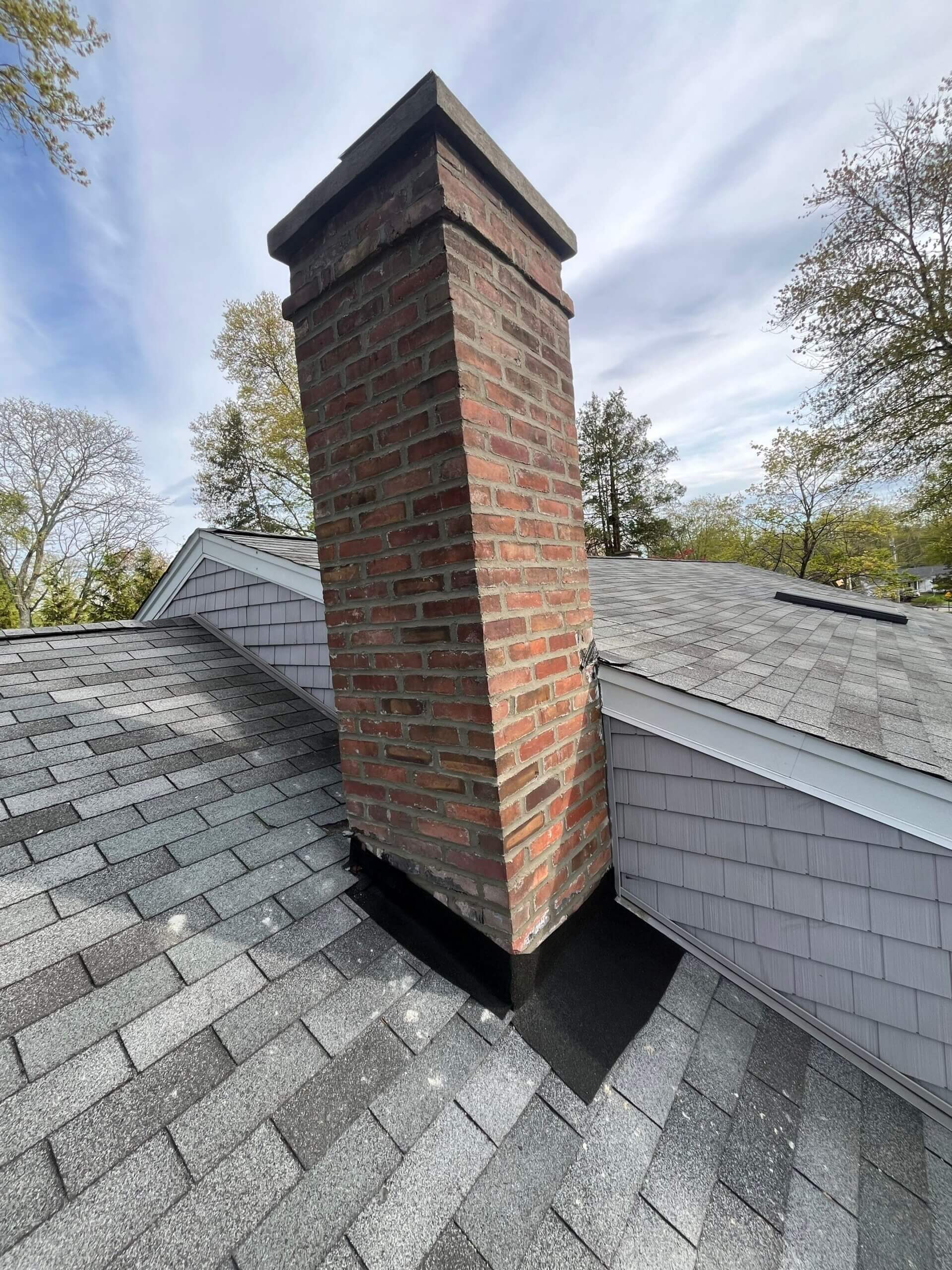
Chimney flashing failure occurs when the lead, copper, or aluminum step and counter-flashing at the chimney-to-roof junction corrodes, separates, or is lifted by ice damage — creating the most common single active leak source in Yonkers’ older residential properties. Yonkers has an extraordinary density of masonry chimneys relative to comparable suburban markets — virtually every pre-war single-family and multi-family property has one or more brick chimneys serving furnaces, fireplaces, and water heaters — each of which represents a high-maintenance flashing junction.
The combination of Yonkers’ freeze-thaw cycle and the original lead or galvanized flashing materials used in the city’s older construction creates a predictable failure timeline. Lead flashing on Yonkers’ Victorian-era homes has often been in service for 60–80 years — well past the material’s functional life in the Northeast’s thermal cycling conditions. Ice dam formation at chimney saddles and counter-flashing joints concentrates mechanical stress at exactly the points where flashing integrity is critical.
Signs you’ll notice:
Yonkers-specific patterns: The densely built rowhouse neighborhoods of Nepperhan and Ludlow — where chimney chases serve multiple units in attached construction — show the highest concentration of flashing-related leak calls. Tudor-revival properties in Lawrence Park West with decorative chimney stacks and multiple flashing transitions are particularly maintenance-intensive.
Severity: Serious. Chimney flashing failures allow water infiltration with every rain event. Long-unaddressed flashing leaks frequently produce structural damage to the rafters and decking adjacent to the chimney.
Typical solution: Complete flashing removal and replacement using modern step flashing and counter-flashing systems appropriate to the chimney masonry type, combined with chimney cap and crown assessment to address masonry water entry above the roofline.
Granule loss describes the progressive shedding of the mineral coating from asphalt shingle surfaces — the coating that provides UV resistance, fire protection, and weathering durability — leaving bare asphalt exposed to accelerated deterioration from the sun, rain, and freeze-thaw cycling that Northeast roofs experience.
Yonkers’ post-war residential sections — the ranch homes and split-levels in the northeastern parts of the city and the cape cod developments along the Bronx border — carry a large inventory of asphalt shingle roofing from the 1960s through 1990s that is either at or well past end-of-life. Standard 20–25 year architectural shingles installed in the mid-1990s are now approaching or past the 30-year mark, and the Northeast’s freeze-thaw cycling compresses functional lifespan below the product’s rated term. Granule-depleted shingles are brittle, fail in wind events at lower speeds than intact shingles, and allow UV-driven asphalt deterioration that eventually produces the cracking and curling that precedes active roof failure.
Signs you’ll notice:
Yonkers-specific patterns: South- and west-facing roof sections in Yonkers’ post-war neighborhoods show the fastest granule depletion from UV exposure combined with snow loading. Ranch homes with shallow roof pitches retain debris and moisture longer than steep-pitch construction, accelerating the biological growth that compounds granule loss.
Severity: Moderate to Serious. End-of-life granule exhaustion indicates replacement planning is needed within 2–3 years to prevent deck damage from prolonged moisture infiltration.
Typical solution: Full roof replacement with dimensional architectural shingles, ice-and-water shield at eaves and valleys per New York State code requirements, and ridge vent installation where attic ventilation is deficient.
Wind damage describes shingle lifting, displacement, and complete blow-off caused by the sustained high-wind and gusting events that Nor’easters and severe thunderstorms deliver to Yonkers — exposing roof decking and underlayment to direct rain and snow infiltration until repairs are completed.
Yonkers and the Lower Hudson Valley experience an average of 3–5 significant Nor’easter events per winter season, with wind gusts regularly exceeding 50–60 mph and documented events above 80 mph. These events are particularly damaging to shingles whose adhesive seal strips have degraded from age or heat cycling, and to slate and tile systems where individual pieces have already loosened from nail fatigue. The city’s topographic position — elevated relative to the Hudson River to the west and the Bronx to the south — creates wind channeling effects that concentrate gusts in certain street corridors, particularly in Riverview and the waterfront neighborhoods.
Signs you’ll notice:
Yonkers-specific patterns: Elevated properties along Palisade Avenue and in the Riverview neighborhood experience the most concentrated wind exposure. Two-family attached properties in Southwest Yonkers with aging seal strips show high rates of wind-driven shingle loss during Nor’easter events.
Severity: Emergency. Wind-exposed deck areas allow large volumes of water entry during subsequent precipitation. Tarping and repair should be prioritized within hours of discovery.
Typical solution: Emergency tarping followed by shingle replacement with wind-resistant installation and seal-down of adjacent borderline shingles, or full replacement where wind damage is systemic.
On Time Roofing of Yonkers provides the full spectrum of residential and commercial roofing services for a market as diverse as Yonkers demands — from single slate replacement on a Victorian rowhouse to full flat roof replacement on a South Broadway commercial building. Every service is calibrated to the specific materials, climate conditions, and regulatory requirements that Westchester County properties require.
We provide emergency tarping, debris removal, and damage containment for active roof failures — storm damage, ice dam breaches, wind blow-off, and any situation where a roof compromise is allowing immediate water entry. Emergency response is available throughout Yonkers and the 20-mile service radius. Emergency services include rapid-deploy tarping over exposed areas, photograph documentation for insurance purposes, and removal of debris creating ongoing damage risk. In Yonkers’ Nor’easter season — November through March — emergency roofing demand spikes after every major storm event. We maintain response capacity during storm seasons to reach emergency calls within the same business day where conditions allow.
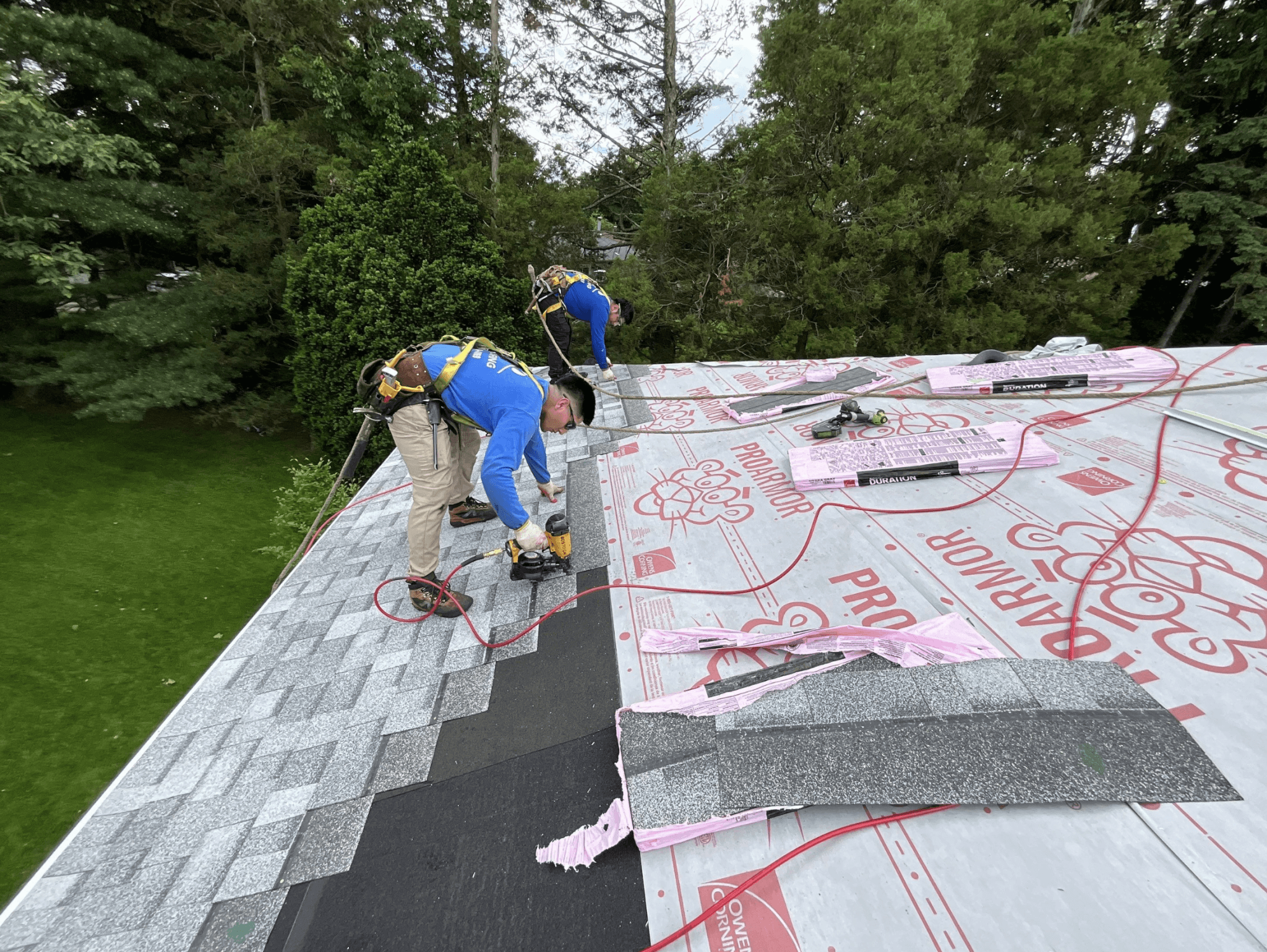
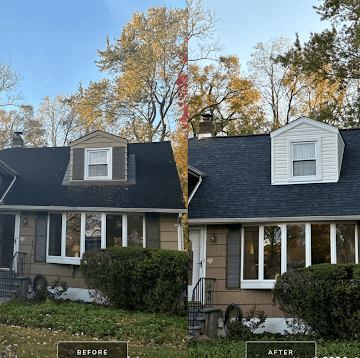
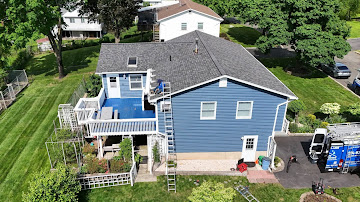
Full roof replacements from tear-off through finished installation — managing Yonkers building permit applications, deck inspection and repair, underlayment appropriate for New York State’s climate requirements, and complete new shingle, slate, or membrane installation. For Yonkers’ residential market, replacement specifications include ice-and-water shield at all eaves and valleys per New York State code, dimensional architectural shingles with minimum 130 mph wind resistance ratings, and ridge vent installation where attic ventilation is deficient. For slate replacement with architectural shingles, we manage the material transition to preserve visual character where HOA or historic district guidelines govern.
Targeted repairs addressing specific failure points — individual slate replacement, chimney flashing rebuilding, flat roof membrane patching, broken ridge cap, and isolated storm damage — without requiring full system replacement where the surrounding system remains sound. Repair is the right recommendation when it genuinely extends a sound system’s service life. On Yonkers’ diverse housing stock, distinguishing repair candidates from replacement candidates requires material-specific expertise — a 90-year-old slate system with a few broken slates and sound remaining slates is a different repair decision than a 20-year-old asphalt system with systemic granule loss and widespread seal strip failure.
Full residential and commercial roof inspections — all surfaces, flashings, chimneys, gutters, ventilation, and attic conditions — with written findings, condition photographs, and remaining service life estimate. For Yonkers’ real estate market, pre-purchase inspections are particularly valuable on the city’s older housing stock where roofing conditions are rarely obvious from ground level or standard home inspection reports. Post-storm inspections document damage within the timeframe New York insurance policies require for claim initiation.
Scheduled maintenance services — debris clearing, gutter cleaning, flashing inspection and re-sealing, minor repair of developing issues, and condition reporting — designed to extend roof service life and catch the small failures that become expensive repairs in Yonkers’ demanding climate. Given the ice dam risk endemic to Yonkers’ winter climate, fall maintenance visits — clearing gutters, confirming drainage, and inspecting eave flashings before the first freeze — are the highest-value maintenance timing in this market.
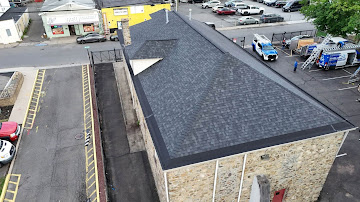
Installation, repair, and maintenance of commercial flat and low-slope roofing systems — TPO, EPDM, modified bitumen, and built-up roofing — for commercial and mixed-use properties across Yonkers’ commercial corridors. Yonkers’ commercial inventory along Central Park Avenue, South Broadway, and the downtown waterfront redevelopment area includes a significant concentration of aging flat-roof commercial structures where deferred maintenance has advanced membrane systems toward end-of-life. Commercial projects include permit management through the Yonkers Department of Housing and Buildings’ commercial review process.
Every project at On Time Roofing of Yonkers follows a clear, documented process from first contact through completion. Yonkers’ regulatory environment and the age and complexity of the city’s building stock make process discipline especially important — here is exactly how it works.
Timeline: Same-day contact; inspection within 1–3 business days
You call, email, or submit online. We confirm your address, the nature of the problem, and schedule the inspection. For emergency situations, we prioritize same-day or next-day response. For Yonkers properties in historic districts — Park Hill, Warburton Avenue corridor — we note this at intake to ensure the right expertise is assigned.
Customer expectations: No preparation needed. If you have any prior repair documentation or permit history, having it available helps us understand the roof’s maintenance history.
Timeline: 45–90 minutes depending on property type and roof complexity
Our inspector systematically examines all roof surfaces, every flashing point, gutters and drainage, chimney and penetration conditions, attic access where available, and any visible interior symptoms the homeowner has noted. On Yonkers’ complex older properties — particularly multi-chimney Tudors and Victorian rowhouses — inspection takes longer and is more thorough than on simpler suburban construction.
Yonkers considerations: We note all permit history and any visible indicators of prior unpermitted work, which affects the scope of any replacement or structural repair project. We document ice dam indicators during fall and winter inspections.
Customer expectations: Written findings report with photographs within 24 hours of inspection.
Timeline: Estimate delivered within 24–48 hours of inspection
We provide a written, itemized estimate detailing material specifications, labor, permit fees, disposal, and any deck or substrate work identified during inspection. For historic properties or those with material-specific requirements, we explain the specification rationale in the estimate.
Yonkers permit note: We confirm whether the specific project scope requires a Yonkers building permit and include permit fees and estimated processing timeline in the estimate where applicable.
Timeline: Repairs: same-day or next-day. Residential replacements: 1–2 days. Commercial and complex multi-chimney projects: 2–5 days.
Installation begins with property protection — perimeter tarps, magnetic nail sweepers along the drip line, careful material staging that respects the adjacent-property proximity common in Yonkers’ attached and semi-attached urban housing. On flat roof projects, we manage tenant access and building entry coordination with property managers. Deck findings during tear-off are communicated and discussed before any scope beyond the estimate proceeds.
New York weather consideration: We schedule around forecasted precipitation and don’t start tear-off we can’t fully protect before anticipated rain.
Timeline: Final walkthrough on completion day
Before the crew leaves, a supervisor inspects the full installation and confirms complete cleanup — including sweep of adjacent sidewalks and shared driveways common in Yonkers’ urban setting. We conduct a walkthrough with the owner, provide written warranty documentation, and register manufacturer warranties on qualifying products.
Customer expectations: All debris removed same day. Permit inspection scheduling managed by us for qualifying projects.
On Time Roofing has spent more than a decade working specifically in Yonkers’ roofing market — not as a regional contractor who occasionally takes Yonkers calls, but as a company that has worked on the full spectrum of the city’s housing inventory: Victorian slate rowhouses in Park Hill, Tudors in Lawrence Park, mid-century colonials in Northeast Yonkers, commercial flat roofs on Central Park Avenue, and everything in between. That direct experience is what makes our inspection findings accurate, our material recommendations appropriate for what’s actually on the roof, and our permit process knowledge reliable for Yonkers’ specific requirements.
Yonkers’ housing stock includes material types — original Vermont and Pennsylvania slate, clay tile, lead flashing, built-up tar roofing — that many general roofing contractors encounter rarely and handle incorrectly. We have direct experience assessing whether a Yonkers slate system is worth continued repair or has reached end-of-life, how to match replacement slates to existing runs, and when historic material preservation is the right call versus replacement with modern high-performance alternatives. This is expertise built through years of working on specific Yonkers properties, not through general training.
Every project On Time Roofing completes is backed by our New York State Home Improvement Contractor license, general liability insurance, and workers’ compensation coverage. In a market where unlicensed work is common and its consequences — voided warranties, failed permit inspections, homeowner liability exposure — are real, verified credentials matter. We provide certificate documentation before any project begins.

GAF has been producing shingles for over a century, leading the industry in quality, brand recognition, and innovative designs.

Owens Corning Offers Solutions for All Your Building and Remodeling Needs
On Time Roofing serves Yonkers and the surrounding communities across a 20-mile service radius, bringing the same expertise in older housing stock, Northeast climate conditions, and New York regulatory requirements to every property we work on.
Our team proudly serves homeowners and businesses throughout the surrounding Westchester County region.
Yes. The City of Yonkers requires building permits for roof replacements and most structural roof repairs through its Department of Housing and Buildings. New York State also requires roofing contractors to hold a Home Improvement Contractor (HIC) license for residential work. On Time Roofing manages all permit applications, fee payments, and inspection scheduling as part of every qualifying project. Work completed without permits creates disclosure complications at sale and may void manufacturer warranties that require permitted installation by a licensed contractor.
Yonkers experiences 30–40 freeze-thaw cycles per winter — significantly more than most comparable Northeast markets — because of its position between the Hudson River Valley and the New York City heat island. This cycling frequency means snow that partially melts during daytime above-freezing temperatures has many more opportunities to refreeze at cold eave edges than in cities with more stable winter temperatures. The city’s older housing stock, much of which has minimal attic insulation compared to current standards, creates the heat loss condition that drives ice dam formation regardless of the external temperature cycling.
Most residential shingle replacements in Yonkers complete in one to two days of installation work. More complex properties with multiple dormers, chimneys, or steeply pitched multi-section rooflines run two to three days. Flat roof commercial or multi-family replacements typically run two to four days. The overall project timeline includes permit processing — which adds one to three weeks before installation can begin on permitted work in Yonkers. We provide a specific installation date at estimate confirmation and communicate proactively if anything changes.
This is the defining roofing decision for many Yonkers property owners, and it depends on the specific slate system’s condition, the grade and source of the original slate, the overall quality of the existing nail and batten condition, and the property owner’s goals. Well-maintained original Vermont or Pennsylvania soft-weathering slate in good condition, with sound nails and flashing, is worth repairing — a quality slate system has decades of remaining service life. Slate that has become porous, whose nails are failing systemically, or that has been patched with mismatched materials over decades warrants honest assessment of whether repair spending still makes economic sense versus replacement with a modern high-performance system. Our inspection includes a specific recommendation on this question with documented evidence.
The key indicators are system age, the extent and distribution of current failure points, and whether those failures are isolated events or symptoms of systemic deterioration. A 12-year-old shingle roof with wind damage to a few courses after a Nor’easter is a repair candidate. A 25-year-old shingle roof with widespread granule loss, multiple active leak points, and failed seal strips throughout the field is a system that has reached end-of-life and is better replaced than repaired indefinitely. Our free inspection specifically addresses this question with documented evidence rather than a blanket recommendation.
Yonkers’ climate doesn’t give roofs a long grace period between first warning signs and active failure — and the city’s older housing stock means that developing problems frequently reveal more complexity than ground-level observation suggests. Whether you’ve noticed ceiling staining, missing slates, or your roof simply hasn’t been professionally inspected in years, we’re the right starting point.