Pelham roofs face a set of pressures most of Westchester County never encounters. As one of the county’s southernmost communities, sitting directly on the Long Island Sound shoreline and bordering the Bronx, Pelham’s roofs are exposed to salt-laden coastal air that corrodes flashing, fasteners, and gutters faster than the same materials age even a few miles inland. Add the tightly platted lots of the Pelham Heights Historic District — one of the earliest planned suburban developments in the country, still built out almost entirely in Tudor Revival, Dutch Colonial, and Colonial Revival homes from the 1900s through the 1930s — and you have a roofing market where salt-air durability and historic material expertise matter as much as basic weatherproofing. On Time Roofing of Pelham has spent more than ten years working specifically in this coastal, closely built environment, developing the corrosion-resistant material knowledge and historic district experience that Pelham properties demand.
We know why a standard galvanized flashing detail that holds up fine in Chappaqua or Armonk corrodes within a decade a half-mile from the Sound in Pelham Manor. We know how the compact lots throughout the Village of Pelham complicate staging and access in ways that wider suburban properties don’t, and why the Village of Pelham and the Village of Pelham Manor — two separate incorporated villages with two separate building departments — each require their own approach to permitting. Beyond the roof, we handle the siding, gutter, and chimney work that faces the same salt-air exposure. Serving Pelham, Pelham Manor, New Rochelle, and the broader southern Westchester and northern Bronx market, we bring the coastal material and regulatory knowledge that inland or out-of-region contractors consistently underestimate.
Pelham isn’t a typical Westchester suburb, and its roofing needs reflect a coastline most of the county doesn’t share. The combination of salt-air exposure, a historic housing stock built on unusually compact lots, and a permitting structure split across two separate villages creates roofing demands that a contractor without direct local experience will consistently underestimate.
Pelham’s position on the Long Island Sound shoreline gives it a genuinely different weather profile than inland Westchester towns just a few miles north. The Sound’s moderating effect means Pelham typically sees fewer freeze-thaw cycles each winter than communities in the county’s interior — often 15–25 compared to 30 or more inland — which reduces classic ice-dam frequency somewhat. What replaces that risk is coastal exposure: salt-laden air corrodes galvanized fasteners, standard flashing, and gutter hardware significantly faster near the water than the same materials age even five or ten miles inland, and Pelham’s shoreline position brings direct exposure to Nor’easters, coastal flooding, and the wind and rain from tropical storm remnants that track up the Atlantic seaboard. For roofing material selection, that combination means corrosion resistance is often a bigger factor in Pelham than pure freeze-thaw durability — a distinction inland contractors frequently miss.
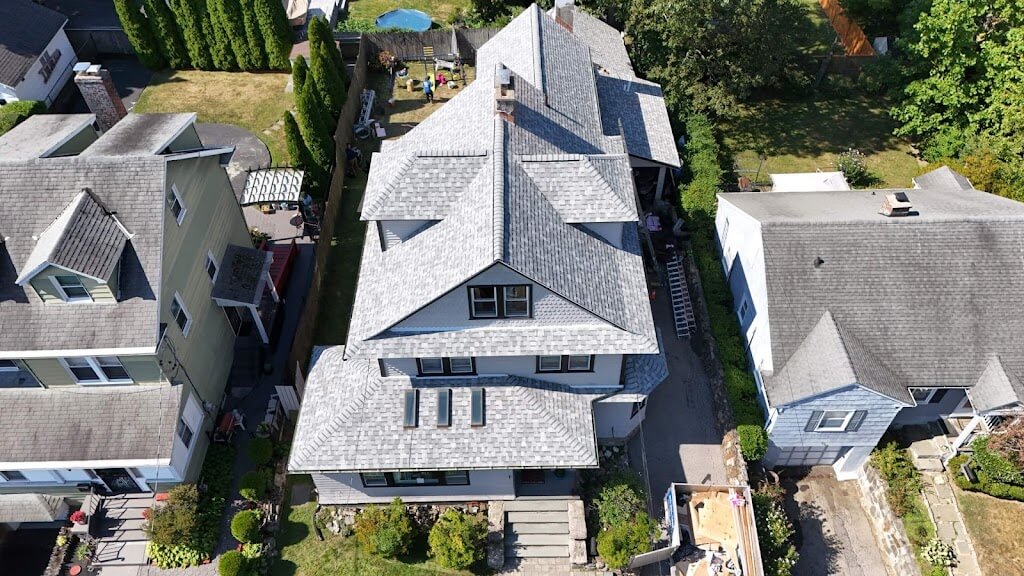
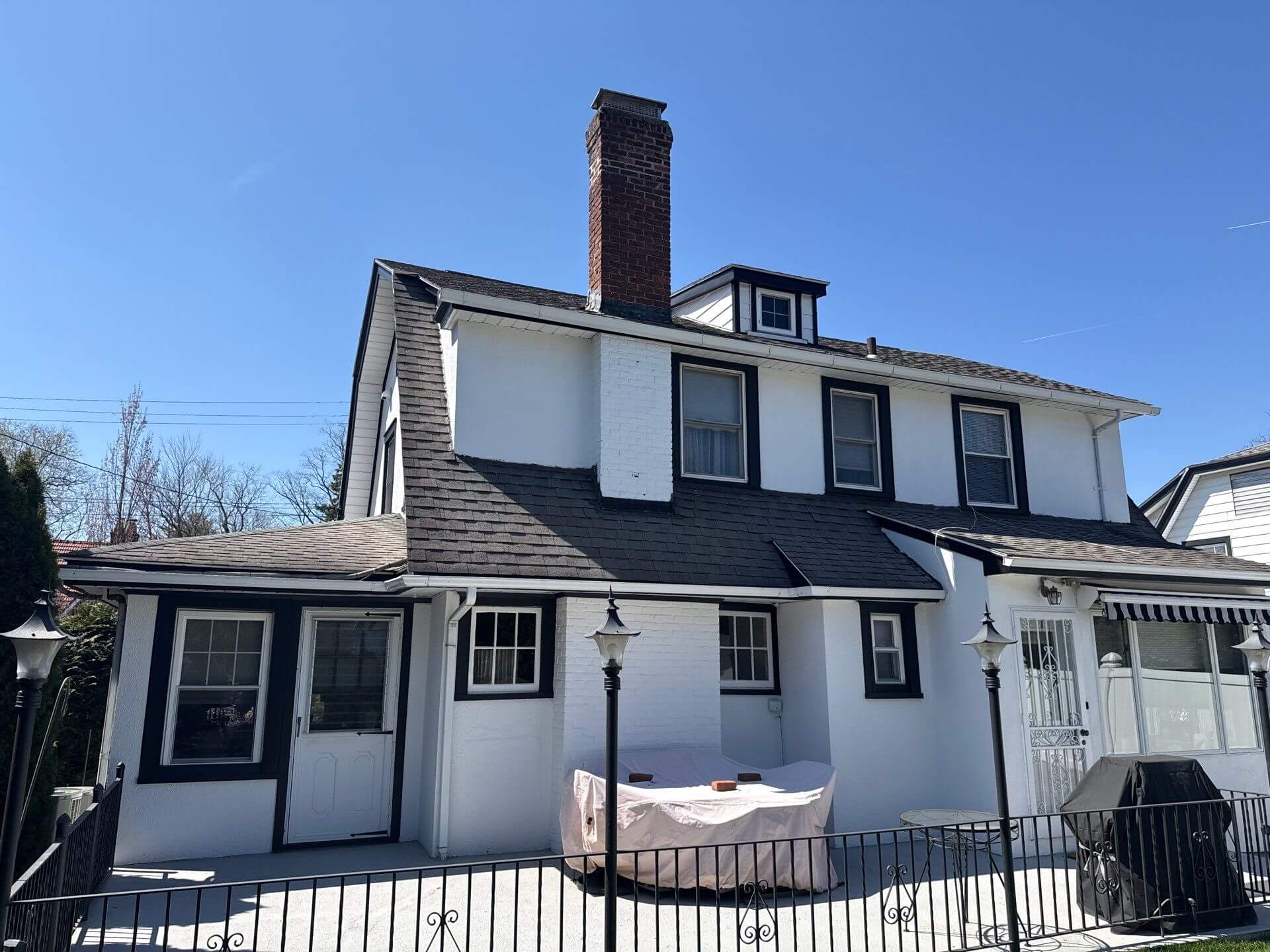
Pelham’s housing stock is defined by its unusual development history. The Pelham Heights section of the Village of Pelham is a National Register-listed historic district, laid out in the 1870s as one of the earliest planned suburban developments in the United States, and built out through the early 20th century almost entirely in Tudor Revival, Dutch Colonial, and Colonial Revival styles — many with original slate roofing, copper flashing, and decorative masonry chimneys. Unlike the larger-lot developments found in northern Westchester, these homes sit on comparatively small, tightly spaced parcels, which shapes everything from roof access and staging to how closely a chimney or valley sits to a neighboring property line. Later construction throughout the Village of Pelham and the Village of Pelham Manor added Tudor and colonial-style homes through the 1920s and 30s with similarly compact footprints, along with the rear additions, sunporches, and enclosed porches that many of these homes have accumulated over a century of ownership — each with its own small flat or low-slope roof section distinct from the main roofline.
Roofing work in Pelham operates within a permitting structure that’s unusual even by Westchester standards: the Town of Pelham is made up of two separate incorporated villages — the Village of Pelham and the Village of Pelham Manor — each maintaining its own building department, its own permit application process, and its own inspection scheduling. A property’s specific village determines which building department to file with, and processing times and requirements can differ meaningfully between the two. Properties within the Pelham Heights Historic District face additional design review intended to preserve the neighborhood’s original architectural character, affecting material and color choices on street-facing roof sections. Insurance claims for coastal storm or wind damage involve New York State insurance regulations, and documentation requirements for Pelham’s higher-value historic homes near the shoreline warrant contractor experience with New York-specific claims handling.
After ten-plus years of roofing work across Pelham and the broader Town of Pelham market, On Time Roofing has developed a clear picture of the failure patterns that appear most consistently on properties here. Every problem below is driven by the specific combination of coastal exposure, historic material, and compact lot construction that defines the Pelham market.
Salt-air corrosion describes the accelerated deterioration of galvanized fasteners, standard steel flashing, and aluminum gutter hardware caused by airborne salt particles carried inland from Long Island Sound. Materials rated for decades of service inland can show significant corrosion within 10–15 years in Pelham, particularly on properties within a half-mile or so of the shoreline in Pelham Manor. This isn’t a defect in the material itself — it’s a mismatch between standard-grade hardware and a coastal environment that calls for corrosion-resistant alternatives.
Signs you’ll notice:
Pelham-specific patterns: Homes in Pelham Manor closer to the Shore Road area and the Sound shoreline show the fastest hardware corrosion rates. Properties with older galvanized flashing that hasn’t been upgraded to stainless steel or copper during prior repairs show the highest concentration of corrosion-driven leak calls.
Severity: Moderate to Serious. Corrosion is progressive and often invisible until a fastener or flashing section fails outright, at which point water entry can be sudden rather than gradual.
Typical solution: Replacement of corroded flashing, fasteners, and gutter hardware with stainless steel, copper, or coated aluminum alternatives rated for coastal exposure, specified proactively during any repair or replacement rather than defaulting to standard inland-grade materials.
Pelham Heights’ Tudor Revival and Colonial Revival homes were built with slate roofing as standard practice in the early 20th century, and a significant share of that original material remains in place today — now well over a century old in some cases. Slate deterioration in Pelham follows the same general pattern as elsewhere — cracking, delamination, and nail failure — but progresses faster here because the copper and lead flashing paired with the original slate is also subject to the salt-air corrosion that accelerates failure at every valley, chimney, and dormer transition.
Signs you’ll notice:
Pelham-specific patterns: Homes within the Pelham Heights Historic District show the highest concentration of aged original slate, and design review requirements mean replacement material and color must be considered carefully to remain consistent with the neighborhood’s protected architectural character.
Severity: Moderate to Serious. Individual broken slates allow water entry; systemic flashing corrosion alongside slate deterioration often indicates a full reassessment of the roof system is warranted.
Typical solution: Historic-appropriate slate repair or full replacement using slate matched to the district’s architectural character, paired with corrosion-resistant copper or stainless steel flashing specified for coastal conditions.
Many of Pelham’s Tudor and colonial-style homes have accumulated rear additions, enclosed porches, and sunrooms over decades of ownership, and these additions are almost always built with a small flat or low-slope roof section distinct from the home’s primary pitched roofline. These sections are frequently overlooked during general roof maintenance because they’re smaller and less visible than the main roof, and they carry their own drainage and membrane considerations that a pitched-roof-only inspection can miss entirely.
Signs you’ll notice:
Pelham-specific patterns: Older homes throughout the Village of Pelham with additions built decades after original construction show the highest incidence of this problem, particularly where the addition’s roof has never been replaced despite the main roof having been redone more recently.
Severity: Moderate to Serious. These leaks are often mistaken for main-roof problems, delaying the correct repair, and can cause structural damage to the addition itself if left unaddressed.
Typical solution: Dedicated flat-roof assessment and membrane replacement scoped separately from the main roof, with drainage correction where the addition’s original design didn’t adequately account for water shedding.
Pelham’s direct shoreline exposure means it experiences coastal weather effects that inland Westchester towns are largely shielded from — stronger sustained winds during Nor’easters, storm surge and coastal flooding risk in low-lying areas near the water, and greater exposure to the wind and heavy rain that tropical storm remnants deliver as they track up the Atlantic coast. These events are particularly damaging to roofing hardware already weakened by salt-air corrosion, since a corroded fastener or flashing seam fails at lower wind speeds than the same detail would if it were in sound condition.
Signs you’ll notice:
Pelham-specific patterns: Properties in Pelham Manor closest to the shoreline see the most concentrated wind exposure during coastal storm events, and homes with older, uncorrected corrosion issues tend to sustain more extensive damage than comparably aged roofs further inland.
Severity: Emergency. Coastal storm damage frequently arrives with heavy rain already underway, making rapid tarping essential to limiting interior damage.
Typical solution: Emergency tarping followed by repair or replacement using coastal-rated wind-resistant shingle installation and corrosion-resistant hardware to reduce the likelihood of repeat damage in future storms.
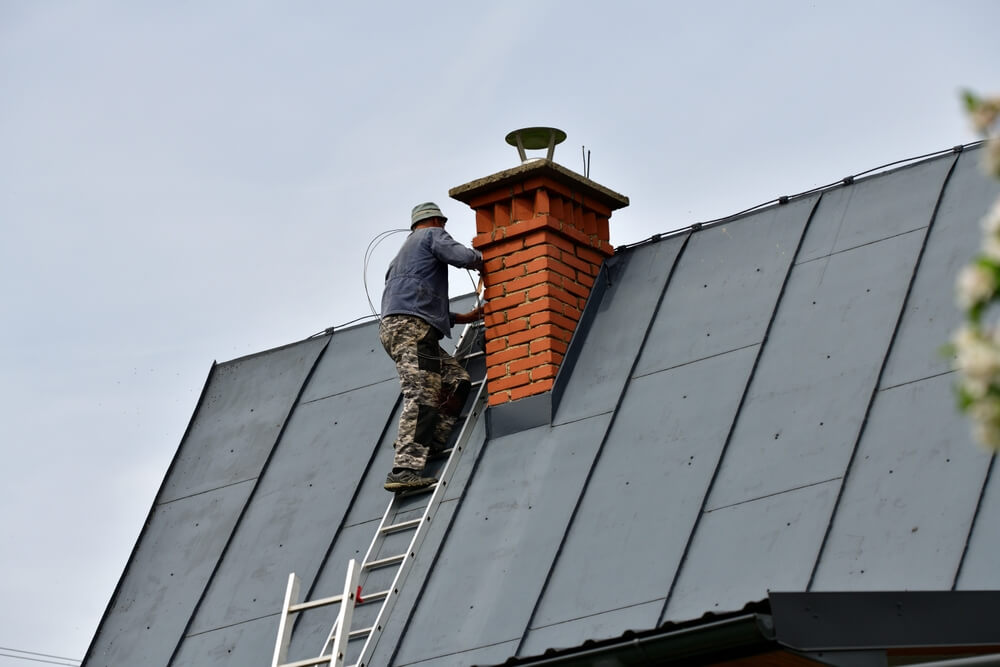
Nearly every pre-war Tudor and colonial-style home in Pelham has at least one masonry chimney, and the borough’s tightly platted lots mean many of these chimneys and roof valleys sit close to neighboring property lines — a layout that adds complexity to inspection, staging, and repair access compared to homes on larger suburban lots. Combined with salt-air corrosion of the flashing itself, chimney flashing is one of the most common active leak sources in Pelham’s older housing stock.
Signs you’ll notice:
Pelham-specific patterns: Original, unrenovated homes throughout the Village of Pelham with chimney flashing that has never been upgraded to coastal-rated material show the highest concentration of leak calls. Properties where roof access requires coordination with an adjacent neighbor’s property add scheduling complexity that our team accounts for during estimating.
Severity: Serious. Chimney flashing failures allow water infiltration with every rain event and frequently produce structural damage to rafters and decking adjacent to the chimney if left unaddressed.
Typical solution: Complete flashing removal and replacement using copper or stainless steel step and counter-flashing rated for coastal exposure, with access planning that accounts for Pelham’s tight lot spacing.
Wolfs Lane and the surrounding downtown Pelham business district carry a mix of early-20th-century mixed-use buildings and later commercial construction, most relying on flat or low-slope roofing over street-level retail and, in many buildings, residential or office space above. Coastal salt-air exposure affects commercial membrane systems and rooftop HVAC hardware in the same way it affects residential roofing, and older buildings along this corridor frequently carry membrane systems installed decades ago that are now well past their expected service life.
Signs you’ll notice:
Pelham-specific patterns: Mixed-use buildings along Wolfs Lane with rooftop equipment added or upgraded over the years show accelerated wear at penetration points, compounded by coastal corrosion on the hardware itself.
Severity: Serious to Emergency. Active membrane failures in occupied commercial or residential space represent both a property damage and tenant liability concern.
Typical solution: Full membrane assessment with attention to corrosion on rooftop hardware, targeted repair for isolated failures, or complete tear-off and replacement with a coastal-rated membrane system for buildings past useful service life.
On Time Roofing of Pelham provides the full spectrum of roofing services calibrated to a coastal, historically dense market — from slate repair on a Pelham Heights Tudor to flat roof replacement on a Wolfs Lane storefront. Every service accounts for the salt-air exposure, historic material, and compact-lot access that define roofing work in this town.
We provide emergency tarping, debris removal, and damage containment for active roof failures — coastal storm damage, wind-driven leaks, and any situation where a roof compromise is allowing immediate water entry. Emergency response is available throughout Pelham, Pelham Manor, and the surrounding 20-mile service radius.
Full roof replacements from tear-off through finished installation — managing the correct village’s building permit application, deck inspection and repair, underlayment appropriate for New York State’s climate requirements, and complete new shingle, slate, or flat-roof membrane installation.
Targeted repairs addressing specific failure points — individual slate replacement, chimney and valley flashing rebuilding, flat-roof membrane patching on additions, and isolated storm damage — without requiring full system replacement where the surrounding system remains sound.
Full residential and commercial roof inspections — all surfaces, flashings, chimneys, gutters, ventilation, and attic conditions — with specific attention to hardware corrosion, historic material condition, and drainage on any flat-roof additions, delivered with written findings, condition photographs, and remaining service life estimate.
Scheduled maintenance services — gutter cleaning, flashing inspection with specific attention to corrosion, minor repair of developing issues, and condition reporting — designed to extend roof service life in an environment where hardware ages faster than the roofing material itself.
Installation, repair, and maintenance of commercial flat and low-slope roofing systems — TPO, EPDM, and modified bitumen — specified with coastal corrosion resistance in mind, for the mixed-use and retail buildings along Wolfs Lane and throughout Pelham’s business district.
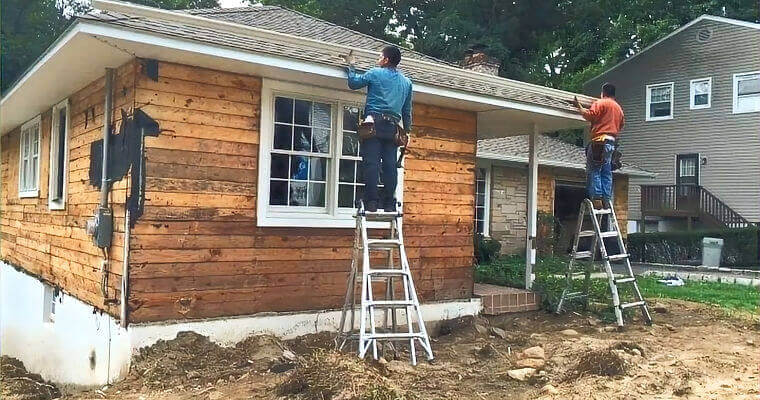
Salt air doesn’t stop at the roofline. Siding, gutters, and chimneys in Pelham face the same corrosive coastal exposure as roofing hardware, and a problem in one system frequently accelerates wear in another — corroded gutter hangers that pull free and saturate the siding below, or a deteriorating chimney crown that feeds water into flashing that’s already compromised. On Time Roofing handles all three alongside our core roofing work, giving Pelham homeowners one coordinated, coastal-aware assessment instead of separate vendors working from separate diagnoses.
We install and repair siding across Pelham’s historic and mid-century housing stock, with particular attention to the stucco, wood, and shingle-style siding common on the town’s Tudor and Colonial Revival homes. Coastal moisture and salt exposure accelerate rot and finish failure on original wood siding, and we assess siding condition in the context of the roofline and gutter system above it rather than treating it as an isolated repair.
Best for: Homeowners planning siding work alongside a roof replacement, storm-damaged siding sections requiring insurance-scoped repair, and Pelham Heights homes needing historic-appropriate siding repair or replacement.
We install seamless aluminum, copper, and coated-steel gutter systems and repair or replace gutters and downspouts showing the corrosion and premature failure common in Pelham’s coastal environment. Selecting the right gutter material for a property’s distance from the Sound meaningfully extends service life compared to defaulting to standard-grade aluminum.
Best for: Homes with corroded, sagging, or prematurely failing gutters, properties near the shoreline where material upgrade is worth the added cost, and historic homes pairing copper gutters with existing copper roof flashing for a consistent, long-lasting system.
Beyond flashing work handled as part of our roofing services, we address the masonry side of chimney care — repointing deteriorated mortar joints, rebuilding damaged crowns and caps, and applying masonry waterproofing suited to coastal moisture exposure. This work is especially relevant on Pelham Heights’ century-old chimneys, many of which have gone decades without masonry attention even where roofing nearby has been updated.
Best for: Chimneys with visible mortar deterioration, cracked or missing crowns, or efflorescence staining, and masonry chimneys addressed alongside a full roof replacement to avoid reopening finished work shortly after completion.
Every project at On Time Roofing of Pelham follows a clear, documented process from first contact through completion. Pelham's split village permitting structure and its compact, historic housing stock make process discipline especially important — here is exactly how it works.
Timeline: Same-day contact; inspection within 1–3 business days
You call, email, or submit online. We confirm your address, which village your property falls in, the nature of the problem, and schedule the inspection. For emergency situations, we prioritize same-day or next-day response. For properties within the Pelham Heights Historic District, we note this at intake to ensure the right expertise and design review process is assigned.
Customer expectations: No preparation needed. If you have prior repair documentation or permit history, having it available helps us understand the roof’s maintenance history.
Timeline: 45–90 minutes depending on property type and access complexity
Our inspector systematically examines all roof surfaces, every flashing point, gutters and hardware condition, chimney and penetration conditions, attic access where available, and any visible interior symptoms the homeowner has noted, with specific attention to corrosion on flashing, fasteners, and gutter hardware. Where siding, gutter, or chimney concerns are part of the visit, we assess those systems in the same appointment. On Pelham’s compact lots, we also evaluate access and staging requirements as part of the inspection.
Pelham considerations: We note which village’s permitting applies and flag any Pelham Heights Historic District design requirements affecting material or color choices.
Customer expectations: Written findings report with photographs within 24 hours of inspection.
Timeline: Estimate delivered within 24–48 hours of inspection
We provide a written, itemized estimate detailing material specifications — including any coastal-grade upgrades to standard hardware — labor, permit fees, disposal, and any deck or substrate work identified during inspection. For historic properties, we explain the specification rationale and any design review requirements in the estimate.
Village permit note: We confirm which building department — Village of Pelham or Village of Pelham Manor — governs your project, and include permit fees and estimated processing timeline in the estimate where applicable.
Timeline: Repairs: same-day or next-day. Residential replacements: 1–3 days. Commercial and complex historic projects: 2–5 days.
Installation begins with property protection — perimeter tarps, magnetic nail sweepers along the drip line, and staging planned around Pelham’s tight lot spacing and, where necessary, coordination with adjacent property access. On commercial and mixed-use buildings, we manage tenant access and coordinate with property managers. Deck findings during tear-off are communicated and discussed before any scope beyond the estimate proceeds.
New York weather consideration: We schedule around forecasted precipitation and don’t start tear-off we can’t fully protect before anticipated rain.
Timeline: Final walkthrough on completion day
Before the crew leaves, a supervisor inspects the full installation and confirms complete cleanup, including any shared walkways or driveways common on Pelham’s closely spaced lots. We conduct a walkthrough with the owner, provide written warranty documentation, and register manufacturer warranties on qualifying products.
Customer expectations: All debris removed same day. Permit inspection scheduling managed by us for qualifying projects.
On Time Roofing has spent more than a decade working specifically in Pelham’s roofing market — not as a regional contractor who occasionally takes coastal Westchester calls, but as a company that understands the specific combination of salt-air exposure, historic slate and copper flashing, and compact-lot construction that defines this town. That direct experience is what makes our inspection findings accurate, our material recommendations appropriate for coastal conditions, and our permit process knowledge reliable across both of Pelham’s villages.
Few roofing contractors regularly specify hardware for genuine coastal exposure, and fewer still combine that with experience on Pelham Heights’ historic slate and copper roofing. We know which materials hold up near the Sound and which ones will need premature replacement, and we know how to detail a Tudor Revival roof so that it satisfies both historic district expectations and modern weatherproofing performance. This is expertise built through years of working on specific Pelham properties, not general training.
Every project On Time Roofing completes is backed by our New York State Home Improvement Contractor license, general liability insurance, and workers’ compensation coverage. In a market with historic homes and tightly spaced lots where liability exposure runs higher than average, verified credentials matter. We provide certificate documentation before any project begins.

GAF has been producing shingles for over a century, leading the industry in quality, brand recognition, and innovative designs.

Owens Corning Offers Solutions for All Your Building and Remodeling Needs
On Time Roofing serves Pelham and the surrounding communities across a 20-mile service radius, bringing the same expertise in coastal exposure, historic housing stock, and New York regulatory requirements to every property we work on.
Our team proudly serves homeowners and businesses throughout the surrounding Westchester County region.
Standard asphalt shingle replacement on a typical Pelham colonial or Tudor-style home runs $12,000–$17,000. Complex historic roof replacement in Pelham Heights, including slate repair and copper flashing, runs $18,000–$27,000. Flat roof replacement on a rear addition or sunporch runs $6,000–$12,000. Commercial flat roof replacement along Wolfs Lane runs $20,000–$32,000 for a mid-size scope. The higher end of these ranges reflects coastal-grade material requirements and Pelham's compact-lot access considerations. Free inspection provides an accurate project-specific estimate.
Yes. Both the Village of Pelham and the Village of Pelham Manor require building permits for roof replacements and most structural roof repairs, each through its own building department. New York State also requires roofing contractors to hold a Home Improvement Contractor (HIC) license for residential work. Properties within the Pelham Heights Historic District require additional design review for exterior material changes. On Time Roofing confirms which village's process applies to your property and manages the full permit and review submission as part of every qualifying project.
Pelham's proximity to Long Island Sound means the air carries salt particles that accelerate corrosion of standard galvanized and aluminum hardware — flashing, fasteners, and gutters can show significant wear within 10–15 years here compared to a longer service life inland. This isn't a sign of poor original installation; it's a mismatch between standard-grade materials and a coastal environment. Upgrading to stainless steel, copper, or coated alternatives during any repair or replacement addresses the root cause rather than repeating the same premature failure.
This depends on the specific slate system's condition, the condition of the copper or lead flashing paired with it, and whether corrosion has affected the flashing independently of the slate itself. Well-maintained original slate with sound, uncorroded flashing is worth repairing — a quality slate system has decades of remaining service life. Slate that has become porous, or where copper flashing shows advanced corrosion throughout, warrants an honest assessment of whether continued repair spending still makes sense, particularly given the historic district's material requirements for any replacement work. Our inspection includes a specific recommendation on this question with documented evidence.
The key indicators are system age, the extent of current failure points, and whether corrosion has spread across multiple flashing points rather than remaining isolated. A 12-year-old roof with an isolated corroded flashing point is a repair candidate. A 30-year-old roof with corrosion-driven failures at multiple valleys, chimneys, and gutter runs is a system that has reached end-of-life and is better replaced than repaired indefinitely. Our free inspection specifically addresses this question with documented evidence rather than a blanket recommendation.
Pelham’s coastal exposure means roofing hardware can fail well before the roofing material itself shows obvious wear — a corroded flashing point or gutter hanger is often invisible from the ground until it fails outright. Whether you’ve noticed ceiling staining, corrosion streaking, missing slates, gutter problems, or your roof simply hasn’t been professionally inspected in years, we’re the right starting point.