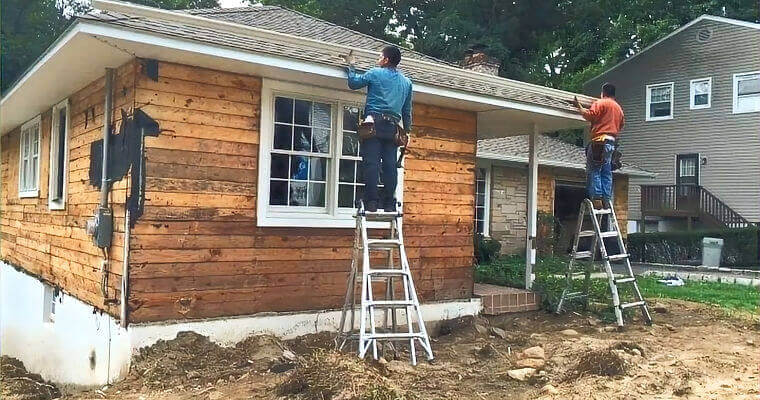
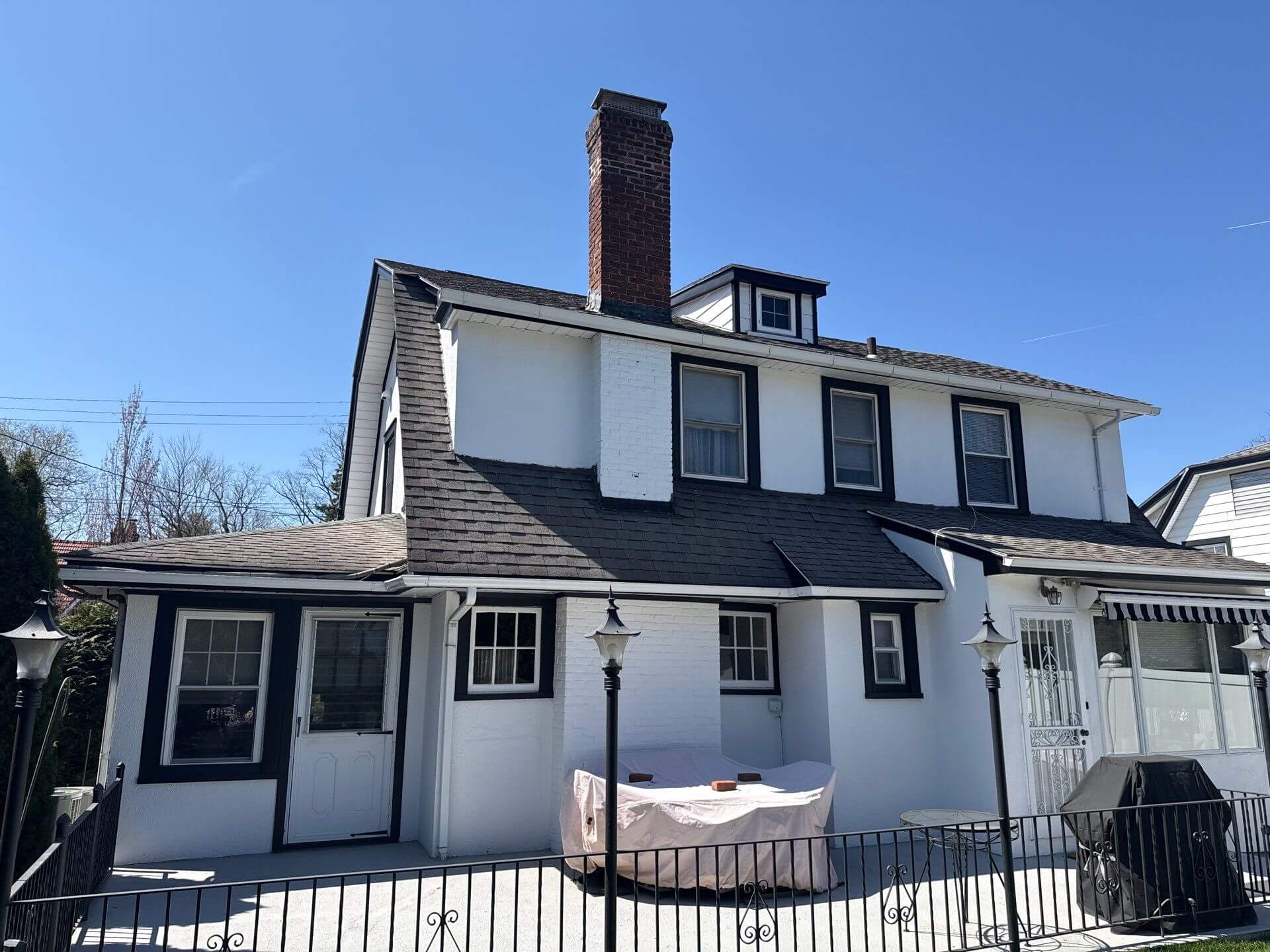
Eastchester presents a roofing challenge that has less to do with dramatic architecture and more to do with timing. Unlike neighboring communities built up in scattered waves over a century or more, most of Eastchester’s housing stock — the colonials, Cape Cods, and split-levels that fill the town’s residential streets — went up during a comparatively short post-war building boom, which means entire blocks and developments are now approaching roof replacement age at roughly the same time. Add a governance structure that few homeowners fully understand — the Village of Bronxville and the Village of Tuckahoe are each separately incorporated within the Town of Eastchester, while the rest of the town is governed directly — and even figuring out which building department to call can be its own small hurdle. On Time Roofing of Eastchester has spent more than ten years working through both of these realities, helping homeowners plan roof replacement before an entire street needs one at once and managing whichever permitting path actually applies to a given address.
We know the difference between the roof-height transitions that make split-level flashing more complicated than a standard colonial, and the dormer details that define a Cape Cod’s roofline. We know that Crestwood’s small, older pocket near the train station ages differently than the broader mid-century tract housing surrounding it, and we know exactly which building department to file with depending on whether a property sits in the Town of Eastchester proper, the Village of Bronxville, or the Village of Tuckahoe. Beyond the roof, we handle the siding, gutter, and chimney work that ages right alongside it on homes built in the same construction window. Serving Eastchester, Bronxville, Tuckahoe, and the broader central Westchester market, we bring the timing-aware, jurisdiction-aware approach this town actually requires.
Eastchester isn’t defined by one dramatic architectural style or a single historic district — it’s defined by consistency, and that consistency creates its own specific roofing considerations. The combination of a housing stock built largely within one generation, a small older pocket that doesn’t follow that pattern, and a permitting structure split across three separate governments creates planning challenges that a contractor unfamiliar with this specific town will consistently underestimate.
Eastchester’s terrain is comparatively even by Westchester standards — no dramatic elevation swings like the county’s hillier northern towns, no direct coastal exposure like the Long Island Sound communities to the east, just a fairly uniform inland suburban climate with the freeze-thaw cycling typical of central Westchester. What makes Eastchester’s roofing market distinctive isn’t the weather itself — it’s the housing calendar. Because so much of the town’s residential construction happened during a relatively short post-war building boom, homes built the same year on the same street tend to reach the end of their roofing service life at nearly the same time, which means Eastchester periodically sees waves of roofing demand concentrated by neighborhood and construction era rather than spread evenly across the town year to year.
The bulk of Eastchester’s housing — colonials, Cape Cods, and split-levels — was built during the mid-20th-century suburban expansion that filled out much of central Westchester after World War II, giving the town a more architecturally consistent character than many of its neighbors. Crestwood, the hamlet built up around its own Metro-North station, is the notable exception: this pocket developed earlier and more densely than the surrounding tract housing, giving it an older housing profile and a different set of roofing considerations than the broader town. Along the White Plains Road corridor, Eastchester’s commercial development took a different form entirely — larger retail plazas and freestanding commercial buildings rather than a traditional small-town Main Street, each requiring flat or low-slope roofing scaled to a bigger footprint than a typical mixed-use storefront.
Roofing permits in Eastchester depend entirely on which of three governments actually has jurisdiction over a given address. The Village of Bronxville and the Village of Tuckahoe are both separately incorporated municipalities that sit within the boundaries of the Town of Eastchester, each maintaining its own building department, permit process, and inspection scheduling. Properties outside both villages fall under the direct jurisdiction of the Town of Eastchester’s own building department. A homeowner’s mailing address alone doesn’t always make clear which government actually governs their roofing permit, and processing requirements can differ meaningfully between the three. Insurance claims for storm damage involve New York State insurance regulations regardless of which jurisdiction applies, and documentation requirements warrant contractor experience with New York-specific claims handling across all three.
After ten-plus years of roofing work across Eastchester, On Time Roofing has developed a clear picture of the failure patterns that appear most consistently in this town. Every problem below connects back to the town’s construction timeline, its housing types, or the specific pockets that don’t follow the broader pattern.
Because so much of Eastchester was built out in a concentrated post-war construction wave, entire streets and developments frequently share the same roof age — which means a homeowner who waits for visible failure before addressing an aging roof often finds several neighbors facing the identical decision within the same year or two. This creates predictable, if under-recognized, demand spikes by neighborhood rather than a steady, evenly distributed replacement pattern across the town.
Signs you’ll notice:
Eastchester-specific patterns: Entire sections of the town’s post-war tract developments show this synchronized aging pattern, particularly in areas built out during a single, concentrated development phase rather than infilled gradually over time.
Severity: Moderate, trending toward Serious as roofs approach or exceed 25 years without replacement. Proactive assessment before visible failure avoids the higher costs and higher risk of an emergency replacement.
Typical solution: Age-based inspection and remaining-service-life estimate well before visible failure occurs, allowing homeowners to plan replacement on their own timeline rather than reacting to an emergency alongside several neighbors at once.
Ice dams form when heat escaping through an inadequately insulated attic melts snow on the upper roof, which refreezes at the colder eave and builds into a barrier that forces meltwater back under the roofing material. Eastchester’s post-war colonials and Cape Cods were built to the insulation standards common across the entire town during that era, which means the underlying vulnerability to ice damming is broadly consistent from house to house rather than concentrated in one particular neighborhood or housing type.
Signs you’ll notice:
Eastchester-specific patterns: Because attic insulation levels are broadly similar across the town’s post-war housing stock, ice dam risk runs fairly evenly across Eastchester’s residential streets rather than clustering in a specific neighborhood, with Cape Cod dormer valleys showing a slightly higher rate of ice-related leaks than simple gable rooflines.
Severity: Serious. Active ice dams can introduce several gallons of water per day into ceiling and wall assemblies. Address current-season ice dams and schedule an attic ventilation and insulation assessment for the following season.
Typical solution: Emergency ice dam removal using steam, followed by ice-and-water shield installation at eaves during any subsequent repair or replacement, and attic ventilation and insulation correction.
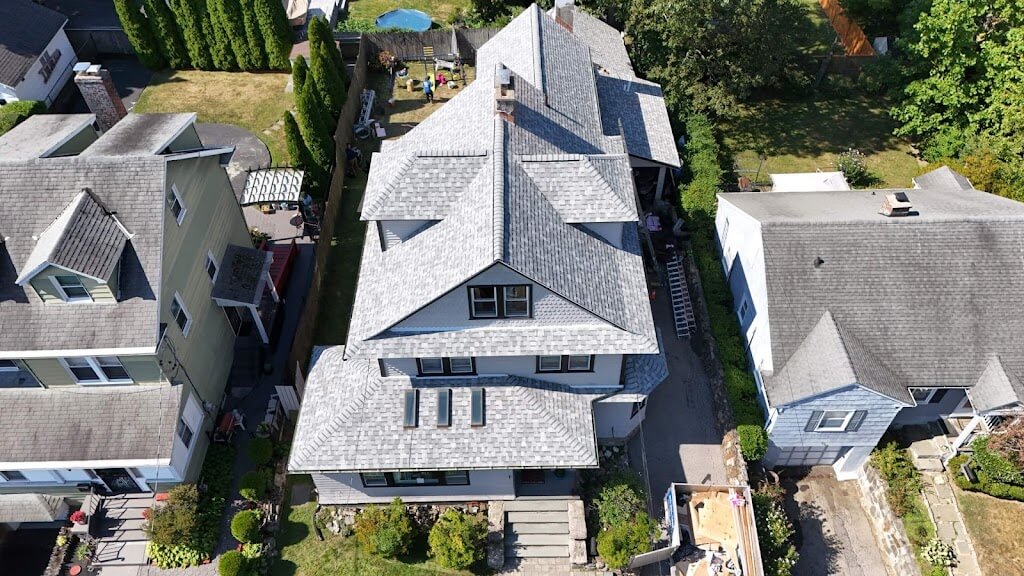
Split-level homes, common throughout Eastchester’s mid-century developments, have roof sections at different heights connected by short vertical wall transitions — each one a flashing detail that a simple single-story roofline never requires. Cape Cod homes bring their own complexity through dormer construction, where multiple small roof planes meet the main roofline at valleys prone to water concentration. Both home types require more flashing expertise per square foot of roof than a standard ranch or basic colonial.
Signs you’ll notice:
Eastchester-specific patterns: Split-level homes throughout the town’s mid-century developments show a higher rate of flashing-related leak calls at roof-height transitions than simple single-story rooflines, and Cape Cod dormer valleys are a comparably frequent source of leaks on that housing type.
Severity: Moderate to Serious. These leaks are often intermittent and easy to misdiagnose, since the interior staining doesn’t always appear directly below the actual failure point.
Typical solution: Flashing replacement at roof-height transition walls or dormer valleys using details appropriate to the specific roof geometry, rather than a generic flashing approach that doesn’t account for the added complexity these home styles introduce.
Eastchester’s commercial development along White Plains Road took the form of larger retail plazas and freestanding commercial buildings rather than a traditional small-town storefront district, and these properties rely on flat or low-slope roofing scaled to a bigger footprint than a typical mixed-use downtown building. Many of these roofs were installed decades ago and have received patch repairs over the years rather than full replacement.
Signs you’ll notice:
Eastchester-specific patterns: Larger retail plaza roofs along White Plains Road show wear concentrated around HVAC units serving multiple tenant spaces, and drainage design across a bigger roof surface becomes a more significant factor than on a smaller commercial building.
Severity: Serious to Emergency. Active membrane failures in occupied retail space represent both a property damage and tenant liability concern, magnified by the larger scale of these roof surfaces.
Typical solution: Full membrane assessment scaled to the building’s larger footprint, drain clearing and slope correction where standing water is present, targeted repair for isolated failures, or full tear-off and replacement for systems past useful service life.
Crestwood developed earlier and more densely than the broader post-war tract housing that fills most of Eastchester, giving this hamlet a distinct housing profile built around its own Metro-North train station. Homes here are generally older than the surrounding town’s typical housing stock, with some carrying original slate or early asphalt roofing that predates the mid-century construction found elsewhere in Eastchester.
Signs you’ll notice:
Crestwood-specific patterns: Homes closest to the Crestwood train station show the highest concentration of older roofing material, requiring a different evaluation approach than the standard mid-century inspection used across the rest of Eastchester.
Severity: Moderate to Serious, depending on material and age. Older Crestwood homes warrant assessment for whether original material remains repairable or has reached genuine end-of-life.
Typical solution: Material-specific assessment distinguishing Crestwood’s older housing stock from the town’s broader mid-century inventory, with repair or replacement recommendations calibrated to the property’s actual age and material rather than a generic mid-century assumption.
Eastchester sits along part of the Hutchinson River corridor, and properties near the river’s lower-lying sections can experience heavier stormwater runoff during intense rain events than homes on higher ground elsewhere in town. This isn’t coastal storm surge — it’s inland drainage overload, where gutters, downspouts, and grading sized for typical rainfall can be overwhelmed during the heavier, more concentrated storm events that have become more frequent in the Northeast.
Signs you’ll notice:
Eastchester-specific patterns: Properties nearer the Hutchinson River’s lower-lying sections show the highest incidence of drainage-related roof edge and gutter stress during major storm events compared to homes on higher ground elsewhere in town.
Severity: Moderate to Serious, with risk of both roof edge damage and foundation moisture issues on affected properties.
Typical solution: Gutter and downspout capacity assessment and upsizing where needed, roof edge and fascia repair where sustained overflow has caused damage, and drainage correction directing water further from the foundation on affected properties.
On Time Roofing of Eastchester provides the full spectrum of roofing services for a town defined by its post-war housing consistency, its Crestwood exception, and its White Plains Road commercial corridor. Every service accounts for the specific construction era and roofline geometry each Eastchester property presents.
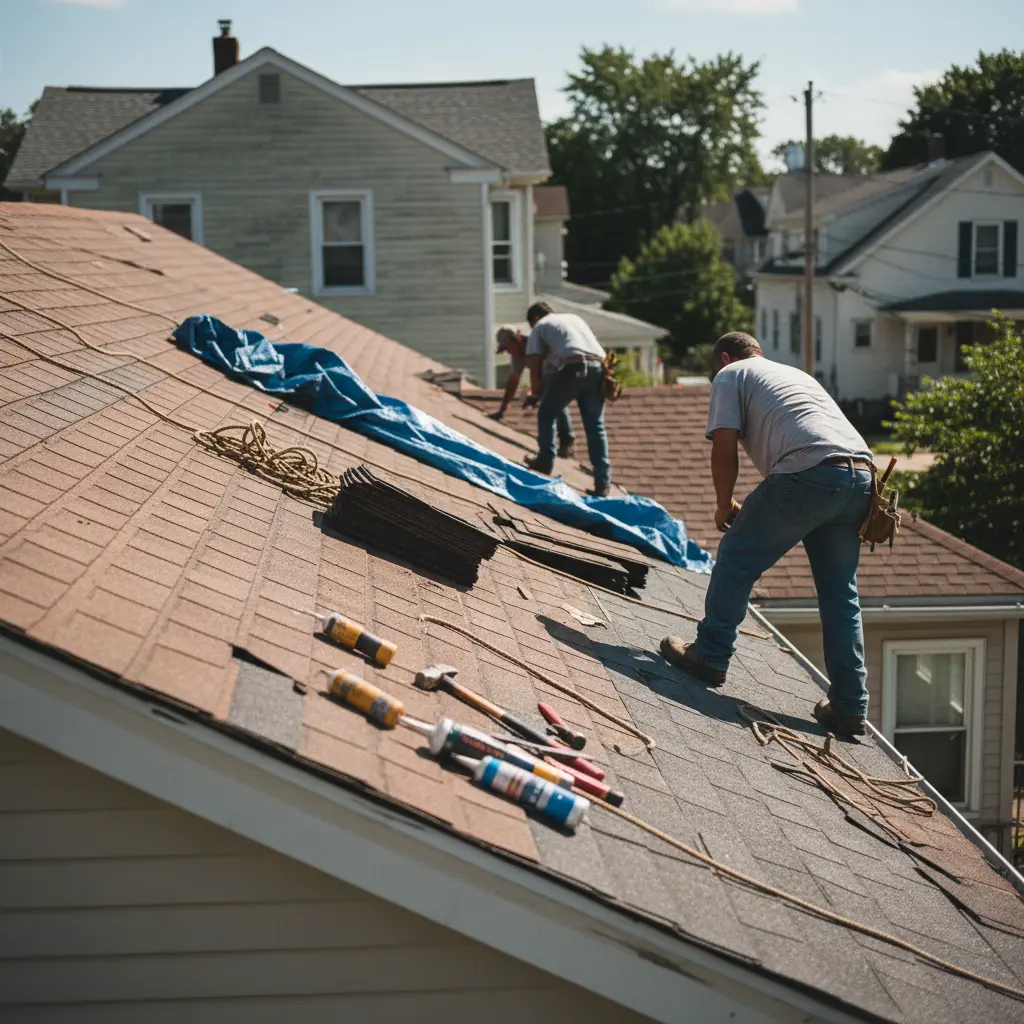
We provide emergency tarping, debris removal, and damage containment for active roof failures — storm damage, ice dam breaches, and any situation where a roof compromise is allowing immediate water entry. Emergency response is available throughout Eastchester and the surrounding 20-mile service radius.
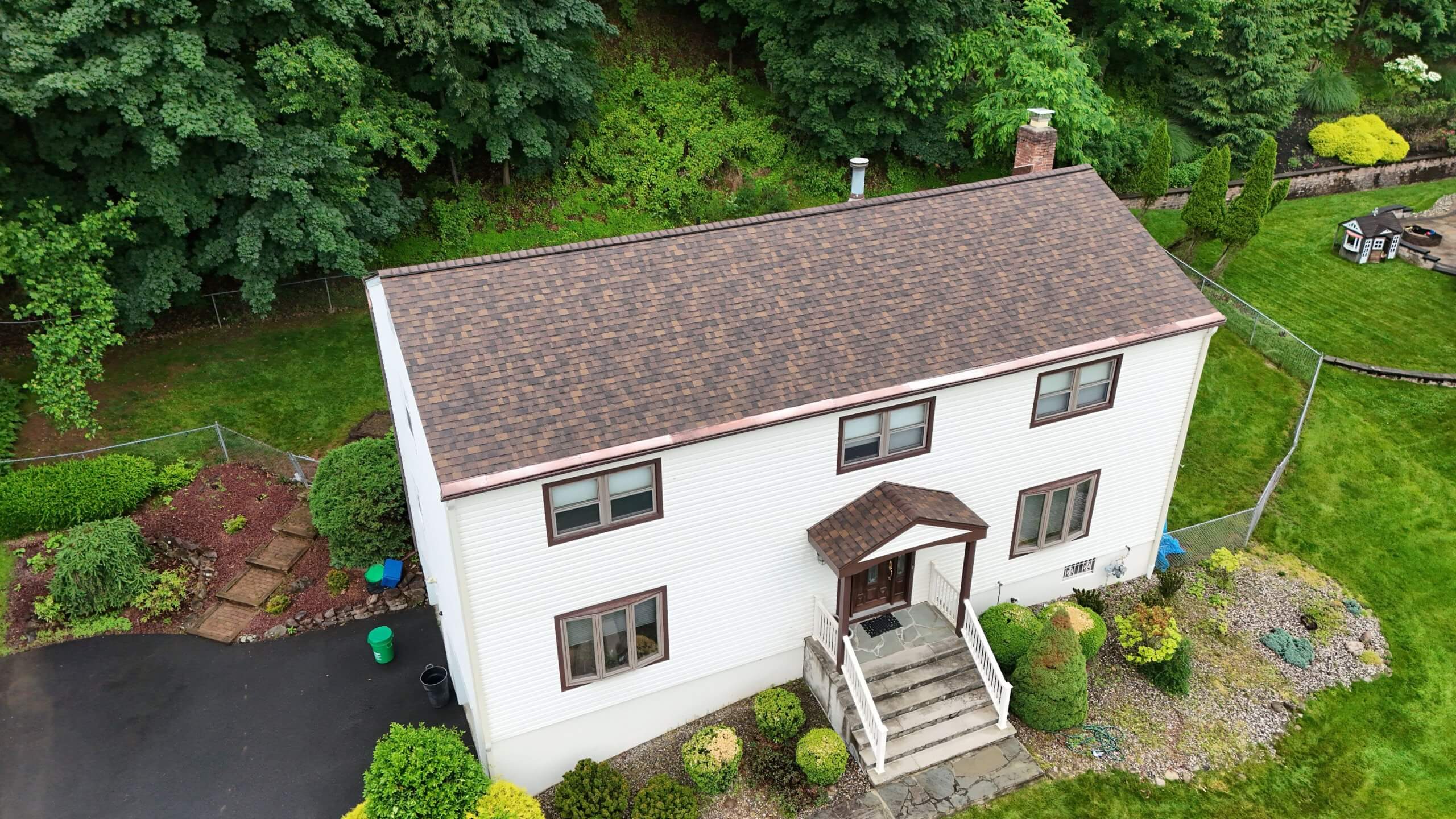
Full roof replacements from tear-off through finished installation — managing the correct jurisdiction’s building permit application, deck inspection and repair, underlayment appropriate for New York State’s climate requirements, and complete new shingle or membrane installation.
Targeted repairs addressing specific failure points — flashing rebuilding at split-level transitions or dormer valleys, chimney flashing repair, and isolated storm damage — without requiring full system replacement where the surrounding system remains sound.
Full residential and commercial roof inspections — all surfaces, flashings, chimneys, gutters, ventilation, and attic conditions — with written findings, condition photographs, and remaining service life estimate, with specific attention to where a property sits within Eastchester’s broader construction timeline.
Scheduled maintenance services — debris clearing, gutter cleaning, flashing inspection and re-sealing, minor repair of developing issues, and condition reporting — designed to extend roof service life and help homeowners plan ahead of Eastchester’s synchronized neighborhood aging pattern.
Installation, repair, and maintenance of commercial flat and low-slope roofing systems — TPO, EPDM, and modified bitumen — scaled to the larger retail plazas and freestanding commercial buildings that define Eastchester’s White Plains Road corridor.
Every project at On Time Roofing of Eastchester follows a clear, documented process from first contact through completion. Sorting out the correct jurisdiction and accounting for a home's specific construction era make process discipline especially important — here is exactly how it works.
Timeline: Same-day contact; inspection within 1–3 business days
You call, email, or submit online. We confirm your address, which jurisdiction applies — the Town of Eastchester, the Village of Bronxville, or the Village of Tuckahoe — and the nature of the problem, then schedule the inspection. For emergency situations, we prioritize same-day or next-day response.
Customer expectations: No preparation needed. If you have prior repair documentation or a sense of your home’s original construction date, having it available helps us plan the project efficiently.
Timeline: 45–90 minutes depending on property type and roof complexity
Our inspector systematically examines all roof surfaces, every flashing point, gutters and drainage, chimney and penetration conditions, attic access where available, and any visible interior symptoms reported, with specific attention to roof-height transitions on split-levels and dormer valleys on Cape Cod homes. We also assess where a property’s roof age sits relative to typical service life for its construction era.
Eastchester considerations: We confirm which jurisdiction’s building department applies to the property and flag whether Crestwood’s older housing profile changes the evaluation approach.
Customer expectations: Written findings report with photographs within 24 hours of inspection.
Timeline: Estimate delivered within 24–48 hours of inspection
We provide a written, itemized estimate detailing material specifications, labor, permit fees, disposal, and any deck or substrate work identified during inspection, informed by the home’s actual construction era and roofline type.
Permit note: We confirm whether the project requires a Town of Eastchester, Village of Bronxville, or Village of Tuckahoe building permit and include applicable fees and estimated processing timeline in the estimate.
Timeline: Repairs: same-day or next-day. Residential replacements: 1–3 days. Commercial and larger multi-property projects: 2–5 days.
Installation begins with property protection — perimeter tarps, magnetic nail sweepers along the drip line, and staging appropriate to the property. On commercial and larger properties, we coordinate tenant access with property managers. Deck findings during tear-off are communicated and discussed before any scope beyond the estimate proceeds.
New York weather consideration: We schedule around forecasted precipitation and don’t start tear-off we can’t fully protect before anticipated rain.
Timeline: Final walkthrough on completion day
Before the crew leaves, a supervisor inspects the full installation and confirms complete cleanup. We conduct a walkthrough with the owner, provide written warranty documentation, and register manufacturer warranties on qualifying products.
Customer expectations: All debris removed same day. Permit inspection scheduling managed by us for qualifying projects.
Roofing, siding, gutters, and chimneys on Eastchester’s post-war homes were largely installed within the same construction era, which means they tend to show age-related wear on a similar timeline as well. A gutter system sized for 1960s rainfall expectations may already be undersized for today’s heavier storm events, and a chimney that’s never had masonry attention can be quietly feeding water into flashing that looks fine from the ground. On Time Roofing handles siding, gutters, and chimney work alongside our core roofing services, giving Eastchester homeowners one coordinated assessment instead of separate vendors working from separate diagnoses.
We install and repair vinyl, fiber cement, and wood siding across Eastchester’s residential housing stock, matched to the specific profile of colonial, Cape Cod, and split-level construction common throughout the town. Since much of this siding was installed alongside the original roof during the same post-war construction wave, it often shows comparable age-related wear, making combined roofing and siding projects a common and practical pairing.
Best for: Homeowners planning siding work alongside a roof replacement given the shared age of both systems, storm-damaged siding sections requiring insurance-scoped repair, and split-level homes needing siding work at roof-height transition walls.
We install seamless aluminum gutter systems and repair or replace gutters and downspouts, with particular attention to capacity on properties near the Hutchinson River corridor’s lower-lying sections where heavier rainfall events can overwhelm original, decades-old gutter sizing.
Best for: Homes with gutters original to construction and now undersized for current rainfall patterns, properties near low-lying areas experiencing drainage overload, and homeowners addressing ice dam risk where gutter capacity is a contributing factor.
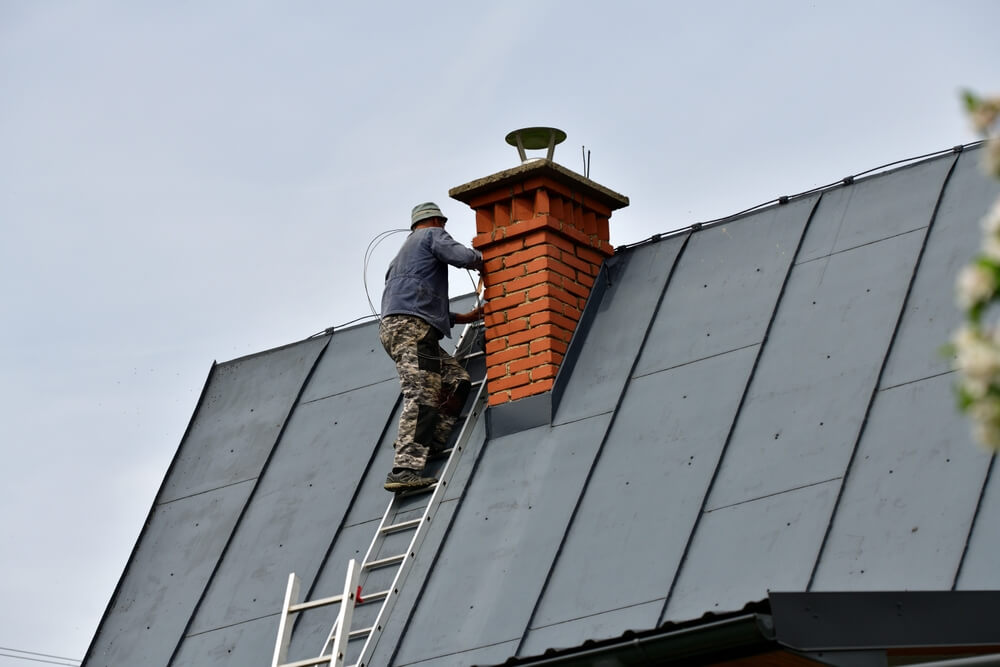
Beyond flashing work handled as part of our roofing services, we address the masonry side of chimney care — repointing deteriorated mortar joints, rebuilding damaged crowns and caps, and applying masonry waterproofing on the fireplace and furnace chimneys standard on Eastchester’s post-war colonials, capes, and split-levels.
Best for: Chimneys with visible mortar deterioration, cracked or missing crowns, or efflorescence staining, and chimneys being addressed alongside a full roof replacement to avoid reopening finished work shortly after completion.
On Time Roofing has spent more than a decade working specifically in Eastchester’s roofing market — not as a regional contractor who occasionally takes town calls, but as a company that understands why so many of Eastchester’s roofs are approaching replacement age around the same time, and helps homeowners get ahead of that pattern rather than react to it during an emergency.
Eastchester’s housing stock looks consistent from a distance, but colonial, Cape Cod, and split-level rooflines each require different flashing expertise — dormer valleys, roof-height transitions, and standard eave conditions all fail differently and need different repair approaches. We have direct experience with all three, built through years of working on Eastchester properties specifically.
Every project On Time Roofing completes is backed by our New York State Home Improvement Contractor license, general liability insurance, and workers’ compensation coverage. We provide certificate documentation before any project begins, whatever jurisdiction applies to your address.

GAF has been producing shingles for over a century, leading the industry in quality, brand recognition, and innovative designs.

Owens Corning Offers Solutions for All Your Building and Remodeling Needs
On Time Roofing serves Eastchester and the surrounding communities across a 20-mile service radius, bringing the same expertise in mid-century housing stock, New York climate conditions, and multi-jurisdiction permitting to every property we work on.
Standard asphalt shingle replacement on a typical Eastchester colonial or cape runs $10,500–$15,000. Split-level roofs with multiple roof-height transitions run $13,000–$19,000 given the added flashing detail required. Older Crestwood homes with slate or early material can run $15,000–$23,000 depending on condition. Commercial flat roof replacement on a White Plains Road retail plaza runs $28,000–$45,000 for a mid-size scope. Free inspection provides an accurate project-specific estimate.
Yes, a permit is required, and which building department you file with depends on your specific address. If your property is in the Village of Bronxville or the Village of Tuckahoe, each village handles its own permitting through its own building department. If your property falls outside both villages, the Town of Eastchester's building department has jurisdiction directly. New York State also requires roofing contractors to hold a Home Improvement Contractor (HIC) license for residential work. On Time Roofing confirms the correct jurisdiction for your address and manages the full permit process as part of every qualifying project.
Not necessarily. Because so much of Eastchester's housing was built in a concentrated post-war construction period, many homes reach a similar roof age around the same time, and waiting until visible failure often means competing for scheduling with several neighbors making the same decision during the same storm season. A roof approaching 20-25 years, even without visible problems, is a reasonable point to get a professional assessment of remaining service life so you can plan replacement on your own timeline rather than in reaction to an emergency.
Split-level homes have roof sections at different heights connected by vertical wall transitions, and each one is a flashing detail more complex than a standard single-story roofline. If a repair addressed the visible symptom without correcting the underlying flashing detail at that transition, the same leak can recur. A repair specifically scoped to the transition's flashing geometry, rather than a generic patch, is usually what resolves this permanently.
The key indicators are system age relative to typical post-war construction service life, the extent of current failure points, and whether those failures are isolated or systemic. A 10-year-old roof with an isolated storm-damaged section is a repair candidate. A 28-year-old roof approaching the end of its expected service life, especially one showing early signs of wear consistent with others on the same street, is a better replacement candidate than an indefinite repair strategy. Our free inspection specifically addresses this question with documented evidence rather than a blanket recommendation.
Eastchester’s roofs age on a fairly predictable timeline, which means the best time to get ahead of a problem is often before it’s visible — not after several neighbors have already called about the same issue. Whether you’ve noticed ceiling staining, ice dam damage, a recurring leak at a split-level transition, or your roof simply hasn’t been professionally inspected in years, we’re the right starting point.