A boatyard’s clear-span roof fails for reasons that have nothing to do with what goes wrong on a bungalow two streets from the water, and a home on the Mamaroneck River that’s dealt with real flood events needs a different kind of attention than one simply exposed to salt air. We’ve built our material choices and our inspection process around that range rather than assuming one approach covers it. Alongside roofing, we handle the siding, gutter, and chimney work that comes with harbor humidity, storm exposure, and older coastal construction alike. Serving Mamaroneck, Larchmont, New Rochelle, and the surrounding Sound-front and central Westchester communities, we bring a level of local specificity that’s hard to find in a contractor covering a wider, less coastal territory.
Two forces do most of the work shaping Mamaroneck’s roofing needs, and they pull in almost opposite directions. One is the harbor — the wind, salt, and humidity that come with a working waterfront. The other is the river — the flood exposure that has made parts of Mamaroneck a genuine case study in what heavy Northeast storms can do to a low-lying property. A contractor who only understands one of these misses half the town.

Mamaroneck's position on Long Island Sound gives it the salt-air exposure common to shoreline Westchester towns, and the Orienta peninsula takes that further than most — a piece of land with water on three sides experiences a different wind and salt load than a property simply located near a shoreline. What sets Mamaroneck apart from other coastal towns in the county is the second body of water running through it: the Mamaroneck River, which drains a substantial watershed and has produced real, damaging flood events during major storms, including widely reported flooding during Hurricane Ida in 2021. That combination — coastal exposure on one side of town, river flood risk on the other — means roofing and drainage planning here has to account for two entirely different water sources rather than one.

The terrain around Mamaroneck Harbor is low and flat, dominated by marinas, boatyards, and waterfront homes on Orienta and along the shore. Move inland toward Hommocks and the streets further from the water, and the elevation picks up noticeably, changing both the drainage profile and the general wear pattern on residential roofs. Older cottages and bungalows sit closer to downtown and the harbor, built in an earlier, more modest wave of construction than some of the town's grander waterfront estates, while the inland streets carry a broader mix of mid-century and later single-family construction. Downtown, Mamaroneck Avenue anchors a commercial district that includes some of the county's better-known restaurants, layered above and beside older mixed-use buildings.

Roofing and exterior work in Mamaroneck runs into more regulatory layers than a typical inland town. Properties in FEMA-designated flood zones near the river or the harbor may fall under flood damage prevention requirements that affect construction methods and elevation considerations, on top of standard building permitting. The Village of Mamaroneck and the Village of Larchmont are each separately incorporated within the Town of Mamaroneck, so which building department has jurisdiction over a given address depends on exactly where the property sits. Insurance claims tied to flood or storm damage in Mamaroneck are also more likely than average to involve flood insurance specifically, in addition to standard homeowners' coverage, and documentation for both needs to hold up to New York State's requirements.
The problems we see most often in Mamaroneck trace back to one of two things: the harbor’s wind, salt, and humidity, or the river’s flood history. A few come from the town’s older housing stock simply aging the way older housing everywhere does.
Properties near the Mamaroneck River have experienced real flood events during major storms, and while flooding itself is a foundation and ground-floor concern more than a roofing one, the storms that cause it also deliver the wind and rain that stress roofing systems at the same time. A property recovering from flood damage often needs its roof and drainage assessed alongside everything else, since a compromised roof adds to water intrusion during the exact storms that already threaten flooding from below.
Signs you’ll notice:
Mamaroneck-specific patterns: Homes closest to the river corridor, particularly those that experienced flooding during past major storm events, benefit from a combined roof and drainage assessment rather than treating flood recovery and roof condition as separate issues.
Severity: Serious to Emergency, given that the storms capable of causing river flooding are typically severe enough to cause roof damage as well.
Typical solution: Post-storm roof and drainage assessment paired with any flood-related repair work, gutter and downspout capacity review suited to the property’s flood-zone status, and roof-edge repair where storm wind or debris has caused separate damage.
The Orienta peninsula sits with water on three sides, which means homes here take wind and salt exposure from nearly every direction rather than the single shoreline-facing exposure that’s typical even in other coastal Westchester towns. Standard roofing hardware — fasteners, flashing, gutter brackets — corrodes faster here than almost anywhere else in the county, and wind loading during coastal storms hits from more angles than a single-shoreline property experiences.
Signs you’ll notice:
Mamaroneck-specific patterns: Orienta properties show corrosion and wind-related wear rates that outpace even other Sound-front homes in the broader area, simply due to the peninsula’s three-sided water exposure.
Severity: Moderate to Serious, with corrosion often invisible until a fastener or flashing point fails outright.
Typical solution: Corrosion-resistant flashing and fastener specification — stainless steel or copper rather than standard-grade materials — combined with wind-rated installation methods that account for exposure from multiple directions rather than a single prevailing wind pattern.
The commercial buildings clustered around Mamaroneck Harbor — boat storage facilities, sail lofts, marina clubhouses, and yacht club structures — carry roofing systems built for wide, open interior spans rather than the smaller flat roofs typical of retail or office construction. These larger clear-span roofs face their own combination of stresses: the same coastal wind and salt exposure as nearby waterfront homes, plus the drainage demands of a much larger single roof surface.
Signs you’ll notice:
Mamaroneck-specific patterns: Boatyard and marina buildings directly on the harbor show the most direct combination of coastal exposure and large-span drainage challenges, distinct from the smaller commercial roofs found away from the water.
Severity: Serious, particularly where stored equipment or boats represent significant value at risk from water intrusion.
Typical solution: Membrane and drainage assessment scaled to the building’s larger roof surface, corrosion-resistant hardware suited to direct harbor exposure, and repair or replacement planned around the marina’s operating season where possible.
Move away from the harbor toward Hommocks and the town’s other inland streets, and the terrain’s added elevation changes how water behaves on and around a roof. Runoff moves faster on a sloped lot than on flat harbor-adjacent land, which can overwhelm gutters and downspouts sized for a gentler grade, and roof-edge erosion becomes a more relevant concern than it is on the flatter parts of town.
Signs you’ll notice:
Mamaroneck-specific patterns: Homes on Mamaroneck’s hillier inland streets, away from the harbor’s flat terrain, show drainage-related wear patterns that flatter, water-adjacent properties in town simply don’t experience to the same degree.
Severity: Moderate, with risk of both fascia damage and foundation moisture on the most sloped properties.
Typical solution: Gutter and downspout capacity review suited to the specific slope, roof-edge repair where runoff has caused fascia damage, and drainage correction that accounts for water moving downhill from or across neighboring properties.
Closer to downtown and the harbor, Mamaroneck carries a stock of older, more modest cottages and bungalows built in an earlier wave than the town’s grander waterfront estates — smaller homes with simpler rooflines but roofing material and flashing that’s frequently reached, or passed, the end of its practical service life.
Signs you’ll notice:
Mamaroneck-specific patterns: The town’s older cottage and bungalow stock near downtown and the harbor shows a higher rate of original, unreplaced roofing material than the newer construction found further from the water.
Severity: Moderate to Serious, depending on how much of the original material remains sound.
Typical solution: Material-specific assessment to determine whether repair still makes sense or whether the roof has reached genuine end-of-life, with replacement specifications suited to the modest scale and simpler geometry these homes typically have.
Humidity from a working harbor behaves differently than the general coastal moisture found further from an active waterfront — Mamaroneck Harbor’s combination of boat traffic, tidal exposure, and dense waterfront development keeps ambient humidity elevated on nearby properties for more of the year than inland Westchester experiences. Attics and roof assemblies with inadequate ventilation trap that moisture, leading to condensation-driven problems that look different from a simple leak.
Signs you’ll notice:
Mamaroneck-specific patterns: Homes closest to the harbor show this condensation-driven pattern more often than properties even a short distance inland, simply due to the elevated ambient humidity near active waterfront development.
Severity: Moderate, but capable of causing significant hidden damage to decking and framing over time if ventilation isn’t corrected.
Typical solution: Attic ventilation assessment and correction — additional intake or exhaust ventilation appropriate to the home’s specific construction — rather than treating the symptom as a roofing leak when the actual cause is trapped moisture.
Because Mamaroneck’s roofing needs split so clearly between harbor-facing and inland conditions, we scope our services with that split in mind rather than offering one standard residential package.
Storms serious enough to raise the Mamaroneck River also tend to be serious enough to damage roofs, and we treat the two as connected rather than handling them separately. Emergency tarping, debris removal, and documentation are available throughout Mamaroneck and the surrounding 20-mile service radius.
We prioritize river-adjacent and harbor-front properties during major storm events, since these are the locations most likely to need both flood-related and roof-related emergency response at the same time. We photograph everything for insurance purposes, covering both standard homeowners’ claims and, where applicable, flood insurance documentation.
A roof replacement on Orienta needs corrosion-resistant hardware and multi-directional wind resistance; a replacement on a hillside inland street needs drainage planning suited to the slope; a replacement on an older downtown cottage needs an honest assessment of whether the existing simple roofline still makes sense with a modern material upgrade. We specify each differently rather than defaulting to one standard package.
We manage the applicable building permit — whether that’s the Town of Mamaroneck, the Village of Mamaroneck, or the Village of Larchmont — and handle flood zone considerations directly where a property requires them.
Isolated damage gets an isolated repair — but the right repair on a harbor-adjacent property often looks different from the right repair on an inland one, even when the visible symptom is similar. We diagnose the actual cause, whether that’s corrosion, wind, drainage, or simple material age, before recommending a fix.
An inspection near Mamaroneck Harbor accounts for salt exposure and humidity-driven ventilation issues; an inspection on an inland hillside street accounts for drainage and runoff; an inspection on a river-adjacent property accounts for flood history. We adjust the checklist to the property rather than running the same generic evaluation everywhere.
Given Mamaroneck’s combination of coastal corrosion risk and flood-adjacent storm exposure, a maintenance relationship that checks flashing and hardware condition before storm season, rather than after a problem appears, holds up better here than a generic annual visit.
Boatyards, sail lofts, marina clubhouses, and downtown mixed-use buildings each need a different commercial roofing approach — wide clear-span membrane systems for marine buildings, standard flat-roof commercial work for Mamaroneck Avenue’s storefronts. We handle both, along with the applicable jurisdiction’s permit process.
Harbor humidity and flood-adjacent storms affect siding, gutters, and chimneys just as directly as they affect roofing, and a property recovering from any one of these often needs attention to more than one system at once. We handle siding, gutters, and chimney work alongside our core roofing services so Mamaroneck property owners aren’t managing separate contractors with separate, sometimes conflicting, assessments.
We install and repair vinyl, fiber cement, and wood siding across Mamaroneck’s waterfront, downtown, and inland properties, adjusting material recommendations based on a property’s specific exposure — corrosion-resistant fasteners and moisture-appropriate materials near the harbor, standard specifications further inland.
Best for: Waterfront homeowners needing coastal-grade siding materials, older cottage owners addressing wood siding rot, and any property pairing siding work with a roof replacement.
We install seamless aluminum, copper, and coated-steel gutter systems sized for Mamaroneck’s actual storm patterns rather than outdated average-rainfall assumptions, with particular attention to river-adjacent and hillside properties where storm-driven runoff regularly exceeds what older gutter systems were designed to handle.
Best for: River-adjacent homes needing upsized capacity ahead of storm season, hillside properties experiencing runoff-driven overflow, and waterfront homes needing corrosion-resistant hardware.
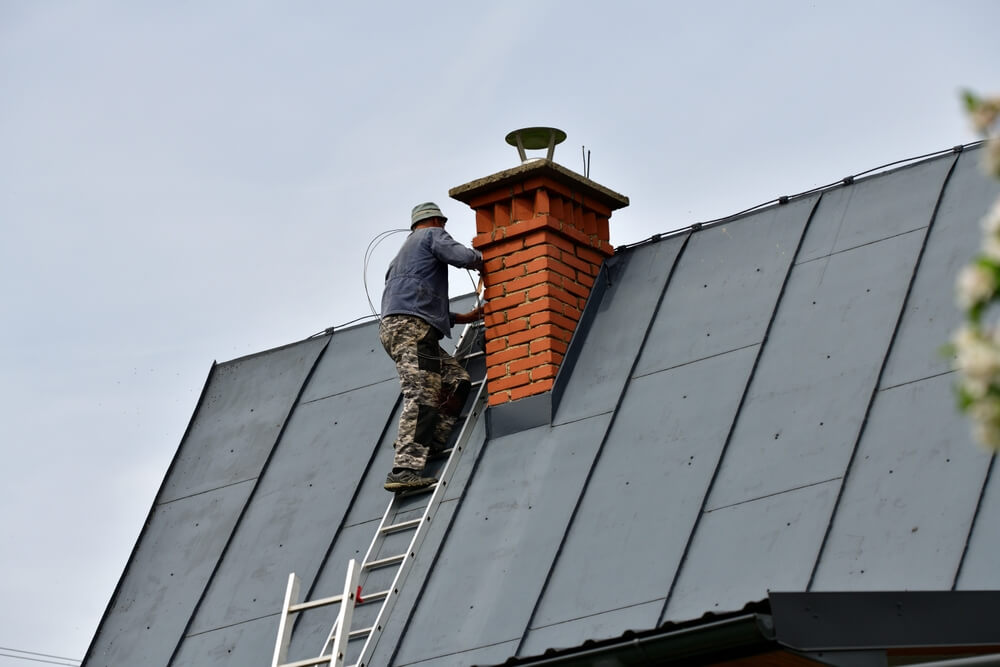
Beyond flashing work handled under our roofing services, we address chimney masonry directly — repointing, crown and cap rebuilding, and waterproofing — accounting for the accelerated wear coastal humidity causes on harbor-adjacent chimneys compared to inland properties.
Best for: Chimneys with visible mortar deterioration or efflorescence staining, waterfront chimneys showing faster-than-expected wear, and chimney work bundled with a full roof replacement.
Here's how a project actually moves forward, adjusted for whether your property sits near the harbor, along the river, or up on Mamaroneck's inland streets.
Timeline: Same-day contact; inspection within 1–3 business days
We start with your address and a sense of your property’s specific location — harbor-adjacent, river-adjacent, or inland — along with the nature of the problem. Emergency and storm-related calls get same-day or next-day priority.
Customer expectations: Nothing to prepare in advance, though flood insurance documentation or prior repair records help if the property has a storm or flood history.
Timeline: 45–90 minutes depending on property type and location
We inspect all roof surfaces, flashings, gutters, chimneys, and attic conditions, adjusting our focus based on location — corrosion and ventilation on waterfront properties, drainage and slope on hillside streets, flood-adjacent roof and gutter stress on river-adjacent homes.
Mamaroneck considerations: We confirm which jurisdiction — Town of Mamaroneck, Village of Mamaroneck, or Village of Larchmont — applies to your address, and flag any flood zone requirements relevant to the property.
Customer expectations: Written findings with photographs within 24 hours.
Timeline: Estimate delivered within 24–48 hours of inspection
Our itemized estimate reflects the specific material and design choices your property’s location calls for — coastal-grade hardware, drainage upsizing, or standard specification — rather than a one-size approach.
Permit note: We confirm the correct building department and any flood zone requirements, including applicable fees and processing time.
Timeline: Repairs: same-day or next-day. Residential replacements: 1–3 days. Commercial and marina projects: 2–7 days depending on scale.
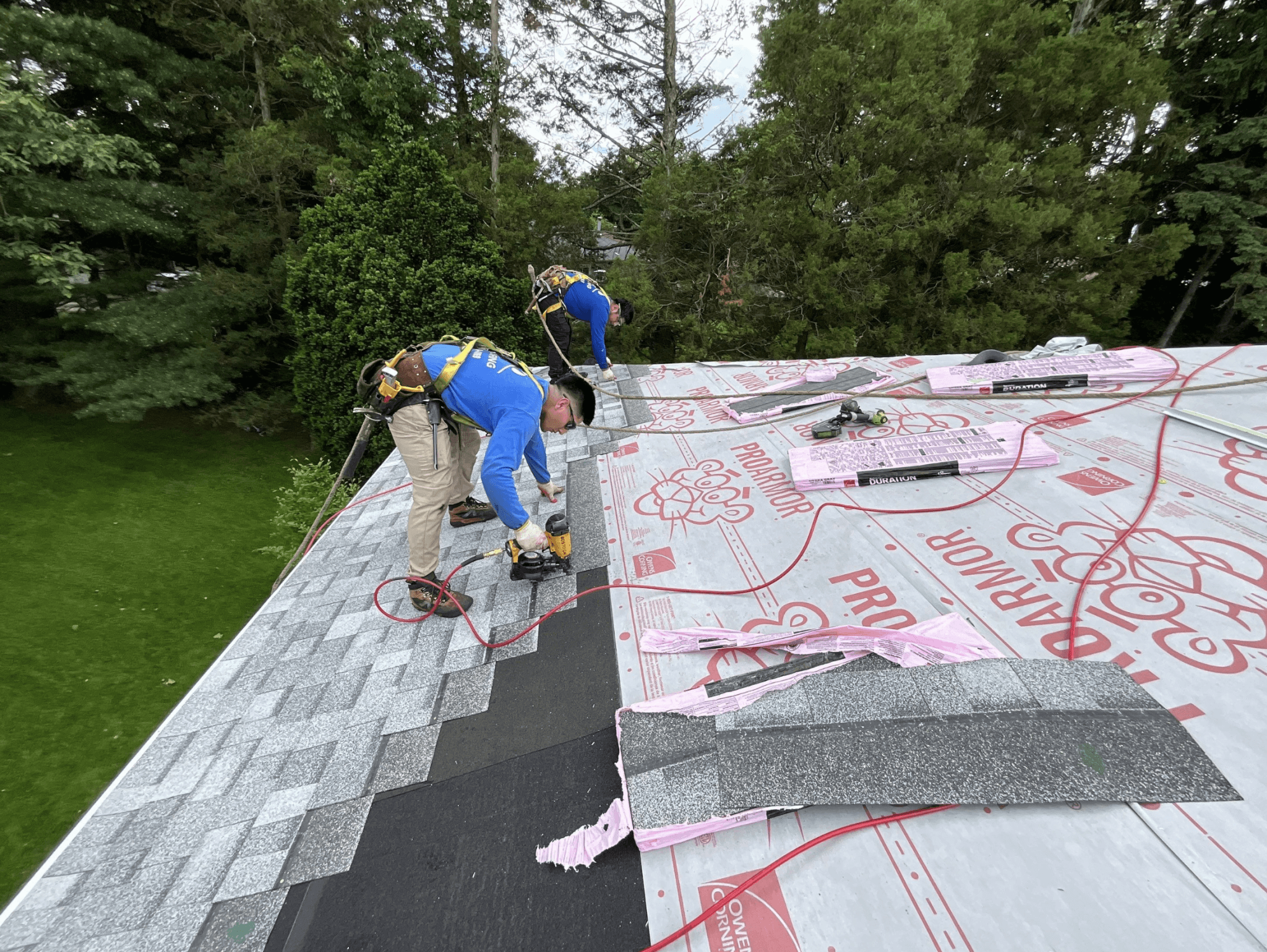
We stage material with an eye toward the property’s specific access conditions, coordinate with marina or boatyard operations where relevant, and schedule around forecasted storms rather than starting work we can’t fully protect.
New York weather consideration: On waterfront and river-adjacent properties, we pay particularly close attention to storm forecasting given the added flood and wind risk these locations carry.
Timeline: Final walkthrough on completion day
A supervisor confirms the completed work and full cleanup, then walks the property with you and provides written warranty documentation, including any flood-zone-relevant construction documentation where applicable.
Customer expectations: All debris cleared same day. Permit inspection scheduling handled by us where applicable.
More than ten years in Mamaroneck means we’ve handled the boatyards, the Orienta estates, the older downtown cottages, and the inland hillside homes enough times to know that none of them should get the same generic treatment. We plan around each property’s actual location rather than a townwide average.
Mamaroneck’s flood history means we think about storm response differently than a contractor working in a town without serious river flood exposure. Roof and drainage assessment happens alongside flood recovery, not as an afterthought once the water recedes.
Our New York State Home Improvement Contractor license, general liability insurance, and workers’ compensation coverage apply across residential, waterfront, and commercial marina work. We provide documentation before any project begins.

GAF has been producing shingles for over a century, leading the industry in quality, brand recognition, and innovative designs.

Owens Corning Offers Solutions for All Your Building and Remodeling Needs
Mamaroneck is our home base for this part of the county, and we cover a 20-mile radius from it into the surrounding coastal and inland communities.
Possibly, in addition to standard roofing permits. Properties within FEMA-designated flood zones near the river or harbor may face flood damage prevention requirements affecting construction methods, on top of whichever building department has jurisdiction — the Town of Mamaroneck, the Village of Mamaroneck, or the Village of Larchmont, depending on your exact address. We confirm both the correct jurisdiction and any flood zone requirements as part of every qualifying project.
Yes, meaningfully. Water on three sides means more wind exposure from more directions and faster corrosion on standard-grade flashing and fasteners than even other Sound-front properties experience. We specify corrosion-resistant hardware — stainless steel or copper — and wind-rated installation methods for Orienta properties as a matter of course, rather than defaulting to standard suburban specifications.
Yes. The storms severe enough to cause river flooding in Mamaroneck are typically severe enough to stress roofing systems at the same time, even if the roof damage is less immediately obvious than water in the basement. A combined assessment after a major storm event catches problems that might otherwise go unnoticed until the next storm makes them worse.
It depends on your property's specific exposure as much as age. A waterfront roof with isolated corrosion at one flashing point is a repair candidate. One with corrosion or wind damage spread across multiple areas, especially on a highly exposed property like Orienta, is more likely a replacement candidate. Inland and downtown properties follow more standard age-and-condition logic. Our inspection gives you a specific answer based on what we actually find on your property.
Yes, across all of Mamaroneck's conditions — coastal-grade siding and gutters for waterfront properties, drainage-focused gutter work for hillside homes, and chimney repair suited to whichever type of exposure your property faces. Handling all of it together tends to catch issues a roofing-only inspection would miss, particularly on properties where humidity or corrosion affects more than one exterior system at once.
Whether your property sits on the harbor, along the river, or up on one of Mamaroneck’s inland streets, the risks are different enough that a generic inspection checklist won’t catch everything. We build our assessment around where your property actually is.