On Time Roofing of Pleasantville handles roof repair, replacement, and inspection for the village’s homes, the flat-roof buildings on Pace University’s Pleasantville campus, and the small storefronts near Wheeler Avenue and the Jacob Burns Film Center — plus the siding, gutter, and chimney work that tends to need attention at the same time. Every project starts with a free, no-pressure inspection and a written, itemized estimate before anything begins, and we manage the Village of Pleasantville’s permit process ourselves so it’s one less thing on your plate. We’re New York State licensed, fully insured, and back every job with a written workmanship warranty — whether it’s a single shingle repair or a full institutional reroof.
Pleasantville’s roofing market doesn’t revolve around one dominant housing style or a single dramatic weather pattern. It revolves around three things sitting close together in a small village: a college campus, a walkable cultural downtown, and rolling terrain that behaves differently than the flatter towns nearby.

Pleasantville sits in the hillier, rolling part of central Westchester, and that terrain isn't uniform even within the village — some streets sit up on open, exposed high ground, while others tuck into wooded, sheltered valleys just a short walk away. That difference changes how wind and runoff behave from block to block more than it would in a flatter town. Pleasantville also sits within the broader Croton watershed region that feeds part of New York City's drinking water supply, which means some construction projects near watershed-sensitive land may involve additional stormwater or impervious-surface review beyond standard village permitting — a layer of consideration that doesn't come up in towns further from the reservoir system.

Most of Pleasantville's housing is modest in scale — early-20th-century capes, bungalows, and simple colonials built for a working village rather than an estate market, many still carrying original detached garages and small accessory structures that get far less roofing attention than the main house. What sets Pleasantville apart isn't the housing stock, though — it's what sits alongside it. Pace University's Pleasantville campus brings dormitories, academic buildings, and athletic facilities with flat and low-slope institutional roofing on a scale nothing else in the village approaches. Downtown, the cluster of restaurants and shops around Wheeler Avenue and the Jacob Burns Film Center gives Pleasantville a walkable commercial core built more around culture and food than retail volume.

The Village of Pleasantville, part of the Town of Mount Pleasant, handles building permits for roofing and structural repair work through its own building department, with standard residential processing typically running 2–4 weeks. Institutional projects on the Pace University campus involve their own coordination with campus facilities management on top of village permitting. Properties near watershed-protected land may need to account for additional environmental review depending on the specific project scope. Insurance claims for storm damage follow New York State regulations regardless of which of these categories a property falls into.
A decade of work in and around Pleasantville means the same handful of issues come up repeatedly, tied to the village’s campus buildings, its downtown, its terrain, or its modest older housing stock.
Dormitories, academic buildings, and athletic facilities on Pace University’s Pleasantville campus carry flat or low-slope roofing built at a scale that’s simply different from residential or small commercial work — larger membrane surfaces, heavier rooftop mechanical loads for classroom HVAC systems, and in some cases wide clear-span roofs over gymnasium or athletic space. These systems face steady wear from continuous institutional use rather than the occasional wear a residential roof experiences.
Signs you’ll notice:
Pleasantville-specific patterns: Campus buildings with the heaviest rooftop mechanical loads, and those with the largest single roof surfaces, show the most consistent wear and the highest maintenance frequency.
Severity: Serious, given that a flat roof failure here can affect occupied academic, residential, or athletic space serving many people at once.
Typical solution: Membrane and drainage assessment scaled to the building’s size and mechanical load, with repair or replacement scheduling coordinated around the academic calendar wherever possible.
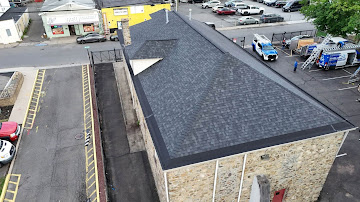
Pleasantville’s small commercial downtown, anchored by the Jacob Burns Film Center and the restaurants and shops nearby, sits in older mixed-use buildings with flat or low-slope roofing over street-level retail and, in some buildings, office or residential space above. Decades of use, combined with rooftop signage and equipment added over the years, have left many of these roofs carrying more penetrations and patch history than their original design anticipated.
Signs you’ll notice:
Pleasantville-specific patterns: Buildings closest to the film center and the busiest stretch of Wheeler Avenue show the most accumulated wear, tied to decades of added signage and equipment layered onto original roofing.
Severity: Serious to Emergency, given tenant occupancy and the visibility of deferred maintenance on a small, walkable downtown.
Typical solution: Full membrane assessment, targeted repair where the failure is isolated, or complete replacement where accumulated penetrations and patches make continued repair unreliable.
Because Pleasantville’s terrain rolls rather than sits flat, water behaves differently from block to block. Properties on steeper streets see faster runoff that can overwhelm gutters sized for a gentler grade, while properties closer to watershed-sensitive land warrant extra care around drainage design given the broader environmental context of the area.
Signs you’ll notice:
Pleasantville-specific patterns: The village’s steeper residential streets show drainage-related wear that flatter properties simply don’t experience to the same degree, regardless of roof age or material.
Severity: Moderate, with risk of fascia damage and foundation moisture on the most sloped properties.
Typical solution: Gutter and downspout capacity review suited to the specific slope, roof-edge repair where runoff has caused damage, and drainage correction designed with the property’s position on the hillside in mind.
Many of Pleasantville’s early-20th-century homes came with a detached garage or small accessory structure, and these secondary roofs get far less attention than the main house — often going decades without inspection even when the primary roof has been maintained carefully. Because they’re smaller and less visible from the street, problems here tend to go unnoticed until they’ve caused real damage to the structure underneath.
Signs you’ll notice:
Pleasantville-specific patterns: Older homes throughout the village’s residential streets show a consistent pattern of well-maintained main roofs paired with neglected garage or accessory roofing, simply because these structures rarely get a second thought during routine maintenance.
Severity: Moderate, though neglect over many years can allow structural damage that’s more expensive to address than early attention would have been.
Typical solution: Inclusion of accessory structures in any full-property roof inspection, with repair or replacement scoped separately from the main house given the smaller scale and often different material condition.
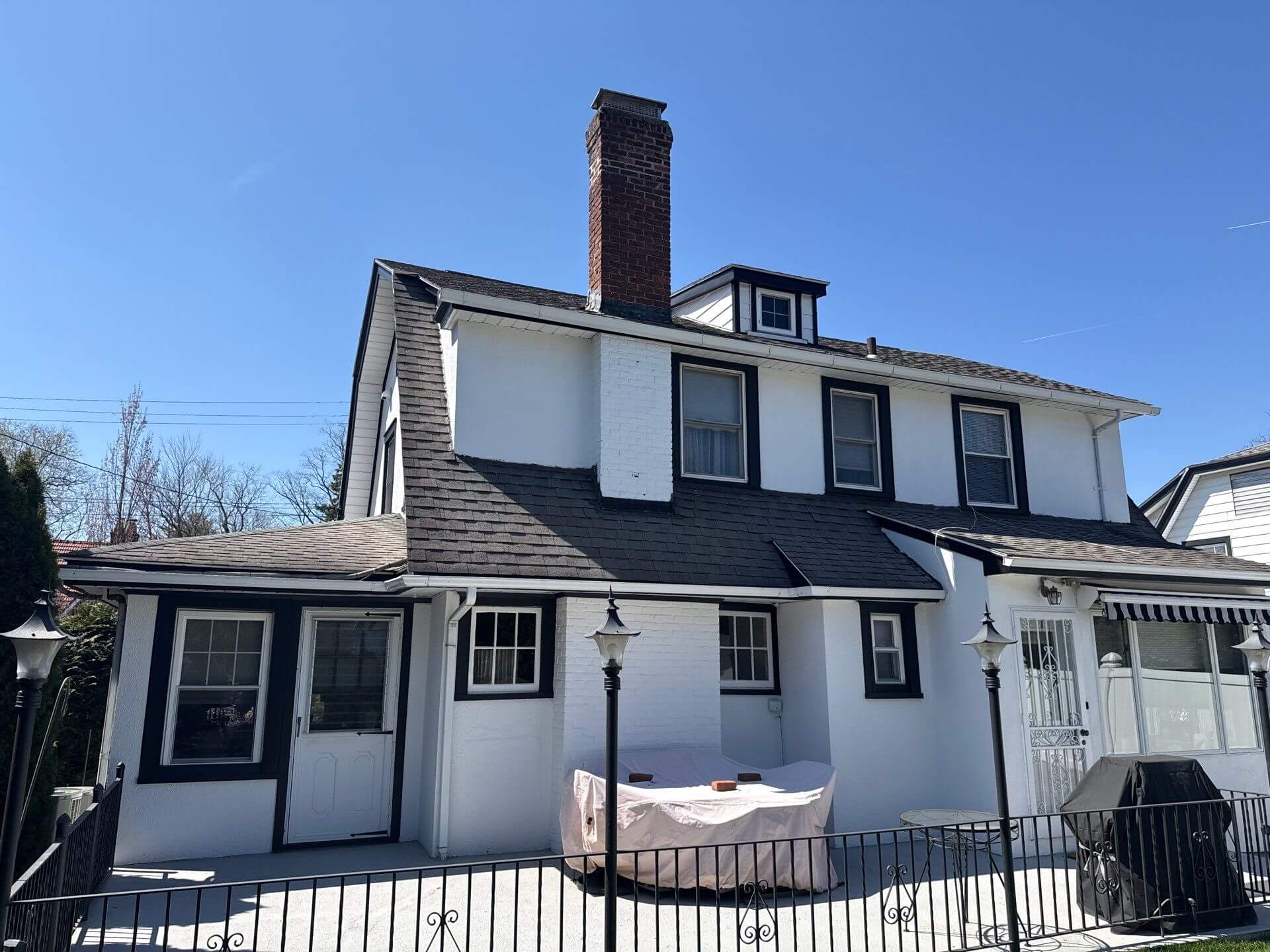
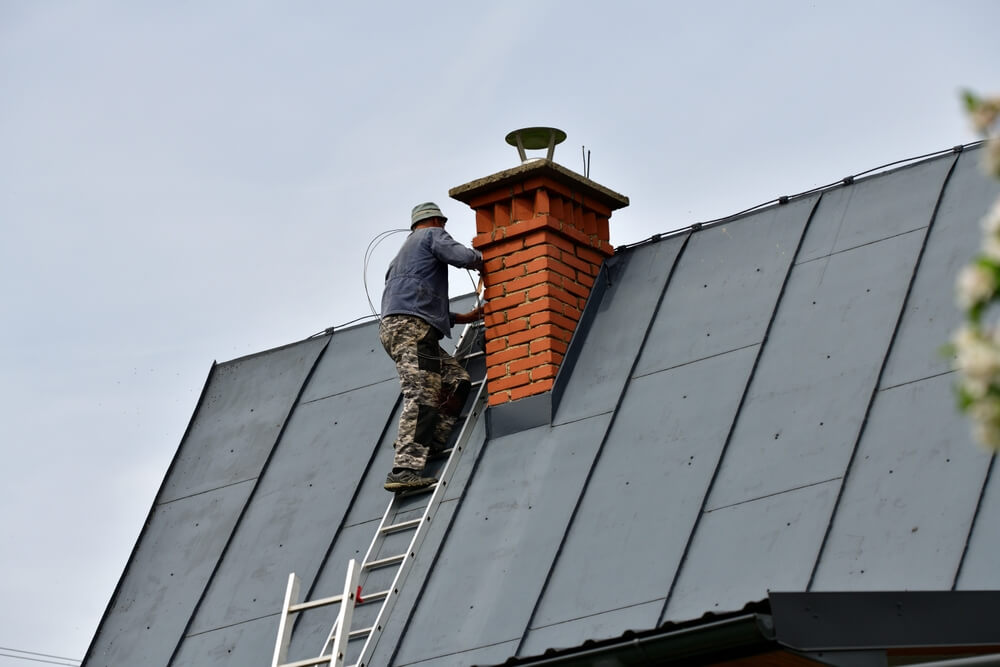
Pleasantville’s capes, bungalows, and simple colonials generally have straightforward rooflines, but nearly all of them include at least one masonry chimney whose flashing has aged along with everything else on the house. On modest, simply built homes, chimney flashing is frequently the single most active leak source, since the surrounding roof material and geometry rarely include the complex valleys or dormers that create leak points elsewhere.
Signs you’ll notice:
Pleasantville-specific patterns: Original, unrenovated homes with chimney flashing that’s never been replaced since original construction account for the majority of chimney-related leak calls in the village.
Severity: Serious. Chimney flashing failures allow water infiltration with every rain event and frequently produce structural damage to rafters and decking if left unaddressed.
Typical solution: Complete flashing removal and replacement using modern step flashing and counter-flashing systems, with a masonry chimney assessment included to catch any cap or crown issues at the same time.
Because Pleasantville’s terrain varies so much within such a small area, wind exposure does too. Homes on the village’s more open, elevated streets take direct wind loading during storms that homes tucked into wooded valleys a few blocks away barely notice, even during the same weather event.
Signs you’ll notice:
Pleasantville-specific patterns: Properties on the village’s higher, more open streets show measurably more wind-related roofing wear and storm damage than comparably aged homes in the more sheltered, tree-covered valley sections.
Severity: Moderate to Serious, depending on a specific property’s exposure and the severity of a given storm.
Typical solution: Wind-rated shingle installation and reinforced ridge and eave detailing on the village’s more exposed hilltop properties, calibrated to the actual wind conditions a specific address experiences rather than a village-wide default.
Pleasantville’s mix of campus buildings, downtown storefronts, and modest single-family homes means our services need to flex across very different scales, and we scope each one accordingly.
Active leaks, storm damage, and sudden failures get rapid tarping, debris removal, and insurance-ready documentation, available throughout Pleasantville and the surrounding 20-mile service radius. We prioritize occupied buildings — campus dormitories, downtown storefronts with tenants, and homes with active water intrusion — and maintain the crew capacity to reach same-day or next-day calls during storm seasons.
A full roof replacement means something different depending on the building — standard shingle work for a village cape or colonial, membrane systems scaled to a Pace University academic building, or commercial-grade roofing for a Wheeler Avenue storefront. We manage the Village of Pleasantville permit process directly and coordinate with campus facilities management where institutional work is involved.
Not every roofing problem calls for a full replacement, and figuring out which is which matters as much on a small garage roof as it does on a full residential reroof. We scope repairs to the actual failure — whether that’s chimney flashing, a garage roof that’s been neglected for years, or isolated wind damage on an exposed hilltop property.
Our inspections cover every roof surface on a property, including the detached garage or accessory structure that often gets skipped, along with flashing, gutters, chimneys, and attic conditions where accessible. We deliver written findings with photographs and a remaining service life estimate within 24 hours.
Given how much of Pleasantville’s roofing wear traces back to neglected accessory structures, hillside drainage, or wind-exposed hilltop rooflines, a maintenance visit that specifically checks these areas does more for a property than a generic seasonal walk-through.
We handle the flat and low-slope roofing on Pace University’s campus buildings and the mixed-use commercial buildings near Wheeler Avenue and the film center, each requiring a different scale and specification than standard residential work, and manage the applicable permitting for both.
Roofing problems in Pleasantville rarely stay isolated to the roof itself, particularly on the village’s older homes where several exterior systems have aged together without much attention. We handle siding, gutters, and chimney work alongside our core roofing services so property owners get one coordinated assessment instead of separate vendors working from separate diagnoses.
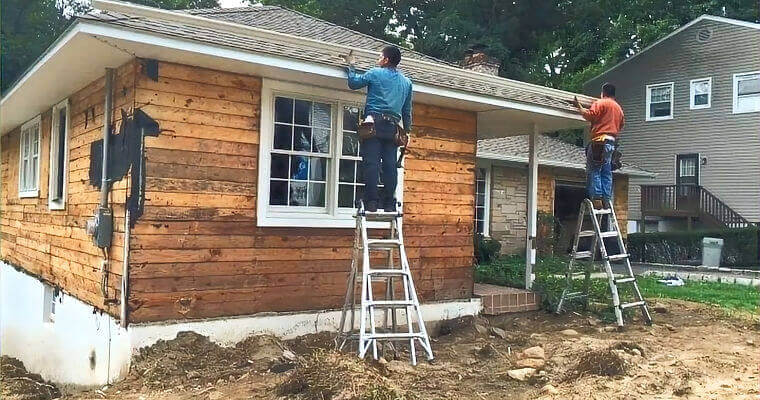
We install and repair vinyl, fiber cement, and wood siding across Pleasantville’s capes, bungalows, and colonials, including the detached garages and accessory structures that often need siding attention alongside their roofs.
Best for: Homeowners pairing siding work with a roof replacement, older homes with wood siding showing rot, and accessory structures needing siding addressed at the same time as roofing.
We install seamless aluminum gutter systems sized for Pleasantville’s rolling terrain, with particular attention to capacity on steeper streets where runoff moves faster than on flatter parts of the village.
Best for: Homes on sloped streets with overflowing or undersized gutters, properties experiencing erosion at downspout discharge points, and homeowners addressing ice dam risk where gutter capacity plays a role.
Beyond flashing work handled under our roofing services, we address chimney masonry directly — repointing, crown and cap rebuilding, and waterproofing — for the chimneys standard on Pleasantville’s early-20th-century homes.
Best for: Chimneys with visible mortar deterioration, cracked or missing crowns, or efflorescence staining, and chimney work bundled with a full roof replacement.
Here's what happens from the first call to the finished job, adjusted for whether the property is a single-family home, a campus building, or a downtown storefront.
Timeline: Same-day contact; inspection within 1–3 business days
We start with your address, the type of property, and what’s prompting the call. Emergency situations get same-day or next-day priority. For campus or commercial properties, we confirm who else needs to be looped in — facilities management or a building owner — before scheduling.
Customer expectations: Nothing to prepare in advance, though prior repair records help if you have them.
Timeline: 45–90 minutes depending on property type and scope
We inspect every roof surface — including any detached garage or accessory structure — along with flashing, gutters, chimneys, and attic conditions where accessible, adjusting our focus based on the property’s specific terrain position and building type.
Pleasantville considerations: We confirm village permit requirements and flag any watershed-related considerations relevant to the property’s location.
Customer expectations: Written findings with photographs within 24 hours.
Timeline: Estimate delivered within 24–48 hours of inspection
Our itemized estimate covers material, labor, permit fees, disposal, and any deck work identified during inspection, scoped to the property’s actual size and building type rather than a generic residential assumption.
Permit note: We confirm Village of Pleasantville requirements and, for campus or watershed-adjacent projects, any additional coordination needed, including applicable fees and timeline in the estimate.
Timeline: Repairs: same-day or next-day. Single-family replacements: 1–2 days. Institutional and commercial projects: 2–7 days depending on scale.
We stage material and protect the property appropriately, coordinate around the academic calendar for campus work and around business hours for downtown commercial buildings, and communicate any deck findings before scope changes.
New York weather consideration: We schedule around forecasted precipitation and avoid starting tear-off we can’t fully protect before rain.
Timeline: Final walkthrough on completion day
A supervisor confirms the completed work and full cleanup, then walks the property with you and hands over written warranty documentation.
Customer expectations: All debris cleared same day. Permit inspection scheduling handled by us where applicable.
More than ten years in Pleasantville means we’ve handled the campus buildings, the downtown storefronts, and the modest village homes enough times to know how differently each one needs to be approached — and we plan accordingly rather than treating a small village as roofing-simple.
Institutional flat-roof work on a university campus requires different expertise than a residential shingle replacement, and we maintain both rather than specializing in one at the expense of the other.
Our New York State Home Improvement Contractor license, general liability insurance, and workers’ compensation coverage apply across residential, institutional, and commercial work. We provide documentation before any project begins.

GAF has been producing shingles for over a century, leading the industry in quality, brand recognition, and innovative designs.

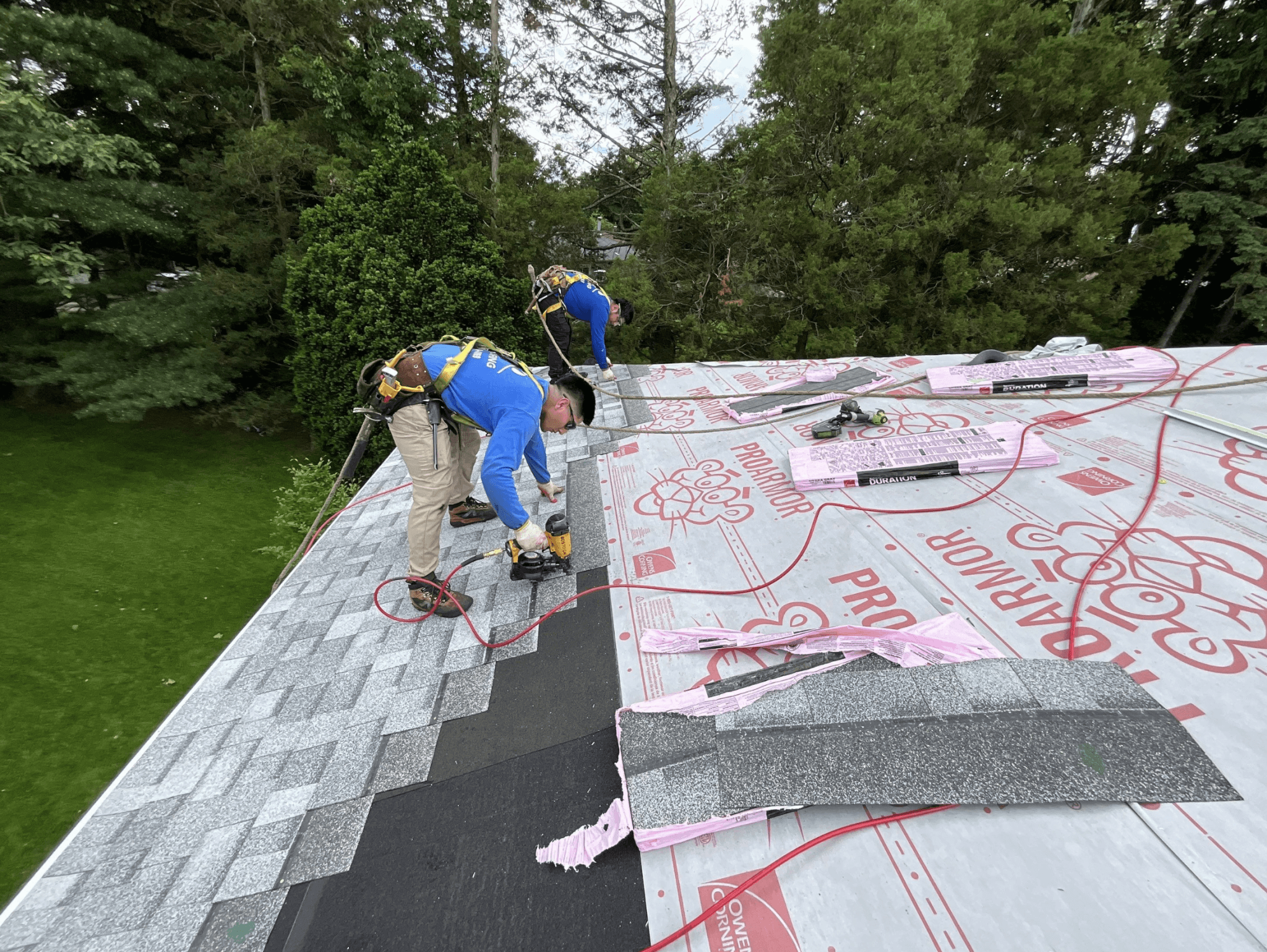
Owens Corning Offers Solutions for All Your Building and Remodeling Needs
Pleasantville is our home base for this part of the county, and we cover a 20-mile radius from it into the surrounding communities.
Yes, through the Village of Pleasantville's building department. New York State also requires roofing contractors to hold a Home Improvement Contractor (HIC) license for residential work. If your property is near watershed-protected land, there may be additional environmental review depending on project scope. We confirm this and manage the full permit process as part of every qualifying project.
It's worth an honest look. Detached garages and accessory structures on Pleasantville's older homes frequently get skipped during routine roof maintenance, simply because they're smaller and less visible than the main house. That neglect can go on for years without obvious problems until water finally gets through, at which point the damage is often more extensive than it would have been with earlier attention. We include these structures in any full-property inspection specifically because of how often this comes up.
Terrain. Pleasantville's rolling landscape means wind exposure varies noticeably even over short distances — a home on an open, elevated street can take direct wind loading during a storm that a home tucked into a wooded valley a few blocks away barely experiences. This is a real, measurable pattern in the village rather than just bad luck.
It comes down to age, how widespread the current problems are, and whether they're isolated or systemic. A newer roof with a single storm-damaged section or one active chimney flashing leak is a repair candidate. An older roof with wear spread across multiple areas, or one that's never had the accessory structure separately assessed, is more likely a replacement or full-property reassessment candidate. Our inspection gives you a specific answer rather than a default recommendation.
Yes, across all of Pleasantville's property types — siding and gutter work sized for the village's hillside terrain, and chimney repair for the older masonry standard on most village homes. Handling all of it together tends to catch issues a roofing-only inspection would miss.
Yes, we handle flat and low-slope institutional roofing, including work on Pace University's Pleasantville campus buildings, coordinating with facilities management and scheduling around the academic calendar where that matters.
Whether it’s a leak on a campus dormitory, a storefront near the film center, or a garage roof that’s been overdue for a look, we start with an honest inspection and go from there.