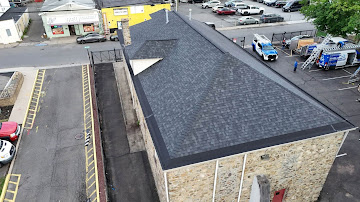
Six-tenths of a square mile. That’s the entire land area of the Village of Tuckahoe — smaller than a single large subdivision in parts of northern Westchester — and yet inside that footprint sits a roofing market with more variety per block than towns many times its size. Tuckahoe grew up as a 19th-century marble quarrying town before its railroad connection turned it into a dense commuter village, and that compressed history left behind a housing stock unlike its neighbors: small brick walk-up apartment buildings standing shoulder-to-shoulder with single-family homes, some on lots so narrow that a roofing crew has to think carefully about where a ladder even fits. On Time Roofing of Tuckahoe has spent more than ten years learning this village block by block, because a roofing plan that works on a quiet suburban lot elsewhere in Westchester often doesn’t translate to a property here with three feet of clearance on either side.
A three-story brick walk-up two blocks from the train station wears differently than a single-family home on a quiet side street, even when the two buildings sit close enough to share a driveway. Snow and ice sliding off a taller building’s roof can land squarely on a shorter neighbor’s roofline — a problem that barely registers in towns with more space between structures, but shows up regularly here. The Bronx River runs close enough to parts of the village that drainage planning matters more than it would a mile inland. We’ve built our approach to Tuckahoe around these specifics rather than a generic suburban playbook, and we handle the siding, gutter, and chimney work that comes with the same tight-lot territory. Serving Tuckahoe, Eastchester, Bronxville, and the surrounding central Westchester communities, we bring village-specific experience that a contractor working from a wider service radius typically hasn’t developed.
Size works against Tuckahoe in one specific way: because the village is so small, nearly every property here deals with a neighbor close enough to affect roofing decisions directly. That single fact — more than any dramatic architectural style — shapes almost everything about how roofing work actually gets done in this village.

Most roofing guidance assumes a certain amount of open space around a building — room for a ladder, room for material staging, room for water to run off without immediately becoming someone else's problem. Tuckahoe's lot sizes routinely don't offer that room. Homes and small apartment buildings sit close enough that a roof failure on one property can affect drainage, staging access, or even structural exposure on the next one over, and any responsible roofing plan here has to account for the neighboring building as a factor rather than an afterthought. This shows up most clearly in winter: when a taller building sheds snow and ice onto a shorter adjacent roofline, or when shared drainage points overflow because two properties' water is effectively routed through the same limited path.

Tuckahoe's identity was shaped by a resource that has nothing to do with roofing at all — the marble quarried here through much of the 19th century, used in landmark buildings well beyond Westchester's borders. What matters for roofing today is what came after the quarries closed: a rail connection that turned the village into a compact commuter destination, filled in over a relatively short window with small brick walk-up apartment buildings and single-family homes built close together on narrow lots. That era of construction left a housing stock that's older on average than the postwar suburban development found in much of the surrounding county, with the flat-roof multi-family buildings, aging chimneys, and early asphalt or slate residential roofing that come with early-20th-century density.

Compared to some of its neighbors, Tuckahoe's permitting is refreshingly simple: as an independently incorporated village, Tuckahoe has its own building department handling roofing permits and inspections for the entire village, without the multi-jurisdiction confusion that affects some surrounding areas. What complicates planning instead is proximity to the Bronx River, which runs close enough to parts of the village that drainage and flood-adjacent conditions deserve consideration on properties nearest to it, particularly for gutter capacity and roof-edge water management during heavy storm events. Insurance claims involving storm or water damage follow New York State regulations regardless of which side of the village a property sits on, and documentation matters just as much here as anywhere else in the county.
A decade of working in a village this size means we’ve seen the same handful of problems come up again and again, almost always traceable to Tuckahoe’s density, its building age, or its position near the Bronx River. Here’s what actually shows up on inspection calls.
Tuckahoe’s early-20th-century construction boom left the village with an unusual number of small multi-family walk-up buildings — typically three to six units, three stories or so, built with a flat or nearly flat roof covering the entire structure. These roofs serve multiple households at once, and the built-up or older membrane systems many of them still carry are well past the point where patch repairs reliably hold.
Signs you’ll notice:
Tuckahoe-specific patterns: Walk-up buildings that have only ever received patch repairs, rather than a full membrane replacement since original construction, account for the majority of multi-unit leak calls in the village. Buildings closer to the train tracks and Main Street show additional wear from decades of accumulated rooftop equipment changes.
Severity: Serious to Emergency, since a single roof failure here affects multiple households rather than one.
Typical solution: Full membrane assessment across the building, with replacement scoped around tenant occupancy and access — these buildings are compact enough that staging logistics matter as much as the roofing work itself.
Parts of Tuckahoe sit close enough to the Bronx River that heavy storm events can push more water toward these properties than their original construction-era drainage was designed to handle. This isn’t about the roof surface itself failing so much as the roof’s drainage system — gutters, downspouts, and grading — being overwhelmed at the exact moment when the roof needs it most.
Signs you’ll notice:
Tuckahoe-specific patterns: Properties on the streets closest to the river corridor show this pattern more consistently than homes on higher ground elsewhere in the village, particularly during the heavier, more concentrated storm events that have become more common in recent years.
Severity: Moderate to Serious, with the risk of both roof-edge damage and foundation moisture on the most exposed properties.
Typical solution: Gutter and downspout capacity review and upsizing where warranted, fascia repair where overflow has caused damage, and drainage correction that moves water further from the foundation on river-adjacent properties.
When two buildings sit a few feet apart, their roofing systems end up interacting whether anyone planned for it or not. A gutter on one property discharging directly onto a neighbor’s roof edge, a chimney positioned close enough to a boundary line that flashing work requires careful coordination, or simply not having enough clearance to stage a ladder safely — these are everyday realities on a meaningful share of Tuckahoe’s properties, and they change how a repair or replacement actually gets planned and executed.
Signs you’ll notice:
Tuckahoe-specific patterns: This shows up across the village generally rather than in one particular section, simply because so many Tuckahoe lots were platted with minimal setbacks from the start.
Severity: Moderate. These issues rarely cause dramatic failure on their own, but they complicate otherwise straightforward repairs and often explain why a previous fix didn’t fully resolve the problem.
Typical solution: Access-aware project planning that accounts for the neighboring structure from the outset, including direct communication with adjoining property owners where a repair genuinely requires it.
This is a problem that barely exists in more spread-out suburban towns but shows up with some regularity in Tuckahoe: when a taller building sits close to a shorter one, snow and ice sliding off the taller roof can land directly on the lower roofline, adding weight and impact stress that the shorter roof’s original design never accounted for.
Signs you’ll notice:
Tuckahoe-specific patterns: This problem concentrates on properties directly adjacent to taller multi-family buildings, particularly where the height difference is significant and no snow-retention measures exist on the taller roof.
Severity: Moderate to Serious, depending on the height differential and how often it occurs during a given winter.
Typical solution: Snow guard or retention system installation on the taller building’s roof to prevent uncontrolled shedding, combined with reinforcement or repair of the lower roof section where repeated impact has caused damage.
Tuckahoe’s downtown sits tightly against the train tracks, and the commercial buildings along Main Street reflect that compact layout — early-20th-century mixed-use structures with retail space at street level and office or residential space above, most covered by flat or low-slope roofing installed decades ago.
Signs you’ll notice:
Tuckahoe-specific patterns: Buildings closest to the train station see accelerated wear tied to decades of added rooftop signage, equipment, and utility penetrations layered onto the original roof.
Severity: Serious to Emergency, given tenant occupancy and the visibility of deferred maintenance on a compact, walkable Main Street.
Typical solution: Full membrane assessment, targeted repair where the failure is isolated, or complete replacement where the system has accumulated too many penetrations and patches to repair reliably.
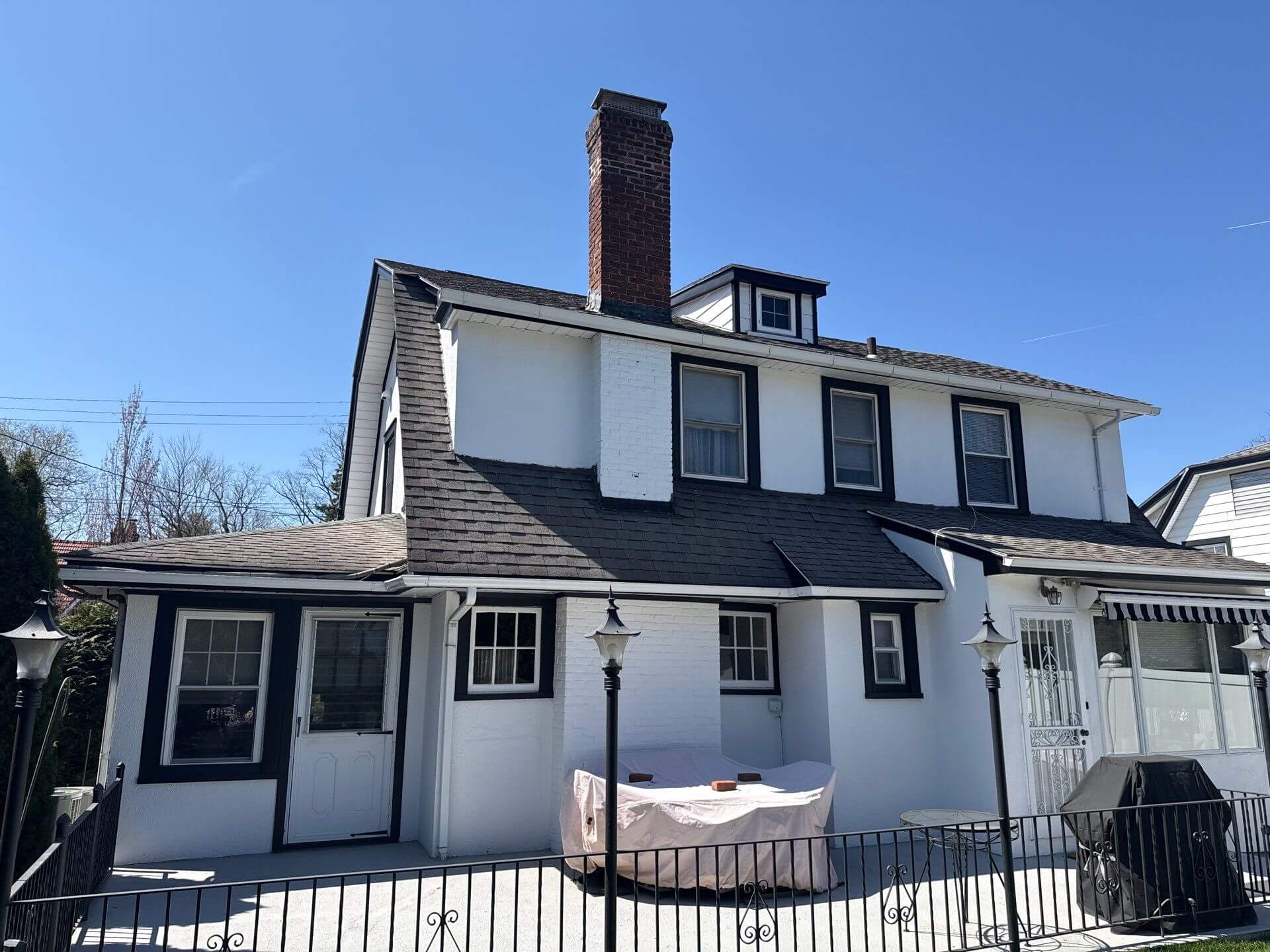
The single-family homes built during Tuckahoe’s early-20th-century growth spurt carry the roofing materials standard for that era — slate on a portion of the older properties, early asphalt shingle on others, much of it now well past a century old on the oldest streets. Decades of piecemeal repair have often left these roofs with mismatched material and flashing that no longer matches the original installation.
Signs you’ll notice:
Tuckahoe-specific patterns: The village’s oldest residential streets, dating to its earliest rail-era development, show the highest concentration of original slate and early asphalt material still in place.
Severity: Moderate to Serious, depending on how much of the original system remains sound versus how much has been patched beyond the point of reliable repair.
Typical solution: Material-specific assessment to determine whether the existing slate or early asphalt system still has useful service life, with repair prioritized where it does and full replacement recommended where systemic flashing failure or material exhaustion makes continued patching impractical.
We’ve scoped our services around what actually shows up in Tuckahoe — small multi-family buildings, tight-lot single-family homes, and a compact commercial strip along Main Street — rather than a generic residential roofing menu.
Active leaks, storm damage, and sudden failures affecting multi-unit buildings all get the same priority: rapid tarping, debris removal, and documentation, available throughout Tuckahoe and the surrounding 20-mile service radius.
Because Tuckahoe’s density means one property’s failure can quickly become a neighbor’s problem too, our emergency response accounts for adjacent structures from the first call rather than treating each property in isolation. We maintain the crew capacity to reach same-day or next-day calls during storm seasons, and we photograph everything for insurance purposes as a matter of course.
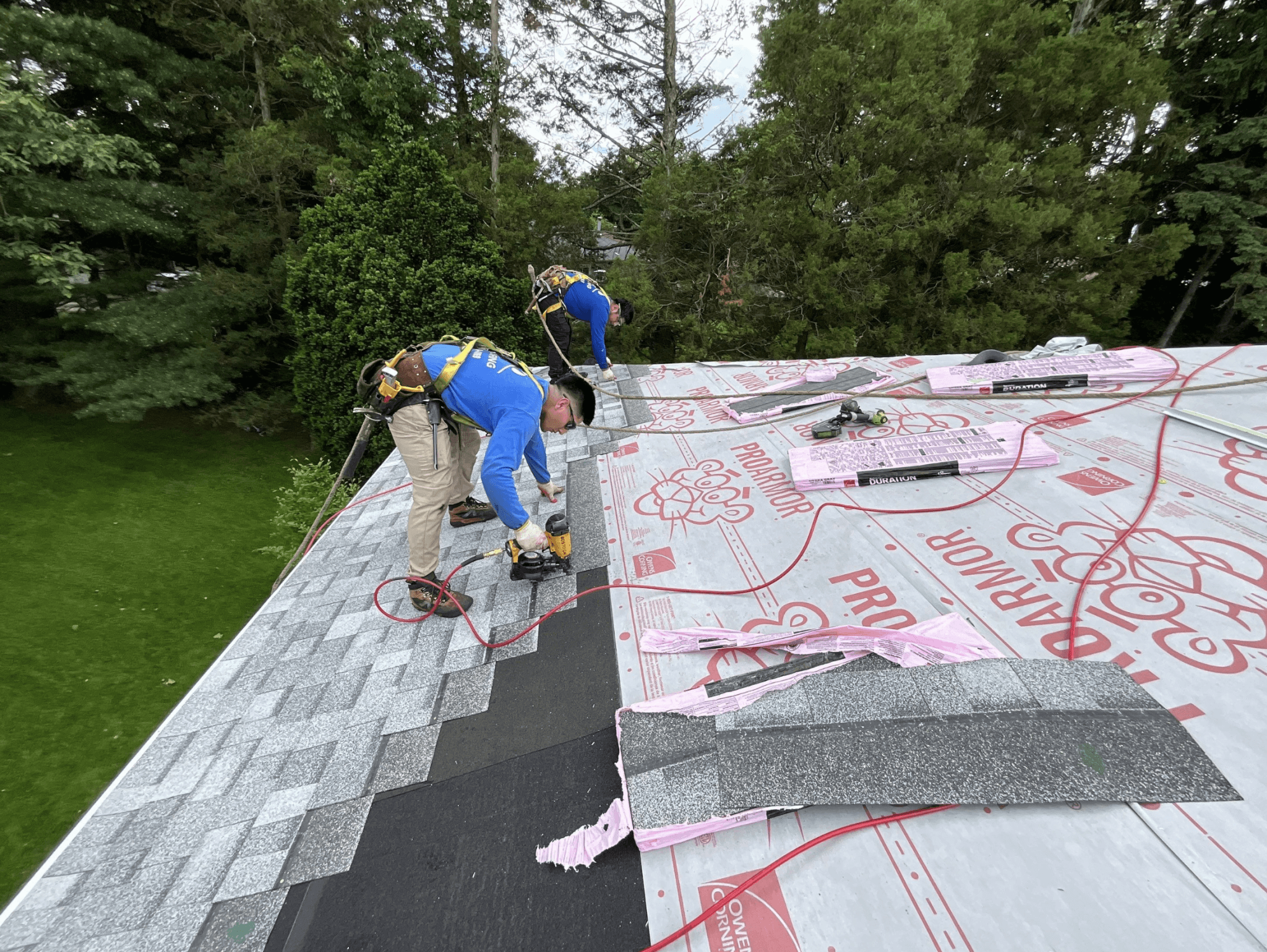
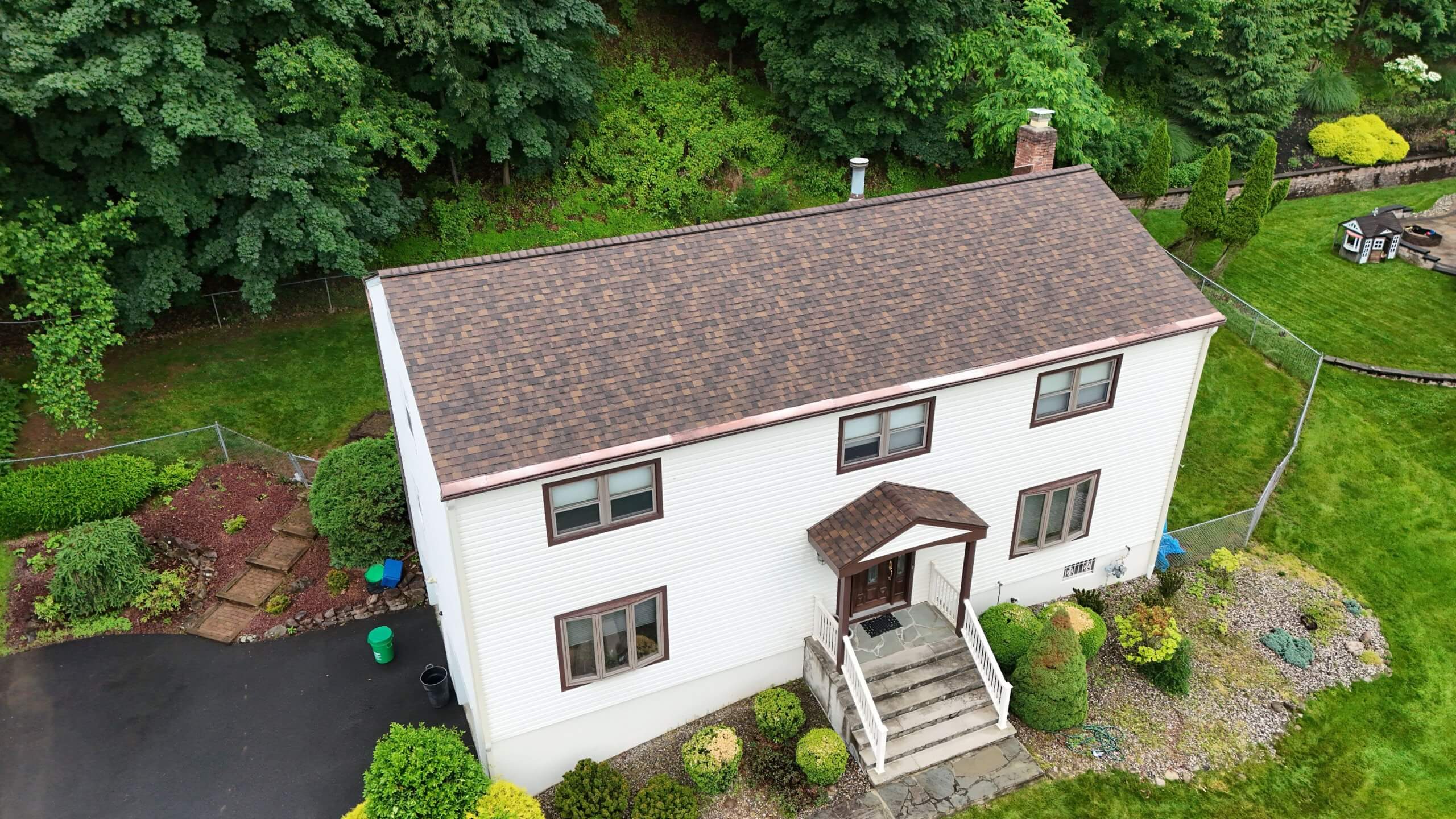
A full roof replacement here means something different depending on the building — flat membrane systems for the village’s small walk-up apartments, standard shingle replacement for single-family homes on the older residential streets, and commercial-grade membrane for Main Street’s mixed-use buildings.
We manage the Village of Tuckahoe’s permit process directly, handle deck inspection and repair, and specify ice-and-water shield and wind-rated shingles on residential work as standard practice. On walk-up buildings, we plan the project around tenant access and staging constraints from day one rather than discovering them mid-project.
Not every roofing problem needs a full replacement, and on Tuckahoe’s older housing stock, figuring out which is which matters more than it might elsewhere — a walk-up building with an isolated seam failure is a very different situation than one with systemic ponding, and a single-family home with a handful of broken slates is a different call than one showing widespread flashing failure.
We scope repairs to match the actual problem, including the boundary-line and access complications that come with Tuckahoe’s tight lots.
A roof inspection on a Tuckahoe walk-up building needs to account for multiple units, shared drainage systems, and access limitations that a single-family inspection doesn’t face — and our process reflects that difference rather than applying the same checklist to every property type.
We deliver written findings with photographs and a remaining service life estimate within 24 hours, whether the property is a single-family home on an older residential street or a six-unit walk-up two blocks from the train.
Given how much of Tuckahoe’s housing stock is older by Westchester standards, and how many properties deal with drainage complications from tight lot lines or river proximity, a proactive maintenance visit does more work here than in a newer, more spread-out suburb.
We check flashing, gutters, and drainage specifically with an eye toward the boundary-line and river-adjacent issues that define this village, rather than a generic seasonal checklist.
Tuckahoe’s downtown commercial buildings need roofing work that accounts for their compact footprint, tenant occupancy, and decades of accumulated rooftop equipment — not a generic commercial specification built for a bigger, more open property.
We manage permitting through the Village of Tuckahoe’s building department and coordinate directly with tenants and building owners to minimize disruption during active retail hours.
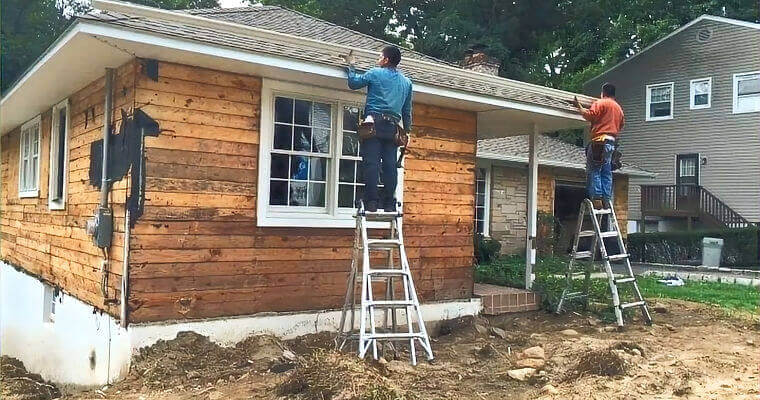
On a village this compact, roofing problems have a way of becoming siding, gutter, or chimney problems fast — there’s simply less distance between systems for water to travel before it shows up somewhere else. We handle all three alongside our core roofing work so Tuckahoe property owners aren’t coordinating separate vendors who each only see part of the picture.
We install and repair vinyl, fiber cement, and wood siding on Tuckahoe’s single-family homes and multi-unit buildings, with particular attention to how tight lot spacing affects both installation access and how quickly siding on the side facing a neighboring structure tends to wear.
Best for: Homeowners pairing siding work with a roof replacement, landlords addressing siding across multiple units, and properties where boundary-line moisture exposure has accelerated siding wear on one side of the building.
We install seamless aluminum gutter systems and repair or replace gutters and downspouts, with specific attention to capacity on properties near the Bronx River corridor and to discharge planning on lots where a neighboring structure sits just a few feet away.
Best for: Homes and multi-family buildings with undersized or failing gutters, properties near the river corridor needing upsized capacity, and boundary-line properties where gutter discharge affects a neighboring roof or foundation.
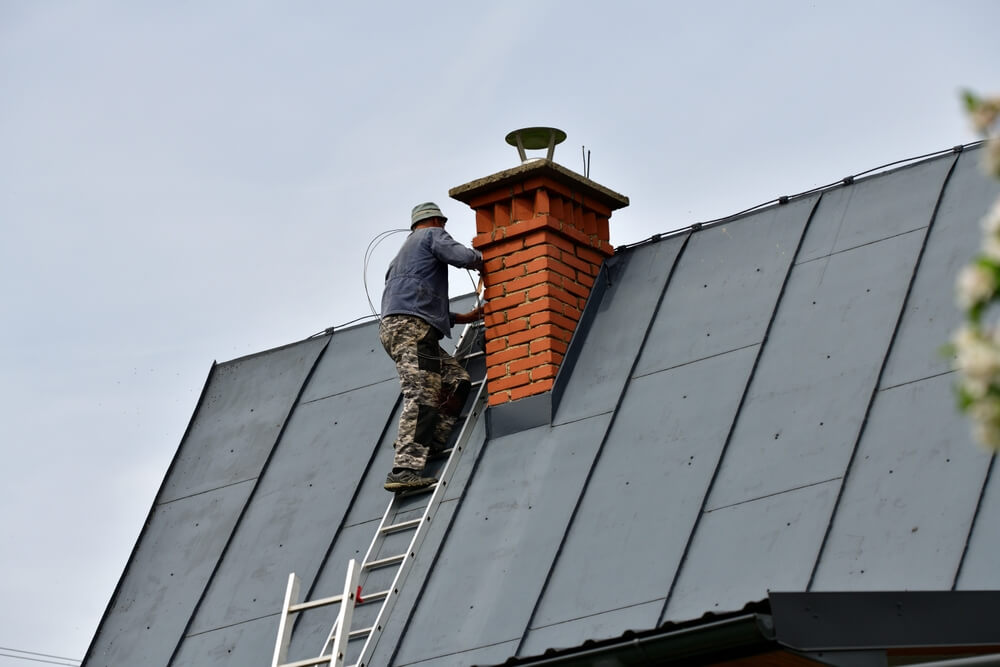
Beyond the flashing work covered under our roofing services, we handle chimney masonry directly — repointing, crown and cap rebuilding, and waterproofing — for the chimneys standard on Tuckahoe’s early-20th-century single-family homes and multi-unit walk-ups alike.
Best for: Chimneys with visible mortar deterioration, cracked or missing crowns, or efflorescence staining, and chimney work bundled with a roof replacement to avoid reopening finished work later.
Here's exactly how a project moves from first call to finished work, adjusted where Tuckahoe's tight lots and multi-family buildings require extra planning.
Timeline: Same-day contact; inspection within 1–3 business days
We start with your address, the type of building — single-family, multi-family, or commercial — and what’s prompting the call. Emergency situations get same-day or next-day priority. If your property is a multi-unit building, we ask about tenant occupancy up front so we can plan access correctly from the start.
Customer expectations: Nothing to prepare in advance, though prior repair records help if you have them.
Timeline: 45–90 minutes depending on property type and access
We inspect every roof surface, flashing point, gutter, chimney, and any visible interior symptoms, and on tight-lot properties we specifically evaluate access constraints and any interaction with the neighboring structure — shared drainage, snow-shedding exposure, or boundary-line flashing details.
Tuckahoe considerations: We confirm the property’s exact permit path through the Village of Tuckahoe’s building department and flag any drainage concerns tied to proximity to the Bronx River.
Customer expectations: Written findings with photographs delivered within 24 hours.
Timeline: Estimate delivered within 24–48 hours of inspection
Our itemized estimate covers material, labor, permit fees, disposal, and any deck work identified during inspection — and on tight-lot properties, we note where access limitations affect the approach or timeline.
Permit note: We confirm the Village of Tuckahoe permit requirements and include applicable fees and processing time in the estimate.
Timeline: Repairs: same-day or next-day. Single-family replacements: 1–2 days. Multi-family and commercial projects: 2–5 days.
We stage material and protect the property with an eye toward Tuckahoe’s tighter clearances, and on multi-unit buildings we coordinate directly with tenants and, where needed, with neighboring property owners on boundary-line issues. Deck findings are discussed before any scope changes.
New York weather consideration: We schedule around forecasted precipitation and avoid starting tear-off we can’t fully protect before rain arrives.
Timeline: Final walkthrough on completion day
A supervisor confirms the completed installation and full cleanup, including any shared walkways or driveways common on Tuckahoe’s tighter lots, then walks the property with you and hands over written warranty documentation.
Customer expectations: All debris cleared same day. Permit inspection scheduling handled by us where applicable.
Working in a village as compact as Tuckahoe for more than ten years means we’ve handled the walk-up buildings, the tight-lot single-family homes, and the Main Street storefronts enough times that none of them surprise us. We plan around this village’s specific density rather than treating it like a smaller version of a standard suburb.
Roofing decisions here often can’t be made in isolation — a gutter, a chimney, or a snow-shedding roofline frequently involves the neighboring property whether anyone intended it to. We factor that in from the first inspection rather than discovering it mid-project.
Our New York State Home Improvement Contractor license, general liability insurance, and workers’ compensation coverage apply across single-family, multi-family, and commercial work alike. We provide documentation before any project begins.

GAF has been producing shingles for over a century, leading the industry in quality, brand recognition, and innovative designs.

Owens Corning Offers Solutions for All Your Building and Remodeling Needs
Tuckahoe is our home base, and we cover a 20-mile radius from it, bringing the same tight-lot and multi-family expertise to the surrounding communities.
Yes, through the Village of Tuckahoe's building department, which handles permitting for the entire village directly — no need to sort out multiple jurisdictions here. New York State also requires roofing contractors to carry a Home Improvement Contractor (HIC) license for residential work. We manage the full permit process as part of every qualifying project.
It can genuinely be both. Repeated snow and ice impact on a roof section that wasn't designed to absorb that extra load can cause real damage over time — dented gutters, localized sagging, or accelerated wear on that specific area. If this happens regularly at your property, it's worth having it assessed rather than assuming it's purely cosmetic. Solutions range from reinforcing the affected section to snow retention hardware on the taller building, which sometimes requires coordinating with the neighboring owner.
It comes down to age, how widespread the current problems are, and whether they're isolated or systemic. A newer roof with a single storm-damaged section is a repair candidate. An older roof — particularly a multi-family building that's only ever had patch work, or a century-old home with slate that's failing broadly rather than in a few spots — is usually better served by replacement. Our inspection gives you a specific answer backed by what we actually find, not a default recommendation.
Yes. We handle all of it alongside roofing — siding installation and repair, gutter systems sized for Tuckahoe's density and drainage needs, and chimney repair and rebuilding. Given how closely these systems interact on tight lots here, having one contractor look at everything together tends to catch things a roofing-only visit would miss.
Regularly. We coordinate tenant access, plan around occupancy, and provide the documentation landlords need for their own records and insurance purposes. The estimate and inspection process is the same thorough approach whether the property is owner-occupied or a rental.
A roof problem in a village this compact rarely stays contained to one property for long — get ahead of it before it becomes your neighbor’s problem too, or theirs becomes yours.