


What Factors Affect Skylight Installation Cost?
Understanding what impacts the total price to add a skylight to a roof helps homeowners make informed decisions. Let’s break down the primary cost drivers:Cost by Frame Material
- Vinyl: $150–$1,000 Vinyl frames are affordable, energy-efficient, and low maintenance, making them popular for standard residential use.
- Metal: $200–$1,500 Metal skylight frames, especially aluminum, are durable and strong. However, they conduct heat and may require thermal breaks to reduce energy loss.
- Wood: $300–$2,500 Wood frames offer a high-end look and good insulation but come at a higher cost due to material and maintenance needs.
Cost by Size
The size of the skylight directly affects both material and labor costs. Smaller tubular skylights can cost as little as $500 to install, while large, custom-built skylights can exceed $3,500. Most standard residential skylights range from 16x32 inches to 48x48 inches, with prices increasing alongside surface area and installation complexity.Cost by Shape
Skylights come in different shapes—rectangular, circular, pyramid, and dome. Standard rectangular or square skylights tend to be more affordable, while custom shapes can add significantly to the installation price due to framing and waterproofing needs.Cost by Type
- Tubular Skylights: $450–$1,300 These are small and ideal for tight spaces like closets or hallways. Their installation cost is lower because they require less structural modification.
- Fixed Skylights: $500–$2,000 These do not open but are great for letting in consistent natural light. They’re the most common and often the most affordable among large skylights.
- Ventilating Skylights: $1,000–$3,500 These open either manually or with a remote to allow fresh air in. They’re more complex to install due to added mechanical components and waterproofing.
Labor Cost ($300–$2,500)
Labor makes up a significant part of the skylight installation fee. Costs vary based on roof pitch, ease of access, framing, and ceiling modifications. A basic tubular skylight on a single-story home may cost just a few hundred dollars to install, while adding a large, vented skylight to a steeply pitched roof can exceed $2,500 in labor alone. For homeowners in Westchester County, proper skylight placement also plays a role. For insights on ideal installation areas, read our guide on the best place to install a skylight.What Are Additional Skylight Installation Cost Factors?
Brand
The brand of skylight you choose can significantly affect the overall installation cost. High-end brands like VELUX, Wasco, and Fakro tend to offer better energy efficiency, durability, and advanced features such as motorized blinds, rain sensors, and UV coatings. These options often come with extended warranties and better performance ratings but cost more upfront—sometimes by several hundred dollars per unit. On the other hand, budget-friendly or generic brands might reduce your immediate expenses, but may lack the same longevity, aesthetic appeal, or energy performance. Choosing a reliable brand is particularly important in climates like Westchester County, where snow, wind, and seasonal temperature shifts can stress low-quality skylight systems. While it may be tempting to save money by opting for a lower-priced brand, investing in a trusted manufacturer often leads to lower maintenance costs and fewer repairs down the line, making it a smarter long-term choice.Glazing Material
Glazing refers to the transparent or translucent material used in the skylight window, and it plays a big role in cost, energy efficiency, and safety. There are three common glazing types:
- Acrylic ($150–$1,000): Lightweight and affordable, acrylic skylights are ideal for low-cost projects. However, they’re prone to scratching, yellowing, and cracking over time, especially in sunny or cold climates.
- Double-paned glass ($300–$3,500): A popular mid-range option, double-pane glass offers insulation by trapping air or gas between panes. It reduces heat transfer and noise, helping lower utility bills.
- Tempered glass ($200–$1,500): Stronger than standard glass, tempered glazing is heat-treated to resist shattering and is often required by building codes for roof applications.
Your choice of glazing impacts skylight installation cost per window and overall home efficiency, so it’s crucial to consider insulation, UV protection, and durability. For those interested in both light and energy performance, check out how skylights can make your home brighter and more energy-efficient.
Permits
In most states and counties—including New York—homeowners are required to obtain a building permit before installing a skylight. These permits ensure that the installation meets local building codes and safety standards. Permit fees generally range from $50 to $300, depending on your municipality and the scope of the work. Structural modifications, electrical upgrades (for motorized units), or changes to the ceiling may trigger additional review and inspection fees. Not securing a proper permit can result in fines, insurance claim denials, or even mandatory removal of the skylight. In some cases, your contractor may include the permit application process in their service package, but it's always best to ask. Factoring permit costs into your budget from the beginning avoids unexpected delays and keeps your project compliant and safe.Roof Type
The type of roof you have plays a major role in skylight installation cost. Asphalt shingle roofs, which are common in New York, are the easiest and least expensive for skylight installation. However, tile, slate, or metal roofs are more labor-intensive, requiring special tools, flashing kits, and careful removal and reinstallation of materials. These types can increase labor costs by 20–50%. Additionally, roof pitch (slope) affects difficulty—steep or high-pitched roofs need scaffolding and safety equipment, further raising costs. The age and structural integrity of the roof also matter. If your roof is old or nearing replacement, it may make sense to install the skylight during a full roofing service to save on labor. Ultimately, roof type directly influences time, materials, and effort required, which all contribute to the final bill.Skylight Upgrades
Skylight upgrades can enhance your home’s comfort, convenience, and energy performance—but they also increase the total skylight installation fee. Common upgrades include:
- Motorized controls: Open or close vented skylights with a remote or smartphone app, starting at $300 extra.
- Built-in blinds or shades: Help control sunlight, privacy, and insulation. Motorized versions are more costly than manual ones.
- Rain sensors: Automatically close skylights when it starts to rain. These sensors add $150–$500 to the installation.
- Tinted or low-E coatings: Help block UV rays and reduce solar heat gain, which improves comfort and energy efficiency.
While these add-ons raise the initial investment, they can lower utility bills, improve indoor air quality, and add resale value. Many New York’s homeowners find the extra cost worthwhile, especially in multi-seasonal climates where light and ventilation needs vary throughout the year.
Installation Style
There are two main styles for skylight installation: deck-mounted and curb-mounted, and your choice can affect both cost and performance.
- Deck-mounted skylights are installed flush with the roof decking. They offer a sleek appearance and are generally used in new construction or when reroofing. However, they require precise flashing and waterproofing, which can increase labor time and cost.
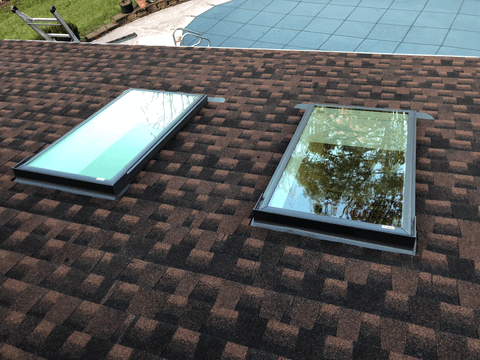
- Curb-mounted skylights sit on a raised frame (curb) and are ideal for retrofit installations. They’re easier to flash and more adaptable to a variety of roof types, though they protrude slightly above the roof surface.
Curb-mounted skylights may cost more upfront due to the extra materials (the curb), but they often simplify waterproofing—especially important in wet climates. Installation style impacts aesthetics, energy performance, and lifespan, so it’s a key decision to make when budgeting for your skylight. You can explore more benefits of installing skylights to decide what suits your home best.
How To Save on Your Skylight Installation
- Choose standard sizes and materials.
- Opt for fixed skylights over vented ones.
- Schedule installation during off-peak seasons.
- Combine skylight work with roof repair or replacement to reduce labor overlap.
Can You Install A Skylight Yourself?
Professional Skylight Installation
Hiring a pro ensures proper waterproofing, structural support, and compliance with local building codes. Mistakes during DIY installations often lead to leaks, drafts, and costly future repairs. You can learn more about expert skylight services in Westchester.DIY Skylight Installation
Installing a skylight yourself may save $500–$1,500 in labor, but it’s best left to experienced homeowners. DIY projects require cutting into the roof, framing, flashing, sealing, and finishing the interior ceiling. If any part of this process is done incorrectly, it can void warranties and result in significant damage.Is Skylight Installation Cost Worth It?
Yes—when properly installed, skylights add natural light, improve ventilation, and may even increase your home’s resale value. While the upfront investment ranges from $1,000 to $3,000, the benefits in terms of aesthetics, comfort, and potential energy savings can make it a smart home improvement decision. If you're ready to add light and value to your home, but want peace of mind before making a decision, On Time Roofing offers free roof inspections to help you evaluate skylight compatibility.FAQs About Skylight Installation Cost
- 1. What is the average cost to install a skylight?
The average cost is around $1,800 per skylight, but it can range from $1,000 to $3,000 depending on size, material, and labor. - 2. How much does it cost to add a skylight to an existing roof?
The price to add a skylight to an existing roof ranges from $1,000 to $2,500. Additional structural modifications may raise this cost. - 3. Are skylights expensive to maintain?
Modern skylights with high-quality glazing require minimal maintenance. Occasional cleaning and checking for leaks is usually sufficient. - 4. Can skylights help reduce electricity bills?
Yes, skylights reduce the need for artificial lighting and, if vented, can also lower cooling costs by improving air circulation. - 5. Is skylight installation more expensive on certain roofs?
Yes, tile or metal roofs often have higher labor costs due to added complexity, compared to asphalt shingle roofs.
